
About James Koppel Gutheim
Lived 1817 – 1886 (aged 68). James Koppel Gutheim was a rabbi.
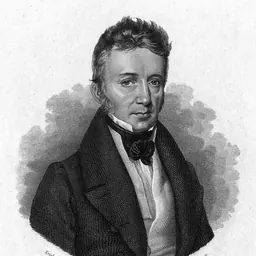
James Koppel Gutheim (November 15, 1817 – May 11, 1886) was the rabbi of Congregation Shangarai Chasset of New Orleans.
He was born near Münster in Westphalia, Prussia. In 1843, Gutheim arrived in the United States and immediately thrust himself upon the Jewish scene. Gutheim was a strong proponent of education, both religious and in his latter days secular education as well. During the 1840s, while serving the Jewish community in Cincinnati, Ohio, he attempted to start a Jewish school, which was unable to sustain itself. Later in his career, he was the president of the New Orleans Board of Education.
Although generally referred to favorably in era literature, in The Occident and American Jewish Advocate, Isaac Leeser appeared to offer Gutheim especially favorable coverage through the 1860s. Gutheim's move from Cincinnati, Ohio to New Orleans was given flowery coverage, saying that "The Crescent City has robbed the Queen of the West of one of the brightest jewels in her diadem." There was also the printing of an exchange of pleasantries in the form of correspondence between Gutheim, then serving as congregational rabbi of Shangarai Chasset and the congregation's president, Isaac Hart (father of Confederate Army Major Alexander Hart), when the congregation presented Gutheim with a gift marking the anniversary of his service to the congregation. His first term as rabbi of the synagogue was from 1850–1853.
After his first term at Shangarai Chasset ended, Gutheim served as the New Orleans' Portuguese Synagogue Nefutzot Yehudah'''s Rabbi/Hazan, where he encountered both religious and political controversy.
During 1860, he appears to have encountered some controversy with regard to his position as the Acting President of Touro Monument Association. Gutheim advocated for the construction of a statue memorializing Judah Touro, whose philanthropic giving was incomparable. (Touro, a wealthy New Orleans businessman, left an estate of $200,000 which provided funds for every existing traditional synagogue in America and $50,000 for the relief of poor Jews in the Holy Land. During his lifetime, aside from his Jewish charitable giving, Touro funded civic projects throughout the United States, including establishing parks as well as funding the construction of a New Orleans church.) The community halted Gutheim's efforts when a traveler, Israel Joseph Benjamin, present at a communal meeting regarding the statue, challenged the decision to erect the memorial statue, as it violated traditional Jewish Law.
Disappointed by the failure of his project, Gutheim withdrew his congregation's pledged $900 support of Benjamin's international Jewish welfare organization, and attempted to smear Benjamin in the press. His actions in the media were considered deplorable by leaders of Reform Judaism in Cincinnati, and those leaders also ruled that erecting the statue appeared to violate Jewish tradition according to their interpretations of Jewish standards (at that time).
Further difficulties arose for Gutheim in 1863, when he refused to take the oath of allegiance to the Union after New Orleans was recaptured. He fled New Orleans, and served as rabbi to Jewish congregations in Montgomery, Alabama, and Columbus, Georgia.
Gutheim returned to New Orleans after the Civil War, to serve as Shangarai Chasset's rabbi, but left to serve in New York City's Temple Emanuel in 1868. In 1872 he once again returned to New Orleans to become minister of the New Orleans Temple Sinai, where he preached until his death. He died in New Orleans.
According to the website of Temple Beth El of San Antonio, Texas, on September 10, 1875, Gutheim was engaged as a guest rabbi to lead the inaugural services at the congregation's new structure.
Despite reportedly having devoted himself to Jewish studies late in life, he was referred to as being "...one of the most eloquent and learned men in American Jewry," particularly in connection with his service as the New Orleans Reform Temple Sinai's spiritual leader, and his adherence to the principles of Tikkun Olam.Gutheim's lifetime involvement in educational and charitable work, was recognized by the Louisiana State Senate adjourning on the day of his funeral.The Menorah, in its July–December 1894 edition noted that the B'nai Brith lodge (no. 439) in New Orleans was named after Gutheim during that year. The lodge members credited Gutheim as a "beloved teacher and pulpit orator...deeply enshrined upon the hearts of the people of New Orleans."
Don’t just read it —
keep it.
Full-length biographies made to live with: read them, listen on the way to work, watch them tonight.
- E-book
- Audio
- Video
Instant download · yours to keep · every purchase keeps this site free
Important facts
People in James Koppel Gutheim's life
Named in this biography and alive at the same time



Related people
Same field, nearest in time

Contemporaries
People whose lives overlapped James Koppel Gutheim's

Frequently asked questions
Who was James Koppel Gutheim?
German-American rabbi
When was James Koppel Gutheim born?
James Koppel Gutheim was born on 15 November 1817 in Germany.
When did James Koppel Gutheim die?
James Koppel Gutheim died on 11 May 1886 in New Orleans.
What was James Koppel Gutheim's occupation?
James Koppel Gutheim was a rabbi.
Sources & further reading
· Wikipedia: James Koppel Gutheim
· DBpedia: James Koppel Gutheim
Cite this page
APA: Biography.guide. (2026). James Koppel Gutheim. https://biography.guide/james-koppel-gutheim/
MLA: "James Koppel Gutheim." Biography.guide, https://biography.guide/james-koppel-gutheim/.
Chicago: "James Koppel Gutheim." Biography.guide. https://biography.guide/james-koppel-gutheim/.
Data last updated: 2026-09-20 · Spot an error? Report a correction.
Page generated 2026-09-27 05:33 UTC