
About James Kazini
Lived 1957 – 2009 (aged 51–52). James Kazini was an Ugandan military personnel and military officer.
Major General James Kazini (1957–2009) was a Ugandan military officer who served as Chief of Staff of the Uganda People's Defence Force (UPDF) from 2001 to 2003.
Early Life and Career He was born in 1957 in the Basongora ethnic group, in Kasese District, in Western Region of Uganda. He attended Ntare School in western Uganda where he was a year ahead of Paul Kagame who later became president of Rwanda but left before completion of his O level studies. Prior to 1984, Kazini was a member of the Uganda National Rescue Front, a rebel group then headed by General Moses Ali, which was based in West Nile, in northwestern Uganda. Around 1984 he left that group and joined the National Resistance Army, headed by Yoweri Museveni, as an enlisted soldier.
He went on to become one of Salim Saleh's body guards. He became a commissioned officer at the rank of Captain in 1987, Major in 1989 and Lieutenant Colonel in 1991. Others included Brigadier Nakibus Lakara (former chief of staff), Brigadier Henry Tumukunde (former director general of the Internal Security Organization) and Brigadier Andrew Gutti, who was later pardoned and promoted. Of those charged, only Kazini was found guilty. Kazini had led Operation Iron Fist (2002), an attempt to wipe out the remaining Lord's Resistance Army forces, where the entire 4th Division was found to be made up of ghost soldiers, costing the army $37.4 million for 24,000 ghost soldiers and requiring an extra 4,000 soldiers to be drafted in to provide additional support. He was released on bail after the conviction.
He later challenged the sentence in the Constitutional Court, arguing that the Court Martial had no jurisdiction to hear the case, but he lost the appeal. He lodged an appeal in the Supreme Court and the case was due for hearing.
Kazini's rise through the ranks of the UPDF has also been credited to his close relationship with Salim Saleh, the brother of President Museveni, for he was otherwise never popular among the top echelons of the National Resistance Army. Independent journalist Obed Katureebe claimed that Kazini had "stepped on many colleagues' toes" in his rise to power. For instance, it is alleged that, while posted as commander of the Mechanised Brigade in the 1990s, Kazini wrote a secret intelligence report accusing General David Tinyefuza and Colonel Kizza Besigye of plotting to overthrow Museveni's government. Tinyefuza would be on the very committee that investigated Kazini for creating ghost soldiers.
Katureebe also reported that Kazini, at this point still a favourite of Museveni, had orchestrated the sacking of General Jeje Odongo by accusing him of leaking sensitive information to the Rwandan Government. The discord between the two men had reached a peak in the late 1990s when Odongo had written a report blaming Kazini for the outbreak of hostilities between Rwanda and Uganda in Kisangani that led to the UPDF's expulsion from the city. Katureebe accordingly refers to Kazini's leadership style as 'factional' and 'abrasive'.
In 2003, the Porter Commission named James Kazini as one of the senior military officials to have taken part in the 'plunder' of eastern Congo.
His alleged killer, 28-year-old Lydia Draru, who also goes by several different aliases, was arrested, presented before a magistrate and remanded to jail, pending trial for capital murder. Kazini left behind five children, four daughters and one son, with two different women. His alleged killer did not have a child with him.
Lydia Draru was tried and convicted of murder. In 2011, she was sentenced to fourteen years in prison. She served her sentence at Luzira Maximum Security Prison. She was released from prison on 12 January 2021. Two years were subtracted from her sentence on account of her good conduct while in prison. The two years she spent in jail, while on trial was counted as part of her sentence.
Don’t just read it —
keep it.
Full-length biographies made to live with: read them, listen on the way to work, watch them tonight.
- E-book
- Audio
- Video
Instant download · yours to keep · every purchase keeps this site free
Important facts
People in James Kazini's life
Named in this biography and alive at the same time

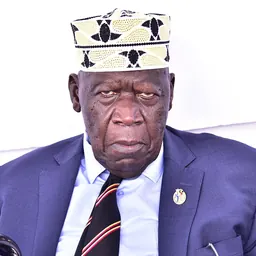

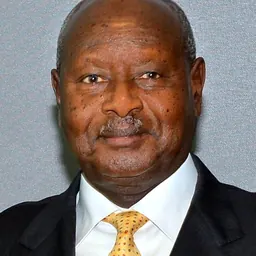


Related people
Same field, nearest in time

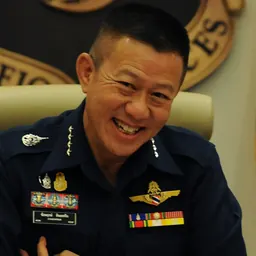
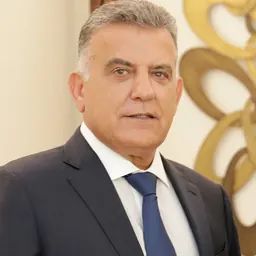

Contemporaries
People whose lives overlapped James Kazini's


Frequently asked questions
Who was James Kazini?
Ugandan Army officer (1957–2009)
When was James Kazini born?
James Kazini was born in 1957 in Kasese District.
When did James Kazini die?
James Kazini died on 10 November 2009 in Kampala, Makindye Division, Namuwongo, Uganda.
What was James Kazini's occupation?
James Kazini was a military personnel and military officer.
What nationality was James Kazini?
James Kazini was Ugandan.
Sources & further reading
Cite this page
APA: Biography.guide. (2026). James Kazini. https://biography.guide/james-kazini/
MLA: "James Kazini." Biography.guide, https://biography.guide/james-kazini/.
Chicago: "James Kazini." Biography.guide. https://biography.guide/james-kazini/.
Data last updated: 2026-09-22 · Spot an error? Report a correction.
Page generated 2026-09-27 05:06 UTC