
About James Johnstone
Lived 1719 – 1800. James Johnstone was a military personnel.
James Johnstone, also known as Chevalier de Johnstone or Johnstone de Moffatt, was a Scottish memoirist who is best remembered for his Memoirs of the Rebellion in 1745 and 1746, first published in 1820. The son of an Edinburgh merchant, he escaped to France after participating in the 1745 Jacobite rebellion.
He was commissioned a lieutenant in the French Colonial Army, and served in French North America for several years. Following the loss of Quebec to the British Army in 1760, Johnstone returned to France and became a civilian. Little is known of his later life, and he is thought to have died sometime between 1791 and 1800.
Family and early life Lady Jane Douglas (c.1698–1753); a distant relative and family friend who helped Johnstone escape to France in 1746. James Johnstone was born 25 July 1719, only son of Jeremy Boone Johnstone, an Edinburgh merchant; his mother was a distant relative of Lady Jane (or Jean) Douglas (c.1698–1753), later the centre of a famous inheritance case known as the Douglas Cause. He had two sisters; the elder, Cecilia (c.1715–1746), married John Rollo (1708–1783), later 6th Lord Rollo. His other sister, Jean, married Hugh Leslie of Dalkeith and their great-grandson purchased Johnstone's manuscripts in 1870. There is no record of Johnstone ever marrying or having children.
Little is known of Johnstone's childhood and youth. In his autobiography, he admitted to being a poor student who was "given to dissipation and extravagance". He had a difficult relationship with his father, but was indulged by his mother and Lady Jane, who lent him money.
In 1738, Johnstone persuaded his father to send him to Saint Petersburg, where he stayed with his mother's uncle, James Hewitt, an expatriate Scot and merchant. Another uncle, Gustav Otto Douglas (1687–1771), was a Russian general who was born in Sweden, but changed sides after being captured at Poltava in 1709. Douglas arranged a commission for Johnstone in the Russian military, but his father threatened to disinherit him if he accepted. After a period in London, he returned to Edinburgh in 1740.
His sister Cecilia's marriage into the Rollo family connected Johnstone to the circle of Jacobite gentry in Perthshire. This group is said to have supplied over 20% of the rebel army in the 1745 Rising. Robert, 4th Lord Rollo (1679–1758) had participated in the 1715 Rising, although his son Andrew Rollo (1703–1765) served with the British army in Flanders during the War of the Austrian Succession.
Jacobite rebellion, 1745–1746 Johnstone joined the Jacobites under Charles Edward Stuart when they reached Perth in early September 1745. He was appointed captain in the Duke of Perth's regiment. Although his claim to have been aide-de-camp to Lord George Murray cannot be verified, he was present throughout the campaign, and took part in the invasion of England. Perth ordered him to join the garrison left at Carlisle in December but he refused, saying he "would never be a victim by choice". At Culloden in April 1746, he allegedly took part in the attack on the government lines, before he escaped by taking someone else's horse.
He made his way to Ruthven Barracks with around 1,500 other survivors; on 20 April, Stuart ordered them to disperse until he returned from France with additional support. Johnstone accompanied Lord Ogilvy to Clova, in Angus, and then spent several weeks hiding in the Highlands until he could return to Edinburgh. His old friend Lady Jane Douglas helped him escape to London, where he watched members of the Jacobite Manchester Regiment being taken to Kennington Common for their execution on 30 July 1746. Disguised as one of Lady Jane's servants, he accompanied her to The Hague, where they parted.
French Colonial Army Johnstone served under Montcalm, shown here after being fatally wounded in the Battle of the Plains of Abraham.
Although he had originally intended to return to Russia, Johnstone stayed in Paris until Stuart was expelled from France after the 1748 Treaty of Aix-la-Chapelle. In 1750, a connection to the Marquis de Puisieulx, then French Foreign Minister led to his appointment as ensign in the Compagnies Franches de la Marine. These were regular troops raised for service in French North America, and Johnstone was posted to Île-Royale, Nova Scotia. A recurring theme of his Memoirs is his complaint of unfair treatment as he considered his rank an insult; however, when he arrived at Louisbourg in 1754, he was promoted lieutenant.
Other works dealing with Johnstone's time in Canada were printed in Quebec in 1887: The Campaign of 1760 in Canada and A dialogue in Hades: a parallel of military errors, of which the French and English armies were guilty, during the campaign of 1759, in Canada.
Don’t just read it —
keep it.
Full-length biographies made to live with: read them, listen on the way to work, watch them tonight.
- E-book
- Audio
- Video
Instant download · yours to keep · every purchase keeps this site free
Important facts
People in James Johnstone's life
Named in this biography and alive at the same time
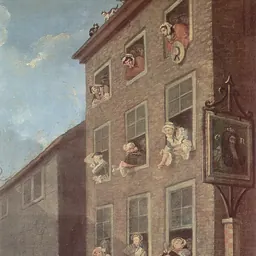
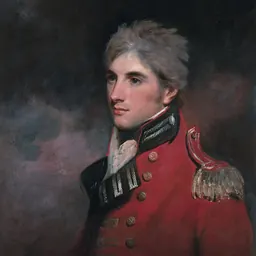
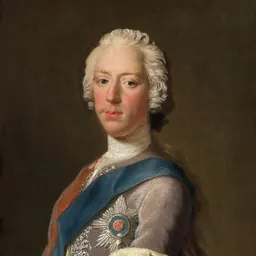

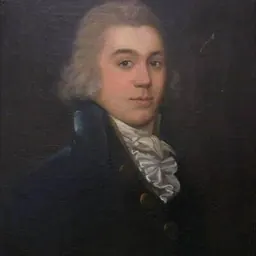

Related people
Same field, nearest in time




Contemporaries
People whose lives overlapped James Johnstone's



Frequently asked questions
Who was James Johnstone?
Jacobite Army officer
When was James Johnstone born?
James Johnstone was born in 1719 in Edinburgh.
When did James Johnstone die?
James Johnstone died in 1800 in Paris.
What was James Johnstone's occupation?
James Johnstone was a military personnel.
Sources & further reading
· DBpedia: Chevalier de Johnstone
Cite this page
APA: Biography.guide. (2026). James Johnstone. https://biography.guide/james-johnstone-military-personnel/
MLA: "James Johnstone." Biography.guide, https://biography.guide/james-johnstone-military-personnel/.
Chicago: "James Johnstone." Biography.guide. https://biography.guide/james-johnstone-military-personnel/.
Data last updated: 2026-09-20 · Spot an error? Report a correction.
Page generated 2026-09-27 05:28 UTC