
James Innes
Colonial American general
About James Innes
Lived 1700 – 1759.
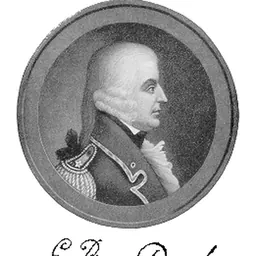
James Innes ( – 5 September 1759) was an American military commander and political figure in the Province of North Carolina who led troops both at home and abroad in the service of the Kingdom of Great Britain. Innes was given command of a company of North Carolina's provincial soldiers during the War of Jenkins' Ear, and served as Commander-in-Chief of all colonial soldiers in the Ohio River Valley in 1754 during the French and Indian War. After resigning his commission in 1756, Innes retired to his home on the Cape Fear River. A bequest made by Innes upon his death led to the establishment of Innes Academy in Wilmington, North Carolina.
Early life and emigration Innes was born around 1700 in the Scottish Highlands. In 1732, Innes purchased on the Cape Fear River in what is now Bladen County, North Carolina. In or about 1733, he received an additional grant of . Shortly after Innes's arrival in North Carolina, Governor Gabriel Johnston appointed him as a justice for New Hanover County, and tried unsuccessfully to appoint Innes to his council.
Military and political career
War of Jenkins' Ear
In 1739, war broke out between Spain and Great Britain over the respective powers' colonial possessions and spheres of influence. At the outset of that conflict, the British requested that their colonies supply troops for an expedition to South America. Innes was selected by Governor Johnston to lead a company of 100 men from the Cape Fear region to Cartagena in the Spanish Viceroyalty of New Granada, a city which is located in the modern-day country of Colombia. The Cape Fear company was to be joined by three other companies raised in the Albemarle Sound region. After 1750, Innes served on the Governor's Council under both Gabriel Johnston and Arthur Dobbs until his death in 1759.
French and Indian War
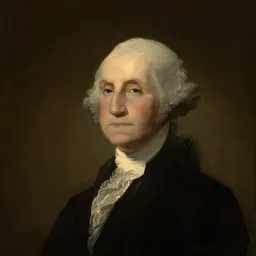
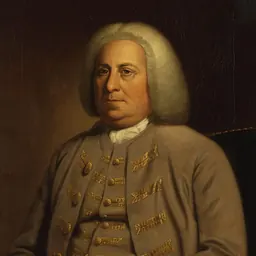
After the conclusion of King George's War in 1748, tension increased on the frontier between the French-held North American territory and the British colonies on the coast. With the possibility of the outbreak of war in 1754, Innes, as an experienced soldier, was nominated as the commander of North Carolina militia, which was to be sent to aid Virginia at the request of Governor Robert Dinwiddie. The government of Virginia in particular feared French incursions, as it claimed much of the territory in the Ohio River Valley. Dinwiddie, a fellow Scot, had become friends with Innes, and considered naming him as Commander-in-Chief of the provincial forces, but instead chose to name Virginian Joshua Fry. Fry's death on 15 May 1754 left the position vacant, and Innes was appointed on 4 June 1754, although George Washington had been Fry's second-in-command.
Washington was given command of the Virginia Regiment upon Fry's death, and he led that unit into the Ohio River Valley on Dinwiddie's orders before Innes was appointed his superior. On 28 May 1754, Washington's unit, along with native Mingo allies, surprised a French unit, killing Joseph Coulon de Jumonville, the unit's commander. A large force of French soldiers then advanced to trap Washington, and on 3 July 1754, assaulted him at Fort Necessity near what is now Farmington, Pennsylvania, and forced the Virginian's surrender. Dinwiddie blamed Matthew Rowan, the acting Governor of North Carolina, for the defeat, stating that had Innes's men been assembled in a timely fashion, they could have accompanied Washington to the frontier. Nevertheless, this engagement signaled the beginning of colonial combat between the French and English, which by 1755 had erupted into open war. alt=A view of Fort Cumberland, a wooden fort situated on a bluff above a river.
Innes's tenure as commander-in-chief had scarcely begun at the onset of the French and Indian War. Innes was directed to go to Wills Creek in Maryland, and to reinforce a fort there, which was to become Fort Cumberland. The North Carolina soldiers that came to Virginia were unruly and difficult to manage, eventually deserting after being informed that their pay was to be reduced, or returning home after Innes himself disbanded the unit due to its instability. To make matters worse, Virginians under Innes's command were ill-disposed towards him, particularly because he was not a Virginian himself.
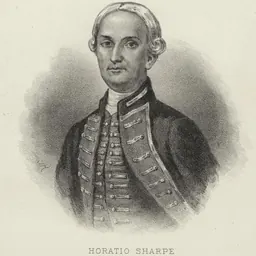
Within five months of Innes's appointment, Horatio Sharpe relieved him of his command, and Innes stayed on at Fort Cumberland as its "campmaster general". When General Edward Braddock arrived with a force of British regulars in 1755, Innes was named Governor of Fort Cumberland. Braddock tasked Innes with commanding a reserve force of troops at the fort during the disastrous Braddock expedition, in which Braddock led an army into the Ohio valley where it was ambushed and routed, leaving the general mortally wounded. During that operation, Fort Cumberland was used as a holding area for wounded and sick soldiers. Innes was among the first to hear of Braddock's defeat, and one of the first to inform Dinwiddie, by way of Lord Fairfax, of the catastrophe. By the mid-1756, Innes was permitted to resign his commission and return to North Carolina.
Retirement and death
Innes lived out the remainder of his life as a planter at "Point Pleasant", his plantation in North Carolina. He died on 5 September 1759 and left behind his wife Jean.
Legacy After his death in 1759, Innes's will left a bequest for an academy, to be called the Innes Academy. The Academy constructed what became the Thalian Hall in Wilmington, North Carolina, which exists today. Innes Street, the main east–west thoroughfare in Salisbury, North Carolina, is named after him.
Don’t just read it —
keep it.
Full-length biographies made to live with: read them, listen on the way to work, watch them tonight.
- E-book
- Audio
- Video
Instant download · yours to keep · every purchase keeps this site free
Important facts
People in James Innes's life
Named in this biography and alive at the same time



Contemporaries
People whose lives overlapped James Innes's



Frequently asked questions
Who was James Innes?
Colonial American general
When was James Innes born?
James Innes was born in 1700 in Canisbay.
When did James Innes die?
James Innes died on 5 September 1759 in Castle Hayne.
Sources & further reading
· DBpedia: James Innes (British Army officer, died 1759)
Cite this page
APA: Biography.guide. (2026). James Innes. https://biography.guide/james-innes-1700/
MLA: "James Innes." Biography.guide, https://biography.guide/james-innes-1700/.
Chicago: "James Innes." Biography.guide. https://biography.guide/james-innes-1700/.
Data last updated: 2026-09-20 · Spot an error? Report a correction.
Page generated 2026-09-27 05:06 UTC