
About James Inglis Hamilton
Lived 1742 – 1803 (aged 60–61). James Inglis Hamilton was a British military personnel.
General James Inglis Hamilton (1728 – 27 July 1803) was a British Army officer who served in the Seven Years' War, American War of Independence and French Revolutionary Wars. He joined the Army in 1755 and went on to command several regiments. Hamilton was the only colonel of the 113th Regiment of Foot (Royal Highlanders). During the Seven Years' War, Hamilton fought in the siege of Fort St Philip, raid on St Malo and the capture of Belle Île.
During the American War of Independence, Hamilton participated in repelling the American invasion of Quebec in 1775 and commanding a British column at the Battle of Freeman's Farm in 1778, where he was captured. Made a member of the Convention Army, Hamilton was imprisoned in Cambridge, Massachusetts. While an American prisoner of war, he adopted James Hamilton, the son of a non-commissioned officer in the British Army. Hamilton was eventually released in 1783.
Following his brother's death, Hamilton took over Murdostoun, where he renovated the castle extensively. Commanding the 15th (The Yorkshire East Riding) Regiment of Foot, Hamilton participated in capture of Martinique as well as the invasion of Guadeloupe in the French Revolutionary Wars. He died on 27 July 1803 at Murdostoun and is buried at Kirk of Shotts graveyard. His adopted son took over Murdostoun before dying at the Battle of Waterloo in 1815.
Early life
Very little is known of Hamilton's early life. He was the third son of Alexander (died 1768) and Margaret Hamilton (died 1742). and Gavin Hamilton (1723–1798), Inglis was added to the family name in 1719 as a condition of the will by which Alexander Inglis bequeathed Murdostoun to his nephew Alexander Hamilton, James's father. He first saw action in June 1756 at the siege of Fort St Philip in Minorca during the Seven Years' War. Assigned to the 34th Regiment of Foot, The French sailed to Fort St. Philip and forced Blakeney to capitulate after a siege. During the siege, Admiral of the Blue John Byng sailed for Minorca with a fleet to relieve the garrison, but was defeated at the Battle of Minorca. The British landed near Saint-Malo, at first planning to attack the town. However, they decided to destroy shipping first and attack the town later. Finding that to occupy the town would require a full siege, for which they had insufficient troops, they occupied Saint-Servan, where they burned over 100 merchant and 30 privateers. British ships retreated after seeing a large French force, but sailed around the coast for a few weeks seeking another place to attack. Even though the Raid on Saint-Malo was small and little damage was done, it is considered a British victory.
In 1761, Hamilton took part in the British capture of Belle Île The first British attack was unsuccessful and led to the attackers suffering approximately 500 killed or wounded. while holding the rank of major, Hamilton became major commandant (colonel) of the 113th Regiment of Foot (Royal Highlanders). It was formed from independent companies and served as a depot for sending drafts to Highland regiments serving overseas. The regiment disbanded in 1763, and Hamilton retired on half-pay.
American War of Independence In 1774, Hamilton commanded the 21st Regiment of Foot in the American War of Independence; General John Burgoyne said that he "was the whole time engaged and acquitted himself with great honor, activity, and good conduct." Early in 1776, while in the 21st Regiment, Hamilton accompanied General Guy Carleton in the British response to the Continental Army's 1775 invasion of Quebec. It was originally intended to include Hamilton's 21st Regiment of Foot in the brigade, but it was replaced by the 53rd. His column was arrayed with the 21st on the right, the 20th on the left, the 62nd in the middle, and the 9th in reserve. To his left, Friedrich Adolf Riedesel commanded the 47th Regiment of Foot and some German troops. To Hamilton's right, Simon Fraser commanded the 24th Regiment of Foot along with light infantry and grenadiers.
The centre column migrated toward the southwest to meet up with the right column. mostly in Hamilton's centre column, where the 62nd was reduced to the size of a single company and three-quarters of the artillery men were killed or wounded. American losses were nearly 300 killed and seriously wounded.
In the next battle, the Battle of Bemis Heights, Hamilton was not as engaged as he was at Freeman's Farm. He was the guard of the camp near the heights. He was in the Convention Army that surrendered after the battle, The prisoners arrived at Cambridge, Massachusetts on 8 November 1777. William Phillips commanded the Convention Army until he was exchanged for American General Benjamin Lincoln in 1780; then Hamilton became the commander. Hamilton name was "signed to the parole given by the officers ... in December". Hamilton was released on 3 September 1781, subject to the condition that he could not travel to America until the war was over.
Later life Murdostoun Castle (2006). Hamilton made modifications to it, and it is where he died. After his exchange, Hamilton returned to Britain,
Around 1790, Hamilton made various renovations to Murdostoun: filling the turret staircase and the old dungeons, adding a parapet running round the roof-line, and changing the original courtyard. On his brother Galvin's death in 1798, Hamilton took over Murdostoun. He came to be considered as one of the most influential freeholders in Lanarkshire.
The regiment also saw service at Guadeloupe (12 April) the same year. He was colonel of his old regiment, the 21st Foot, from 1794 to 1803. Hamilton died on his estate in Scotland on 27 July 1803. On 18 August 1803, his son, who was his only heir, took over Murdostoun. James was killed while commanding the Royal Scots Greys at the Battle of Waterloo.
Don’t just read it —
keep it.
Full-length biographies made to live with: read them, listen on the way to work, watch them tonight.
- E-book
- Audio
- Video
Instant download · yours to keep · every purchase keeps this site free
Important facts
People in James Inglis Hamilton's life
Named in this biography and alive at the same time




Related people
Same field, nearest in time

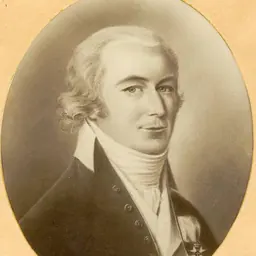
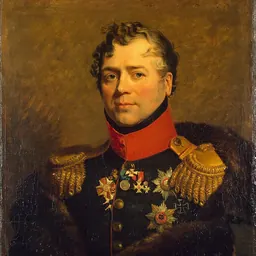

Contemporaries
People whose lives overlapped James Inglis Hamilton's
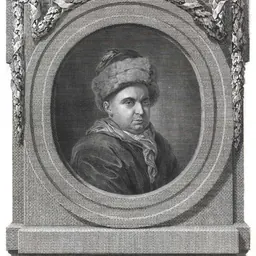



Frequently asked questions
Who was James Inglis Hamilton?
General of the British Army
When was James Inglis Hamilton born?
James Inglis Hamilton was born in 1742.
When did James Inglis Hamilton die?
James Inglis Hamilton died on 27 July 1803 in Murdostoun.
What was James Inglis Hamilton's occupation?
James Inglis Hamilton was a military personnel.
What nationality was James Inglis Hamilton?
James Inglis Hamilton was British.
Sources & further reading
· Wikipedia: James Inglis Hamilton
· DBpedia: James Inglis Hamilton
Cite this page
APA: Biography.guide. (2026). James Inglis Hamilton. https://biography.guide/james-inglis-hamilton/
MLA: "James Inglis Hamilton." Biography.guide, https://biography.guide/james-inglis-hamilton/.
Chicago: "James Inglis Hamilton." Biography.guide. https://biography.guide/james-inglis-hamilton/.
Data last updated: 2026-09-20 · Spot an error? Report a correction.
Page generated 2026-09-27 05:27 UTC