
James Henry Hammond
Governor of South Carolina, South Carolina politician
About James Henry Hammond
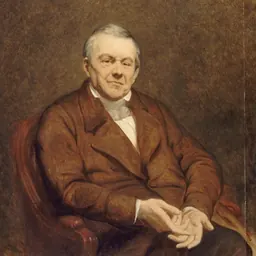
Lived 1807 – 1864 (aged 56). James Henry Hammond was an American politician, lawyer, journalist, jurist, planter class and governor.
James Henry Hammond (November 15, 1807 – November 13, 1864) was an American attorney, politician, and planter. He served as a United States representative from 1835 to 1836, the 60th governor of South Carolina from 1842 to 1844, and a United States senator from 1857 to 1860. A slave owner, Hammond was one of the most ardent supporters of slavery in the years before the American Civil War.
Acquiring property through marriage, Hammond ultimately owned 22 square miles, several plantations and houses, and enslaved more than 300 people. Through his wife's family, he was a brother-in-law of Wade Hampton II and uncle to his children, including Wade Hampton III. When the senior Hampton learned that Hammond had raped his four Hampton nieces as teenagers, he made the scandal public. The publicizing of his crimes nearly derailed Hammond's career, but he later was elected to the United States Senate. He popularized the phrase that "Cotton is King" in his March 4, 1858, speech to the U.S. Senate, saying:
"In all social systems, there must be a class to do the menial duties, to perform the drudgery of life...It constitutes the very mudsill of society." He uttered the oft-repeated words, "You dare not make war on cotton — no power on earth dares make war upon it. Cotton is king." Hammond and Simms were part of a "sacred circle" of intellectuals, including Edmund Ruffin, Nathaniel Beverley Tucker, and George Frederick Holmes, who promoted reformation in the South in various forms. As supporters of slavery, they both justified it in terms of stewardship of inferior beings and promoted enslavers' "improvement" of their treatment of enslaved people.
Hammond promoted Redcliffe, his plantation in Beech Island, South Carolina, as his ideal of the perfectly run plantation in his Plantation manual, 1857-58. It includes a wide range of material, with detailed rules regulating treatment of pregnant and nursing enslaved people (whom he allowed to nurse their infants for 12 months), old enslaved people no longer fit for heavy field work, together with rules about clothing, quarters, food, etc., in addition to livestock and crop management.
Sexual assault Hammond's Secret and Sacred diaries (not published until 1988) described, without embarrassment, his sexual abuse over two years of four teenage nieces, daughters of his sister-in-law Ann Fitzsimmons and her husband Wade Hampton II. He blamed his behavior on what he described as the seductiveness of the "extremely affectionate" young women. He was "ostracized by polite society" for some time, but in the late 1850s, he was nonetheless elected by the state legislature as a U.S. senator. Later, Hammond raped Sally Johnson's daughter, Louisa, who was a year-old baby when he bought her mother. The first rape occurred when Louisa was 12; she also bore several of his children.
Hammond's wife, Catherine, left him for a few years after he repeatedly raped the enslaved girl, taking her children with her. She later returned.
Legacy Hammond School in Columbia, South Carolina, was named the James H. Hammond Academy when founded in 1966. It was one of many private schools known as segregation academies, established to preserve racial segregation in schools. Although many of these segregation academies are now defunct, Hammond School continued to develop; after the 1970s, it expanded its admission policy, as federal law mandated, to be non-discriminatory. The school changed its name to reflect this.
Don’t just read it —
keep it.
Full-length biographies made to live with: read them, listen on the way to work, watch them tonight.
- E-book
- Audio
- Video
Instant download · yours to keep · every purchase keeps this site free
Important facts
People in James Henry Hammond's life
Named in this biography and alive at the same time




Related people
Same field, nearest in time




Contemporaries
People whose lives overlapped James Henry Hammond's






Frequently asked questions
Who was James Henry Hammond?
Governor of South Carolina, South Carolina politician (1807-1864)
When was James Henry Hammond born?
James Henry Hammond was born on 15 November 1807 in Columbia.
When did James Henry Hammond die?
James Henry Hammond died on 13 November 1864 in Beech Island.
What was James Henry Hammond's occupation?
James Henry Hammond was a politician, lawyer, journalist, jurist, planter class and governor.
What nationality was James Henry Hammond?
James Henry Hammond was American.
Sources & further reading
· Wikipedia: James Henry Hammond
Cite this page
APA: Biography.guide. (2026). James Henry Hammond. https://biography.guide/james-henry-hammond/
MLA: "James Henry Hammond." Biography.guide, https://biography.guide/james-henry-hammond/.
Chicago: "James Henry Hammond." Biography.guide. https://biography.guide/james-henry-hammond/.
Data last updated: 2026-09-26 · Spot an error? Report a correction.
Page generated 2026-09-27 05:13 UTC