
About James Hardy
Lived 1815 – 1898 (aged 83). James Hardy was a naturalist and antiquarian.
James Hardy LL.D. (1 June 1815, in Oldhamstocks, East Lothian – 30 September 1898, in Old Cambus, Cockburnspath, Berwickshire) was a Scottish naturalist and antiquarian. He was secretary of the Berwickshire Naturalists' Club from 1871 until at least 1896. At least two species have been named in his honour.
Biography Hardy was the eldest son of George Hardie (after 1861) and his wife Elizabeth (after 1851). At an unknown date, the family relocated from Oldhamstocks, East Lothian to Penmanshiel Farm, Cockburnspath, Berwickshire, where they were well-respected tenant farmers. James is known in official records as "James Hardie" (such as the 1851 Census, which describes him as "Of Penmanshiel Farmhouse, Age 35, Unmarried, Naturalist Writes on Natural History In press", That was written by "Mr James Hardy", presumably the subject of this article; "Mr Hardie" was presumably his father, George Hardie.
Hardy was educated at a local village school or schools. In about 1833, he entered the University of Edinburgh, where he studied for four sessions (including one spent at Glasgow, to attend a special class). It seems that his health was never good, and that (despite having been a good student) he was for one reason or another unsuited for a profession. He returned home, where he remained for some years, although he continued to study. From 1840 or 1846, but it seems that by 1886 he had retired to Old Cambus, and that his younger brother Arthur
In 1881, in recognition of his voluntary services, the Berwickshire Naturalists' Club presented him with an inscribed microscope, and a cheque for £111 (equivalent to about £12,700) towards the binding of his collection of books, pamphlets and manuscripts. In April 1890, the University of Edinburgh conferred upon him the degree of LL.D. honoris causa, a high distinction. Two months later, the club not only acclaimed it, but presented him with a handsomely illuminated address and a cheque for £400 (equivalent to about £48,400). They had no children. It was Hardy's habit to inspect his flower garden after tea-time every day when weather permitted. On 30 September 1898, his wife, perturbed by his unusual lateness to return, discovered his lifeless body there. He was interred at Coldingham Abbey, Berwickshire;
Taxa described Vibrio graminis, the nematode worm Anguina graminis (1850). Cecidomyia helianthemi, a gall midge Dasineura helianthemi
Acknowledgments and recognition Taxa named in honour According to Hardy's obituarist, "several of his discoveries, still bearing the specific name of Hardyii [capital "H" in the source] will serve to keep for ever green the memory of one we loved so well". = C. hardyi, a mite in genus Calyptostoma. (In 1976, Vistorin-Theis proposed that this was the same species as C. velutinus (Müller, 1776). Not all authors have agreed with the identity. ) Walckenaer(i)a hardii (Blackwall, 1850) = Leptothrix hardyi, a spider.
Other acknowledgments and recognition In 1850, William King acknowledged Hardy's contributions to his book on the Permian fossils of England. In 1853, entomologist Andrew Murray acknowledged multiple contributions by Hardy to his Catalogue of the Coleoptera of Scotland. In 1879, William Henderson acknowledged Hardy's contributions to his Notes on the Folk-Lore of the Northern Counties of England and the Borders. In 1895, ornithologist George Muirhead acknowledged multiple contributions by Hardy to his Birds of Berwickshire. In 1926, W. S. Crockett called him "the indefatigable historian of the Berwickshire Naturalists' Club". In 2009, Diarmid Finnegan called him one of the "many leading members of Scottish natural history societies".
Publications
(The publication date of this book is uncertain. Its frontispiece says MDCCCXXXIV (1834), but it includes contributions dated at least as late as 1840.)
1856-1858. Multiple contributions to the Ordnance Survey Name Books for Berwickshire, as an authority for place names in the parish of Cockburnspath. 1868. Plants new to Berwickshire, with notes on their history 1868. A moss flora of eastern Berwickshire. Citing Journal of the Berwickshire Naturalists Club. (1) Hardy, James: 1873-1875, volume 7, pp. 223–225, "Extracts from the Session-Book of Hutton Parish, A.D. 1649-1677" (2) Hardy, James: 1882-1884, volume 10, p. 401, "Notes on Yarrow"
(Date undetermined.)
Don’t just read it —
keep it.
Full-length biographies made to live with: read them, listen on the way to work, watch them tonight.
- E-book
- Audio
- Video
Instant download · yours to keep · every purchase keeps this site free
Important facts
People in James Hardy's life
Named in this biography and alive at the same time


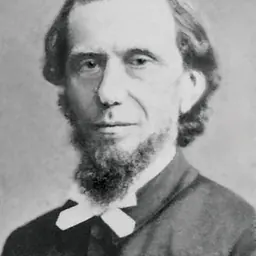
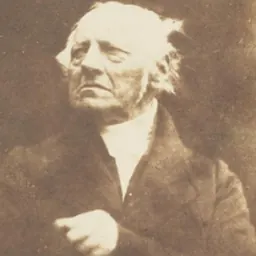
Related people
Same field, nearest in time

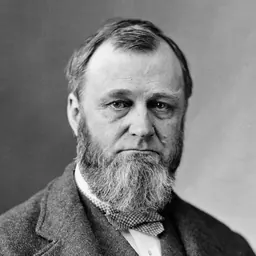
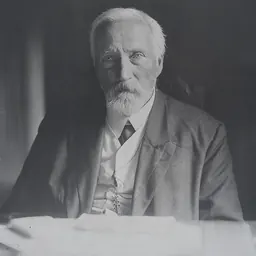


Contemporaries
People whose lives overlapped James Hardy's




Frequently asked questions
Who was James Hardy?
Scottish naturalist and antiquarian
When was James Hardy born?
James Hardy was born on 1 June 1815 in Oldhamstocks.
When did James Hardy die?
James Hardy died on 30 September 1898 in Old Cambus.
What was James Hardy's occupation?
James Hardy was a naturalist and antiquarian.
Sources & further reading
· DBpedia: James Hardy (naturalist)
Cite this page
APA: Biography.guide. (2026). James Hardy. https://biography.guide/james-hardy-naturalist/
MLA: "James Hardy." Biography.guide, https://biography.guide/james-hardy-naturalist/.
Chicago: "James Hardy." Biography.guide. https://biography.guide/james-hardy-naturalist/.
Data last updated: 2026-09-22 · Spot an error? Report a correction.
Page generated 2026-09-27 05:23 UTC