James Hackman
British murderer
About James Hackman
Lived 1752 – 1779 (aged 26–27).
James Hackman, baptized 13 December 1752, hanged , briefly Rector of Wiveton in Norfolk, was the man who murdered Martha Ray, singer and mistress of John Montagu, 4th Earl of Sandwich.
Early life Baptized on 13 December 1752 at Gosport, Hampshire, Hackman was the son of William and Mary Hackman. His father had served in the Royal Navy as a lieutenant. Hackman was apprenticed to a mercer, and although according to some accounts he became a member of St John's College, Cambridge, no record of this can be traced at Cambridge. and in 1776 was promoted lieutenant, but by early 1777 he had resigned from the army to become a cleric. On 24 February 1779, Hackman was ordained a deacon in the Church of England and on 28 February a priest. On 1 March 1779 he was instituted as Rector of Wiveton, a place that he may never have visited.
Martha Ray
In about 1775, while he was a serving army officer, Hackman visited Lord Sandwich's house at Hinchingbrooke and met his host's mistress, Martha Ray. who had lived with Lord Sandwich as his wife since the age of seventeen and had given birth to nine of his children. where she had gone to watch a performance of Isaac Bickerstaffe's comic opera Love in a Village with her friend and fellow singer Caterina Galli.
After Ray and Galli came out of the theatre, Hackman approached them just as they were about to get into their carriage. He put one pistol to Ray's forehead and shot her dead. With the other he then tried to kill himself but made only a flesh wound. He then beat himself with both discharged pistols until he was arrested and taken, with Ray's body, into a tavern in St James's Street. Two letters were found on Hackman, one addressed to his brother-in-law, Frederick Booth, and a love letter to Ray: both later appeared in evidence at the murder trial.
On 14 April 1779, Ray was entombed inside the parish church of Elstree, Hertfordshire, but her body was later moved into the cemetery.
On 16 April 1779, just nine days after the event, Hackman was tried for murder at the Old Bailey. Despite having previously decided to plead guilty, in the event he pleaded not guilty, explaining that "the justice of my country ought to be satisfied by suffering my offence to be proved". The statement afterwards appeared in all the newspapers. Hackman admitted that he had killed Ray, but he claimed he had only meant to kill himself. He said:
Hackman's defence counsel submitted to the court that Hackman was insane and that the killing of Martha Ray was unpremeditated, as shown by the letter to her found on him. Hackman was convicted and sentenced to be hanged.
After the trial, James Boswell told Frederick Booth that Hackman had behaved "with Decency, Propriety, and in such a Manner as to interest everyone present".
Execution
Hackman was hanged at Tyburn on 19 April 1779. He travelled there in a mourning coach, accompanied by the sheriff's officer and two fellow clergymen, the Rev. Moses Porter, a curate friend from Clapham, and the Rev. John Villette, the chaplain of Newgate Prison.
At Tyburn, "Hackman... behaved with great fortitude; no appearances of fear were to be perceived, but very evident signs of contrition and repentance". His body was later publicly dissected at Surgeons' Hall, London.
Horace Walpole remarked that the murder fascinated much of London during April 1779. At first, given Sandwich's position as First Lord of the Admiralty, a political motive was suspected. Not long before, Sandwich and Martha Ray had found themselves fleeing from Admiralty House, where a mob was rioting against the government and in particular against what it saw as the mistreatment of Admiral Keppel.
The affair inspired Sir Herbert Croft's epistolary novel Love and Madness (1780), an imagined correspondence between Hackman and Martha Ray. In this, Hackman is dealt with sympathetically. He is represented as a man of sensibility suffering from an extreme case of unrequited love who descends into suicidal and homicidal despair, even to the point that the reader is invited to identify with Hackman rather than with his victim.
Samuel Johnson and Topham Beauclerk debated whether Hackman had meant to kill only himself. Boswell himself (who had visited Hackman in prison) wrote that the case showed "the dreadful effects that the passion of Love may produce".
An anonymous book was published in 1780 with some correspondence between Hackman and Reay "in a garbled form." The full letters were later edited and published by Gilbert Burgess in The Love-Letters of Mr. H. & Miss R.: 1775–1779, in 1895.
In his Mind-Forg'd Manacles (1987), the social historian Roy Porter argues that Hackman was well aware of the madness of his passion.
In The Luck of Barry Lyndon, Thackeray has his protagonist describe having met Hackman 'at one of Mrs Cornely's balls, at Carlisle House, Soho'.
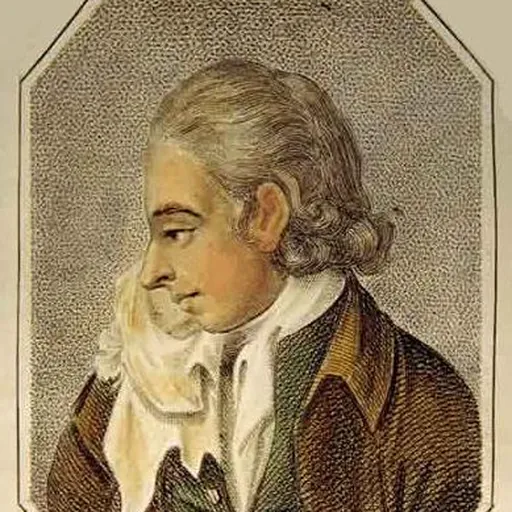
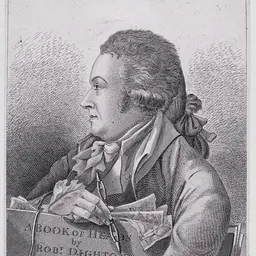
Likenesses A mezzotint of Hackman by Robert Laurie, after Robert Dighton, was published in 1779. Another engraving of Hackman (artist unknown) was used as an illustration in The Case and Memoirs of the Late Rev. Mr James Hackman (1779).
Don’t just read it —
keep it.
Full-length biographies made to live with: read them, listen on the way to work, watch them tonight.
- E-book
- Audio
- Video
Instant download · yours to keep · every purchase keeps this site free
Important facts
People in James Hackman's life
Named in this biography and alive at the same time


Contemporaries
People whose lives overlapped James Hackman's






Frequently asked questions
Who was James Hackman?
British murderer
When was James Hackman born?
James Hackman was born in 1752.
When did James Hackman die?
James Hackman died in 1779.
Sources & further reading
Cite this page
APA: Biography.guide. (2026). James Hackman. https://biography.guide/james-hackman/
MLA: "James Hackman." Biography.guide, https://biography.guide/james-hackman/.
Chicago: "James Hackman." Biography.guide. https://biography.guide/james-hackman/.
Data last updated: 2026-09-20 · Spot an error? Report a correction.
Page generated 2026-09-27 05:09 UTC