
James Davis
Scottish-Australian convict
About James Davis
Lived 1808 – 1889 (aged 80–81). James Davis was a British delinquent.
Conviction
On 29 September 1824 in Glasgow, James Davis was sentenced to fourteen years' transportation. He had pleaded guilty to "the offence of theft, habit and repute". According to the Australian Dictionary of Biography, Davis was convicted for stealing 2 shillings 6 pence (half a crown) from a church box.
In Australia
In 1828 Davis was tried for robbery at Patrick's Plains and was sentenced to three years' imprisonment at the Moreton Bay penal settlement (now Brisbane, Queensland). Davis was sent to the penal settlement on 6 February 1829, arriving there on the 18th. Indeed, Logan's punishments were so extreme that certain convicts at the settlement committed murder with the intention of getting themselves hanged; preferring death to further lashing.
The duo first came across Aboriginal people when they reached Sandgate —possibly the Doomgalbarah people—whom they stayed with for 12 months. The tribe passed them along to Toorbul Point, then to the Mary River, to see if anyone would recognise the white convicts as reincarnated Aboriginal men. Henry Stuart Russell stated that the name meant "kangaroo rat", and was an emblem of activity and speed. Not long after, Davis's companion broke tribal law by desecrating an Aboriginal grave—removing the deceased's remains from a dilly bag in a tree in order to carry oysters—and was killed. He was allotted a flat named Toon about off the Mary River.
In 1879, an Aboriginal man from Pialba claimed that Davis was susceptible to cannibalism.
Location by Andrew Petrie Explorer and tradesman Andrew Petrie located Davis in 1842.On 12/13 May 1842, Davis was found by tradesman and explorer Andrew Petrie in Wide Bay, amongst the Kabi Kabi tribe. The historian Henry Stuart Russell was one of the men in Petrie's party.
Petrie and his party planned to bring Davis back to Western society. Bracewell and an Aboriginal man from Moreton Bay managed to sneak into the Kabi Kabi encampment unnoticed. Then two of Petrie's men, armed with guns, went towards the encampment to secure Davis. The operation was so risky that the men were promised improved conditions if successful. The Kabi Kabi people were vengeful of the party of Western men, as over fifty Kabi Kabi had recently suffered from a mass poisoning in Kilcoy.
Bracewell and the Moreton Bay native were recognised and received by the Kabi Kabi. The two convicts were spotted from a distance, prompting the natives to prepare to spear them. Bracewell and Davis communicated and managed to convince the Kabi Kabi to spare the two convicts.
Petrie persuaded Davis to accept that it was safe to return to Brisbane with the cessation of transportation. Finally Davis became calm and agreed to leave with Petrie next day.
The next morning, Davis boarded the whale boat and left with the party. According to Wargandilla, "blacks in hundreds followed along the bank of the river, walked out on projecting trees and rocks and called their farewells to Davis, who... told them the awful sorrow he felt at leaving them, the joyous days he had spent in their company, his undying love for his father and mother, and all the other superb exaggerations made necessary in the diplomacy of that critical occasion".
Though Davis could speak up to five Aboriginal languages, In 1866 he unsuccessfully petitioned the governor to raise his salary to the standards of other interpreters. Davis also gave some descriptions of Aboriginal rites, with the exception of one apparently obscene ceremony.
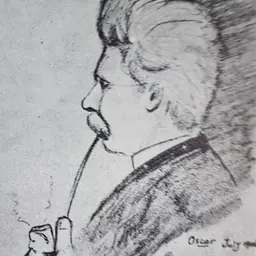
Davis is the subject of a 1893 painting titled Duramboi by Swedish-born artist Oscar Fristrom.
Personal life During his time in the bush, Davis had a son with an Aboriginal woman named Caleeraba. Their son was known as Calarga (meaning "the sparrow hawk") or Daybee. The events of Calarga's life after he grew to manhood are unknown.
On 3 November 1846, Davis married Annie Shea; she died in 1882. On 28 July 1883 he married Irish-born widow Bridget Hayes. Death
By 1889, Davis was confined to his bed at his house in Burnett Lane as he was suffering from heart and lung disease. A police officer, Constable Bailey, stated that he had visited Davis on 1 May, and that Davis was in a weak state with blood stains on his bed sheets. on 6 May Badson testified that prior to Davis's death, Bridget had been "continually upbraiding [her husband] with not having given her more money". Bridget was incoherent and half-conscious during the hearing, and the case was adjourned. Bridget was found not guilty and consequently discharged on 24 August, before Chief Justice Charles Lilley.
Don’t just read it —
keep it.
Full-length biographies made to live with: read them, listen on the way to work, watch them tonight.
- E-book
- Audio
- Video
Instant download · yours to keep · every purchase keeps this site free
Important facts
People in James Davis's life
Named in this biography and alive at the same time



Related people
Same field, nearest in time


Contemporaries
People whose lives overlapped James Davis's





Frequently asked questions
Who was James Davis?
Scottish-Australian convict (1807–1889)
When was James Davis born?
James Davis was born in 1808 in Glasgow.
When did James Davis die?
James Davis died on 7 May 1889 in Brisbane.
What was James Davis's occupation?
James Davis was a delinquent.
What nationality was James Davis?
James Davis was British.
Sources & further reading
· DBpedia: James Davis (escaped convict)
Cite this page
APA: Biography.guide. (2026). James Davis. https://biography.guide/james-davis/
MLA: "James Davis." Biography.guide, https://biography.guide/james-davis/.
Chicago: "James Davis." Biography.guide. https://biography.guide/james-davis/.
Data last updated: 2026-09-20 · Spot an error? Report a correction.
Page generated 2026-09-27 05:12 UTC