
About James Dashow
Born 1944. James Dashow is an American composer.
James Dashow (born November 7, 1944, in Chicago, Illinois) is an American composer of electro-acoustic music, instrumental music and opera.
Life and career Dashow was born in 1944, outside of Chicago. His musical studies began in high school with Horace Reisberg; his principal teachers at the university level were J. K. Randall, Arthur Berger and Seymour Shifrin. In 1969, Dashow went to Italy on a Fulbright Fellowship to complete his studies with Goffredo Petrassi. For many years, he studied the music of Luigi Dallapiccola independently.
One of the first to compose music for digital audio synthesis ("computer music"), Dashow was invited by Graziano (Giuliano) Tisato to work at the computer center of the University of Padua, where he created the first computer music compositions in Italy. He was the first vice president of the International Computer Music Association, has taught at MIT and Princeton University, and continues to actively hold master classes, lectures and concerts in Europe and North America. In 2003 he was composer-in-residence at the 12th Annual Florida Electroacoustic Music Festival in Gainesville, Florida.
For several years he and coproduced a weekly contemporary music program for RAI. He is the author of the MUSIC30 language for digital sound synthesis, and invented the Dyad System, a method that both integrates pitch structure based on dyads into electronic sounds as well as develops the pitch structure itself in terms of dyadic elaborations.
Following on his extensive use of audio spatialization as an integral part of the compositional process, Dashow composed the first opera designed to be performed in a planetarium (Archimedes), taking advantage of the depth projection capabilities of the digital planetarium projectors and the multichannel audio systems that together provide a full immersion theatrical experience. He continues to develop the idea of a double approach to spatialization, through the complementary concepts of movement space, and movement space.
His most important recognitions include the Prix Magistere at Bourges in 2000, Guggenheim (1989) and Koussevitzky Foundation (1998) grants, and in 2011 the Fondazione CEMAT distinguished career award Il CEMAT per la Musica in recognition of his outstanding contributions to electro-acoustic music.
Principal compositions Soundings in Pure Duration n.10 (2020) octophonic concrete and electronic sounds iPiece (2018–2019) a musical satire for guitar, octophonic electronic sounds, video and some electronic gadgets Soundings in Pure Duration n.9 (2016–2017) for bass flute and octophonic concrète and electronic sounds Soundings in Pure Duration n.8 (2015–2016) for bass-baritone voice and octophonic concrète and electronic sounds Soundings in Pure Duration n.7 (2014) for alto saxophone and octophonic electronic sounds Soundings in Pure Duration n.6 (2014) octophonic electronic sounds Soundings in Pure Duration n.5 (2012) harp and octophonic electronic sounds Soundings in Pure Duration n.4 (2012) viola and octophonic electronic sounds Soundings in Pure Duration n.3 (2011) guitar and hexaphonic electronic sounds Album of Small Forms vol. 1 (2010) violin, clarinet, piano Soundings in Pure Duration n. 2a (2009) pre-recorded percussive and hexaphonic electronic sounds Archimedes, a planetarium opera (1999–2008) libretto by Cary Plotkin and Theodore Weiss based on a conception of the composer Sul Filo dei Tramonti (2004) version for flute, harp and stereophonic electronic sounds Soundings in Pure Duration n.1 (2003) hexaphonic electronic sounds Messages from Ortigia (2002) bass flute (alto), bass clarinet, viola, harp and hexaphonic electronic sounds Sul Filo dei Tramonti (2000) soprano, piano and stereophonic electronic sounds on poetry by Giangiacomo Menon ...at other times, the distances (1999) quadraphonic electronic sounds Far Sounds, Broken Cries (1998) 13 instruments and quadraphonic electronic sounds Media Survival Kit (1996) a lyric satire for radio broadcast, text by First Tangent to the Given Curve (1995–1996) piano and stereophonic electronic sounds Le Tracce di Kronos, i Passi (1997) clarinet, dancer and stereophonic electronic sounds A Sheaf of Times (1992–1994) flute (alto, piccolo) clarinet (b. cl.), vln, vc, piano, harp, percussion Morfologie (1993) for trumpet player (doubling cornet, flugelhorn) and stereophonic electronic sounds Reconstructions (1992) for harp and stereophonic electronic sounds 4/3 – trio (1989–90) violin, cello and piano Oro, Argento & Legno (1987) for flute (piccolo, alto flute) and quadraphonic electronic sounds Songs from a Spiral Tree (1984–1986) for mezzo-soprano, flute (piccolo, alto) and harp, on poems by Theodore Roethke In Winter Shine (1983) quadraphonic electronic music Mnemonics (1981–1982, rev. 1984) violin and quadraphonic electronic sounds Second Voyage (1977–1979) tenor voice with stereophonic electronic sounds, poem "Voyage in the Blue" by John Ashbery Effetti Collaterali (1976) clarinet in A and stereophonic electronic sounds Whispers Out of Time (1975–1976) stereophonic electronic music Some Dream Songs (1974–1975) soprano, violin and piano, poems from The Dream Songs by John Berryman Ashbery Setting (1971–1972) soprano, flute and piano, poem "Clepsydra" by John Ashbery Timespace Extensions (1969) flute, piano and 2 percussionists Songs of Despair (1968) soprano and 11 instruments, poems by E. A. Robinson, A. MacLeish, V. Lindsay, T. S. Eliot
Don’t just read it —
keep it.
Full-length biographies made to live with: read them, listen on the way to work, watch them tonight.
- E-book
- Audio
- Video
Instant download · yours to keep · every purchase keeps this site free
Important facts
People in James Dashow's life
Named in this biography and alive at the same time

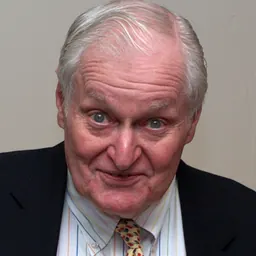
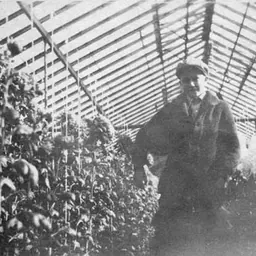





Related people
Same field, nearest in time
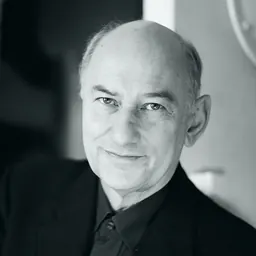
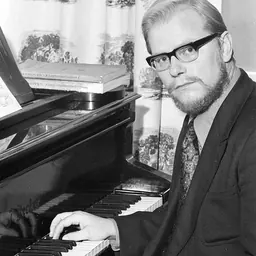

Contemporaries
People whose lives overlapped James Dashow's



Frequently asked questions
Who is James Dashow?
American composer
When was James Dashow born?
James Dashow was born on 7 November 1944 in Chicago.
What is James Dashow's occupation?
James Dashow is a composer.
What nationality is James Dashow?
James Dashow is American.
Sources & further reading
Cite this page
APA: Biography.guide. (2026). James Dashow. https://biography.guide/james-dashow/
MLA: "James Dashow." Biography.guide, https://biography.guide/james-dashow/.
Chicago: "James Dashow." Biography.guide. https://biography.guide/james-dashow/.
Data last updated: 2026-09-20 · Spot an error? Report a correction.
Page generated 2026-09-27 05:02 UTC