
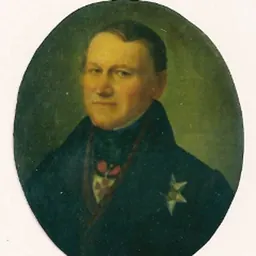
James Colnett
British Royal Navy officer, an explorer, and maritime fur trader
About James Colnett
Lived 1753 – 1806 (aged 52–53). James Colnett was a British explorer and naval officer.
Captain James Colnett ( – 1 September 1806) was a Royal Navy officer, explorer and a fur trader. He served under James Cook during Cook's second voyage of exploration. Later he led two private trading expeditions that involved collecting sea otter pelts in the Pacific Northwest of North America and selling them in Canton, China, where the East India Company maintained a trading post. Wintering in the recently discovered Hawaiian Islands was a key component of the new trade system.
Colnett is remembered largely for his involvement in the Nootka Crisis of 1789—initially a dispute between British traders and the Spanish Navy over the use of Nootka Sound on Vancouver Island that became an international crisis that led Britain and Spain to the brink of war before being peacefully resolved through diplomacy and the signing of the Nootka Conventions.
Due to Colnett's central role in the initial incident that sparked the international crisis, Colnett's account of his second fur trading voyage, including the events at Nootka Sound in 1789, was published in 1940, as part of the Champlain Society's General Series. His first trading voyage journal remained unpublished until 2005.
Early life
Colnett was born in Devon at Devonport in 1753, and was baptised on 18 October at Stoke Damerel parish church, Plymouth. His parents were James and Sarah (née Lang) Colnett. He had two older sisters and one younger brother. Very little is known about his life until he joined the Royal Navy as an able-bodied seaman in 1770.
Colnett joined the Royal Navy in June 1770, initially serving as an able seaman aboard , and then aboard as a midshipman under Lieutenant James Cook from September until December 1771, when both Cook and Colnett moved to . He was with Bienfaisant until 1783, when he joined as her first lieutenant.
Between 1786 and 1791 Colnett led two private fur-trading ventures. With the Royal Navy's approval and a leave of absence he was first given command of a two-vessel fur trading expedition to the Pacific Northwest coast, Hawaii, and China. The vessels included and . Afterwards, a second expedition was organized with the Argonaut and the Princess Royal. The second expedition culminated in the Nootka Crisis. Both companies were exploring the possibilities of collecting sea otter pelts along the Pacific Northwest coast, via trade with the indigenous peoples, and selling the goods in China. The idea had its origins in Cook's third voyage, during which sea otter pelts obtained along the northwest coast of America, from Nootka Sound northwards, were sold for high prices and great profit in Canton.
First fur trading voyage, 1786–1788 During the first fur-trading venture Colnett was in command of a two-vessel expedition. Colnett himself was captain of the 171-ton ship Prince of Wales. The second vessel was the 65-ton sloop , under Charles Duncan. The ships were owned by the King George's Sound Company, or Richard Cadman Etches and Company, and operated under licenses from the South Sea Company and the East India Company, which had a monopoly on British trade in the Pacific Ocean. The two ships left England on 23 September 1786, rounded Cape Horn, and reached the Pacific Northwest late in the summer of 1787. After trading for furs with the indigenous peoples in the vicinity of the Haida Gwaii archipelago, Aristazabal Island, and Banks Island, Colnett and Duncan sailed to the Hawaiian Islands where they spent the winter. While on the coast of present-day British Columbia they had a series of first contact encounters with some of the Kitkatla Tsimshian. In Hawaii they were involved in several violent conflicts with the islanders, including one at Waimea Bay, during which between five and fourteen Hawaiians were killed.
During his voyage, Colnett became the first European to see parts of southern Haida Gwaii. Juan Pérez had visited northern Haida Gwaii in 1774, but had not gone ashore. Colnett and his crew were among the first Europeans to set foot on the islands. They were also the first British explorers to contact the Tsimshian and southern Heiltsuk people.
Although his primary focus was collecting sea otter pelts, Colnett explored the complex coastline in detail, apparently in hopes of finding the fabled Northwest Passage. His journal contains twelve maps of various channels, harbours, inlets, and other coastal features.
In early 1789 Colnett was given command of the joint undertaking as a whole. As captain of the Argonaut he gave over command of its tender, the Princess Royal, to Thomas Hudson. The goal of the joint venture was not just to send vessels to the North West coast but also to set up a permanent trading post at Nootka Sound, to be named Fort Pitt. Meares claimed he had purchased land there from Chief Maquinna of the Nuu-chah-nulth (Nootka) people. The post could be built on Meares's land. The position of the British government, since the days of Queen Elizabeth, had been that its subjects had the right to navigate the ocean and visit, trade, and make settlements anywhere not already occupied by a civilized nation.
The Spanish claim the Sound
In 1789 a Spanish expedition under Estebàn José Martínez set sail from San Blas in order to occupy Nootka Sound. Arriving on 5 May 1789, the Spanish quickly built a few buildings and a small fort with the Spanish flag clearly displayed. Martinez formally occupied the land and began checking the papers of visiting vessels. Two American fur trading ships were already anchored in the sound, one of which was the Columbia Rediviva, and more arrived later, including the Lady Washington, under Robert Gray. Soon after Martínez secured control of the Nootka Sound a number of other vessels arrived, including the Princess Royal, under Thomas Hudson, along with Iphigenia (William Douglas); the Argonaut, under James Colnett, and North West America, under Robert Funter—all British fur trading vessels. Martínez was particularly troubled by the appearance of Colnett's Argonaut. Not only was the Argonaut carrying material and supplies obviously intended for the construction of a permanent base, but a group of Chinese laborers were also on board, one of the first examples of "coolie" labour in the Pacific Northwest. Martínez, whose warships gave him de facto control, asserted Spanish sovereignty. After a heated exchange between the two men, Martínez had Colnett arrested, along with the crew of the Argonaut. Martínez wrote in his journal about personal insults slung at him by Colnett. He was also irritated by Colnett having sailed the Argonaut under Portuguese rather than a British flag, which he felt was deceptive. After a complicated series of events, Martínez ended up with three captured ships and their crews, including the Argonaut, Princess Royal, and North West America. Hudson had taken the Princess Royal into Nootka Sound earlier and had been allowed to leave on the condition he proceed to China. Instead, he collected more furs from the region and returned to Nootka Sound, expecting Martínez would no longer be there. Hudson did not intend to enter the sound but the Princess Royal was becalmed on an incoming tide. A Spanish longboat captured the ship and towed it in.
The prisoners were eventually released and the ships returned. The Chinese workers were forced to help build Fort San Miguel, a small battery of Spanish cannon overlooking the entrance to Friendly Cove, the main harbour of Nootka Sound at the time.
Nootka Conventions
The British ships captured by Martínez, along with Colnett and his crew, still prisoners, were taken to the Spanish naval base at San Blas, Mexico. In Britain, King George III and British Prime Minister William Pitt the Younger soon learned what had happened to the British ships, officers, and crews. The arrest of James Colnett, who was after all still an officer of the Royal Navy, was particularly troublesome in England. Both nations sent officials to Nootka Sound in order to carry out the details of the Nootka Conventions. George Vancouver served as Britain's representative at Nootka, while Juan Francisco de la Bodega y Quadra served as Spain's. While both were respectful toward one another and even became friends, they could not reach an agreement about how to carry out their instructions. They decided instead to await further instructions. At this time, they decided to name the large island on which Nootka was now proven to be located as "Quadra and Vancouver Island". Years later, as Spanish influence declined, the name was shortened to simply Vancouver Island.
Spain continued to occupy Nootka Sound until 28 March 1795. Under the Nootka Convention, Britain and Spain agreed not to establish any permanent base at Nootka Sound, but ships from either nation could visit. The two nations also agreed to prevent any other nation from establishing sovereignty.
Further trading After the initial crisis at Nootka Sound, James Colnett was taken to San Blas, New Spain, and kept under Spanish custody until released in May 1790. His company's ship, the Argonaut, was returned to his command. He was still not permitted to leave until July, after which he sailed north to Clayoquot Sound where he resumed his fur-trading activities. In early 1791, he revisited Nootka Sound. Colnett spent about five months trading along the coast, acquiring about 1,100 sea otter pelts.
By the time Colnett arrived at Nootka Sound the Princess Royal had sailed to San Blas, arriving there about 13 November 1790. Therefore, it could not be returned to Colnett as required by the Nootka Conventions. The governments of Spain and Britain agreed that the vessel would be returned to its owners in Macau. Manuel Quimper sailed it from San Blas to the Philippines, stopping at Hawaii on the way. Another Spanish officer was to take the vessel from the Philippines to Macau. Meanwhile, Colnett, having finished trading on the North West coast, also sailed to China via Hawaii. By chance both Colnett and Quimper arrived at Hawaii in March 1791. The two met. Colnett demanded that the Princess Royal be turned over at once, while Quimper explained his orders were to take it to the Philippines. Colnett became angry and prepared to seize the ship by force. The quarrel was calmed by John Kendrick Jr. (sometimes known as Juan Kendrick) who had come to Nootka in 1788 aboard the Columbia Rediviva with his father John Kendrick, entered Spanish service as a pilot, and was now on board the Princess Royal. Quimper slipped away at a convenient time and sailed to Manila, arriving in June.
Colnett sailed from Hawaii to China, arriving at Macau on 30 May 1791. To his chagrin he found that the Chinese officials had prohibited all ships with furs from entering the port of Canton. China was at war with Russia and thought the ban on fur trading would injure Russia. The prohibition was imposed in early 1791 and lifted on 30 May 1792. Unable to sell his cargo, Colnett sailed to Japan in a bold but unsuccessful attempt to trade there. Thus the Argonaut under Colnett was the first British ship to try to re-open trade with Japan since 1673, when the East India Company's ship Return tried and likewise failed. Eventually Colnett was able to sell some of his furs in northern China. He then sailed for England with his remaining cargo, which he sold to the East India Company for £9,760.
South Seas survey In the whale fishery, British vessels began in 1788 to enter the Pacific by way of Cape Horn. Long voyages often required ports where ships might refit and reprovision, and crew might recover. Spanish ports in the Pacific were so restrictive that shipowners offered to take a naval officer in one of their whaling vessels to search for safe anchorages. Colnett was selected to command the Rattler purchased by Samuel Enderby & Sons. On 4 January 1793 he set sail.
Adverse weather in the North Atlantic made it necessary to put in at Rio de Janeiro. After repairs and provisioning, Colnett went in search of Isle Grande, an island sighted in 1675 by Anthony de la Roché. He was unable to find it but met a great number of right whales, discovering a new whaling ground (roughly 40-45° S, 35° W). On 23 March "two balls of fire, about the size of cricket balls, fell on board."
Rounding Cape Horn, Colnett sailed north along the coast of Chile evaluating potential anchorages, whaling off Mocha, and landing with difficulty at San Félix. He encountered great numbers of seals at an island near the port of Pisco, Peru. He followed the coast, then sailed to the Galapagos where he anchored and explored. They filled a barrel with an unusual, heavy sand or topaz. This island and its neighbor were not on any map in Colnett's possession, so he named them Chatham and Hood.
Colnett interrupted his survey of the Galapagos, returning to the mainland and continuing north. For the next eight months he cruised for sperm whales, sailing as far north as Baha California and returning along the coast of Central America. He searched for islands to refresh his crew, and to add to the ship's supply of water, wood, and food. He anchored at Cocos Island, Socorro, and Coiba. Although they tryed out more than ten whales, Colnett thought the whaling business had failed. He returned to the Galapagos.
It was mid-March and the whales were numerous. Colnett observed them coming and passing all day long in one extended line. The whales would leave and return in a few days in even greater numbers. Everyone foresaw a very successful voyage. For three months Colnett carried on the survey he had begun earlier, mapping and naming the islands. Regarding James's Isle, he wrote: "This place is, in every respect, calculated for refreshment or relief for crews after a long and tedious voyage, as it abounds with wood, and good anchorage".There were plenty of fish and green turtle, but the land tortoise "was considered by all of us as the most delicious food we had ever tasted."
The return to England was by way of Cape Horn and Saint Helena, arriving at Cowes on 2 November 1794. Colnett drew his own charts which were published in 1798 by cartographer Aaron Arrowsmith. His account of the voyage appeared the same year.
Later life Colnett returned to England after the outbreak of the French Revolutionary Wars and was promoted to commander on 19 December 1794. His petition having failed, Colnett set sail for home with a cargo of timber for use in the Royal dockyards.
Legacy There are several places named after James Colnett including Bahía Colnett (bay) and nearby Cabo Colnett (cape) on Mexico's Baja California peninsula, ; Mount Colnett on New Caledonia, ; Cabo Colnett (cape) and nearby Bahía Colnett (bay) in Tierra del Fuego, Argentina, ; and Mount Colnett on Meares Island, British Columbia, Canada. Argonaut Point, in Nootka Sound, British Columbia, is named for Colnett's ship.
Don’t just read it —
keep it.
Full-length biographies made to live with: read them, listen on the way to work, watch them tonight.
- E-book
- Audio
- Video
Instant download · yours to keep · every purchase keeps this site free
Important facts
People in James Colnett's life
Named in this biography and alive at the same time


Related people
Same field, nearest in time



Contemporaries
People whose lives overlapped James Colnett's




Frequently asked questions
Who was James Colnett?
British Royal Navy officer, an explorer, and maritime fur trader
When was James Colnett born?
James Colnett was born in 1753 in Devonport.
When did James Colnett die?
James Colnett died on 1 September 1806 in Great Ormond Street Hospital.
What was James Colnett's occupation?
James Colnett was an explorer and naval officer.
What nationality was James Colnett?
James Colnett was British.
Sources & further reading
Cite this page
APA: Biography.guide. (2026). James Colnett. https://biography.guide/james-colnett/
MLA: "James Colnett." Biography.guide, https://biography.guide/james-colnett/.
Chicago: "James Colnett." Biography.guide. https://biography.guide/james-colnett/.
Data last updated: 2026-09-20 · Spot an error? Report a correction.
Page generated 2026-09-27 05:12 UTC