
About James Clark
Lived 1809 – 1885 (aged 75). James Clark was an American catholic priest, teacher and academic administrator.
James Clark (October 21, 1809 – September 9, 1885) was an American Catholic priest and Jesuit who led the College of the Holy Cross during the American Civil War as president from 1861 to 1867. Born in Pennsylvania, he was educated at the United States Military Academy and served as an officer in the U.S. Army for one year, before converting to Catholicism and later entering the Society of Jesus.
Clark held administrative positions and taught mathematics and the sciences at Georgetown University, before being appointed president of Holy Cross. He was not well received as at Holy Cross, where there were frequent complaints that he was overly strict, which led to his removal. From 1869 to 1875, he was the president of Gonzaga College (later a high school) and oversaw its relocation to a new campus on the outskirts of Washington, D.C., which nearly destroyed the school. He spent his later years at Georgetown.
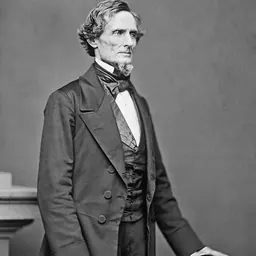
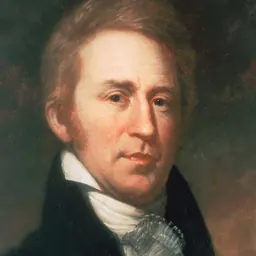
Early life James Clark was born on October 21, 1809, in Meadville, Pennsylvania. His father, William Clark, was a future congressman and the Treasurer of the United States. Both of Clark's parents were Protestant. with honors and ranked 34th, out of a class of 46 graduates. Among his classmates was Robert E. Lee, and he attended the academy at the same time as Jefferson Davis, who graduated in 1828. and was promoted to the rank of brevet second lieutenant. He resigned from the U.S. Army on August 18, 1830. Clark converted to Catholicism and was baptized in 1834, becoming the second known graduate of West Point to convert to Catholicism. Efn|The first known West Point graduate to convert to Catholicism was Abbott Hall Brisbane, who graduated in 1825. He eventually attained the rank of in the order, He was ordained a priest in 1847. He then returned to Georgetown University, where he held multiple positions. He initially became first prefect, He took office just several months after the start of the American Civil War. The college's enrollment had dropped significantly, numbering just 80 by the end of 1861. The percentage of students from the South and Mid-Atlantic decreased and by the end of the war, nearly all students were from New England. In addition to his duties as president, Clark taught mathematics, physics, and French at the college during the war. In 1865, the college applied to the Massachusetts General Court for a charter, which was granted, and Governor John Albion Andrew signed the bill chartering the College of the Holy Cross into law on March 24, 1865. Until then, Holy Cross conferred degrees under Georgetown University's charter. On April 24, 1865, Georgetown transferred ownership of the Holy Cross' land and buildings to the newly chartered college.
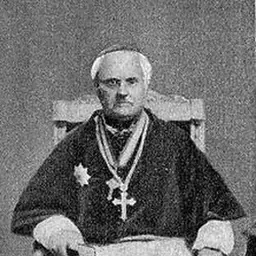
Some people criticized Clark for people being overly strict and granting the Jesuit scholastics too few liberties. Beginning in 1863, Jesuit scholastics began making formal complaints to the provincial superior, Angelo Paresce, about Clark's leadership. By 1866, complaints about Clark had become frequent, and the Jesuit Superior General, Peter Jan Beckx, informed Clark that he would be removed as president in the middle of the academic year. Clark was succeeded as president of the school by Robert W. Brady on February 27, 1867.
Clark returned to Georgetown University, where he again became the vice president and treasurer of the university, as well as a professor of mathematics. Charles H. Stonestreet served as the acting president between Wiget's leave of absence and eventual resignation and Clark's appointment as president. At the same time, Clark became the pastor of St. Aloysius Church. That year, a new Jesuit scholasticate, Woodstock College, opened, which resulted in the removal of many Jesuit teachers from various Jesuit colleges, including Gonzaga, to Woodstock. This required that Clark recruit lay teachers to fill the positions. Many parents of students at Gonzaga College were not pleased, desiring their sons to be taught by Jesuits. As a result, there was sharp decrease in the number of students enrolled in 1869, from several hundred to just 117.
At the 1871 graduation, Clark announced that Gonzaga College would move from F Street NW, between 9th and 10th Streets, to its present location on I Street adjacent to St. Aloysius Church. Many people affiliated with the school disagreed with the decision to relocate from the center of Washington to what was then its outskirts, where there were few buildings and people. The school's sodalities and dramatic and literary societies ceased to exist or were greatly diminished following the move. In 1874, Gonzaga College granted the last academic degrees it would ever confer.
The relocation of the school proved to be disastrous and nearly resulted in its closure. and the school had incurred substantial debt from relocating and from the construction of St. Aloysius Church. Clark resigned the presidency and was succeeded by Charles K. Jenkins on February 2, 1875.
Later years After leaving Gonzaga College, Clark returned to Georgetown University as a teacher and spiritual counselor. He spent the last six years of his life in the Georgetown University infirmary. He suffered a second stroke and died on the evening of September 9, 1885.
Don’t just read it —
keep it.
Full-length biographies made to live with: read them, listen on the way to work, watch them tonight.
- E-book
- Audio
- Video
Instant download · yours to keep · every purchase keeps this site free
Important facts
People in James Clark's life
Named in this biography and alive at the same time




Related people
Same field, nearest in time

Contemporaries
People whose lives overlapped James Clark's




Frequently asked questions
Who was James Clark?
American Jesuit educator
When was James Clark born?
James Clark was born on 21 October 1809 in Meadville.
When did James Clark die?
James Clark died on 9 September 1885 in Georgetown University main campus.
What was James Clark's occupation?
James Clark was a catholic priest, teacher and academic administrator.
What nationality was James Clark?
James Clark was American.
Sources & further reading
· DBpedia: James Clark (Jesuit)
Cite this page
APA: Biography.guide. (2026). James Clark. https://biography.guide/james-clark-catholic-priest/
MLA: "James Clark." Biography.guide, https://biography.guide/james-clark-catholic-priest/.
Chicago: "James Clark." Biography.guide. https://biography.guide/james-clark-catholic-priest/.
Data last updated: 2026-09-20 · Spot an error? Report a correction.
Page generated 2026-09-27 05:23 UTC