
About James Butler, Viscount Thurles
Lived 1916 – 1940 (aged 23). James Butler, Viscount Thurles was a military personnel.
James Anthony Butler, Viscount Thurles (18 August 1916 – 8 May 1940) was a British aristocrat, soldier, and journalist who was a member of the Butler dynasty from Ireland, and one of the last members of the family to live at Kilkenny Castle. Born the eldest child and only son of George Butler, Earl of Ossory and Sybil Butler, Countess of Ossory, he was the only male-line great-grandson of John Butler, 2nd Marquess of Ormonde; as the only male member of the family of his generation, his premature death in 1940 heralded the eventual extinction of the Marquessate of Ormonde. Through his mother he was a first-cousin once-removed of Sir Winston Churchill.
Early life Anthony Butler was born at the London home of his parents, No. 2 Gloucester Place, Marylebone on Friday 18 August 1916. His father, then known as Captain George Butler, was the eldest son of Lord Arthur Butler and the Chicago heiress Ellen, Lady Arthur Butler. His mother, then known as The Hon. Mrs George Butler, was the youngest child of William Fellowes, 2nd Baron de Ramsey and Lady Rosamond Spencer-Churchill (a daughter of John Spencer-Churchill, 7th Duke of Marlborough).
At the time of his birth he was third in line to inherit the ancestral titles and estates of the Marquessate of Ormonde after his grandfather and father. Anthony's great-uncle James Butler, 3rd Marquess of Ormonde had been married to Lady Elizabeth Grosvenor for 40 years; as their union had produced only two daughters, Anthony's grandfather was Lord Ormonde's heir presumptive at the time of his birth.
Surviving records at the National Library of Ireland show that in the months prior to Anthony's birth, Lord Ormonde had written to his father George to inform him that George's father, Lord Arthur Butler, had asked Lord Ormonde to postpone his own right to inherit the family estates in favour of George, George's as-yet unborn make descendants, and George's brother Lt. Arthur Butler, owing to the drastic increases in rates of death duties which had arisen during the First World War.
Anthony's grandfather was also a wealthy man in his own right owing to his marriage to an American heiress; Anthony's grandmother Ellen Stager had inherited approximately $300,000 from her father's estate in 1885, and her wealth had enabled her husband to purchase a long lease on a fashionable London townhouse at No. 7 Portman Square, as well as the freehold of a country estate Gennings Park in Kent.
Viscount Thurles Following the death of the Third Marquess of Ormonde in 1919, Anthony's father succeeded his older brother as Fourth Marquess of Ormonde, and Anthony's father George inherited a life interest in the Ormonde Settled Estates, which included Kilkenny Castle, Ballyknockane Lodge, Tipperary. Much of the family's landed estate in Ireland had been sold in 1903, and the estates, valued between £400,000 and £450,000, were subject to approximately £160,000 in death duties and taxes. Anthony's parents assumed the Ormonde courtesy titles of Earl and Countess of Ossory following the Third Marquess' death, and Anthony in turn was permitted to use the courtesy title Viscount Thurles.
The family took up residence in Ireland in 1920, although records from the 1921 Census indicate that Lord Thurles and his infant sister, Lady Moyra Butler resided with their grandparents in Kent at the time of the census. Lord Thurles was educated at Harrow, with holidays spent at his parents' residence Kilkenny Castle. He later enrolled at Loughborough College in 1934. His parents had installed a tennis court at Kilkenny Castle in the early 1920's, and in 1934 he competed in a tennis tournament at the Tramore Tennis Club in Ireland, where local newspapers praised his skill at the sport. In August 1931, he and his father sailed to Cherbourg and embarked on a tour of the European continent.
Adulthood In 1934 Thurles spent a year studying in the Automotive Department at Loughborough College, where he resided in the Rutherford Halls of Residence. In February 1935 he departed Loughborough and took a job at Dagenham Ford Works; he was known as "Mr Butler" and drove lorries and stoked furnaces for 30s a week in wages. He later reportedly took a post as a motor salesman in Mayfair in July 1935.
Journalist Thurles departed England for the Balkans during the Albanian Crisis in April 1939. He reportedly travelled by air to several "Europeans danger spots";
Personal life Thurles' brief life was interspersed with a number of driving accidents and encounters with the law.
He was fined 10 shillings in 1934 for riding a bicycle without a rear light at college in 1934. In June he received a further court summons and fine of £1 10s for failing to stop at the signal of a police constable, and 10s for riding a motorbike without an efficient silencer. His defence counsel referred to his client as a "wild young Irishman" to the Judge.
In October 1934 he had a close escape when a car he was driving overturned; he escaped the crash with only minor injuries to two fingers; however the vehicle's other passenger, A. J. Franklin, had to be extricated from the car wreckage.
On 1 August 1935 he was seriously injured in another car accident; at 2am a two-seater car he was driving collided with the rear of a stationary motor lorry. Thurles sustained severe head injuries and a concussion; the incident caused a minor scandal due to the fact that his passenger, Miss Elizabeth May Evatt on Fern House, Rayleigh, Essex, was an unmarried young woman, who sustained a fracture to her left leg, further injuries to her right leg, facial injuries and shock as a result of the crash.
Thurles' injuries from the incident resulted in a permanent loss the sight in one eye. He briefly returned to Kilkenny to recuperate from his accident in late August 1935. Lord Thurles' uncle Lord Arthur Butler later formed the opinion that the crash and Thurles' resulting injuries caused a permanent impact on his personality and general health, and likely contributed to his sudden deterioration and death in 1940.
Lord Thurles had returned to London by August 1936, where he was seen dancing at the Savoy Hotel. In a letter to the editor published in the Coventry Evening Telegraph on 22 April 1937, Thurles criticised what he described as the "one-way Empire Free Trading System" which resulted from Dominion countries such as Australia placing tariffs on imported goods from the United Kingdom, despite the fact the government of the United Kingdom placed no reciprocal tariffs on goods imported from the Empire's Dominions. The article noted that Thurles' address was 15 Basil Street, London SW3 in Knightsbridge.
Thurles was socially active amongst Britain's upper classes, attending the Nottingham Women's Hospital Ball as part of Lady May Abel Smith's party in November 1934. In June 1938 Thurles' grandparents Lord and Lady Ormonde loaned their large London townhouse at 11 Bryanston Square to his parents for large ball; the event doubled as celebration of Thurles' coming-of-age (he had attained the age of 21 in August of the prior year) as well as a debutante 'coming out' ball for Lord Thurles' sister Lady Moyra Butler. The guest list reported in newspapers at the time included a significant number of prominent individuals from British and American High Society during the late 1930s, including American Ambassador Joseph Kennedy, Kathleen Kennedy, the-then Mistress of the Robes the Duchess of Northumberland, Lord Carisbrooke, Lady Iris Mountbatten, Clarissa Churchill, the Earl Spencer and The Hon. Pamela Digby.
In October 1939 Thurles successfully defended a summons for assault in the Westminster Police Court. He was alleged to have entered a wine store on 30 September with a friend, ordered a bottle of whisky, and proceeded to tender a cheque from someone the shop's proprietor did not know as payment. He proceeded to use "bad language" when the cheque was refused, and he was asked to leave the store; the shopkeeper proceeded to call the police when Thurles and his companion refused to depart. The shopkeeper alleged that Thurles tripped him, which caused him to fall and stumble into Thurles, who, by his own admission, proceeded to punch the shopkeeper in the neck.
Inheritance Under the terms of the Will of his uncle James Butler, 3rd Marquess of Ormonde, Thurles stood to inherit a life interest in the Ormonde Settled Estates Trust upon the death of his father. During his youth, the finances of the Ormonde Estates continued to steadily decline; whilst Estate income had exceeded £20,000 in the 1890s, this had fallen to approximately £9,000 in 1930. A number of family charges also drained the falling income of the estate; between 1919 and 1927, this averaged between £2,500 and £4,500. The cost of maintaining Kilkenny Castle placed a further strain on finances; in 1904 this amount was some £4,400, but this had fallen to £2,166 in the 1920s, and approximately £1,200 in the early 1930s. In 1935 Thurles' parents announced that they would vacate Kilkenny Castle, and instead split their time between London and the family's former shooting lodge in Ireland, Ballyknockane Lodge, Tipperary. Many of the contents of the castle were sold in 1935 and the building underwent a period of neglect.
In contrast to the diminishing Ormonde inheritance which Thurles stood to inherit from his father, his American grandmother Ellen, Marchioness of Ormonde had grown even wealthier in the early 1920's following the deaths of her two older sisters, both of whom died childless and widowed. Thurles' great-aunt Annie Stager Hickox left an estate of $847,000 in 1922 ($16,287,000 in 2025 when adjusted for inflation) from which Ellen received approximately $650,000 (£130,000) after the payment of taxes, administration costs and specific bequests. By the 1930's Ellen's fortune (held in Trust in Ohio by the Cleveland Trust Company) produced an income in excess of £12,000 ($60,000) annually.
The anticipation of his eventual inheritance may have rendered Thurles as a poor manager of his own finances; in the late 1930's his father had to arrange for £1,500 to be withdrawn from the Ormonde Settled Estates Trust to pay off debts Thurles had incurred. Thurles was required to surrender a $1,200 savings account he held in Cleveland, Ohio as part of the arrangement.
Second World War and Death At the outbreak of war he was commissioned with the Hussars, but subsequently invalidated out. He eventually obtained a role as a Driver in the A.T.S with the rank of Private, and later took convalescence leave. His poor health was attributed to the ongoing effects of injuries he sustained in the car accident of August 1935. but was reported to also have arrived at Ryde on the Isle of Wight in mid-to-late April 1940 for a period of convalescence.
He briefly returned to London to perform the role of Usher at the wedding of his sister Lady Moyra Butler to Capt Charles Weld-Forester in London on 1 May 1940. His health began to deteriorate sharply on 3 May, and he was removed to the Vectis Nursing Home in Ryde on 6 May. His sister and brother-in-law were reportedly at his bedside when he died on 9 May, but his parents, who had returned to Ireland after his sister's wedding, were unable to reach Ryde before his passing. His remains were cremated in Southampton on Friday 10 May 1940, and interred at the family grave at Kilkenny Castle.
His estate was probated on 24 March 1942; the gross value of his estate in England was £145, but the net value amounted to £0. As a result of Thurles' death, his uncle Lt. Col. Lord Arthur Butler succeeded as Sixth Marquess of Ormonde when Thurles' father George Butler, 5th Marquess of Ormonde died in 1949. Thurles sister Lady Moyra also died at the comparatively young age of 38 in 1959, as did her two sons; Piers Weld-Forester at the age of 31 in 1977, and Comte Gerard van den Steen de Jehay at the age of 36 in 1985.
Don’t just read it —
keep it.
Full-length biographies made to live with: read them, listen on the way to work, watch them tonight.
- E-book
- Audio
- Video
Instant download · yours to keep · every purchase keeps this site free
Important facts
People in James Butler, Viscount Thurles's life
Named in this biography and alive at the same time





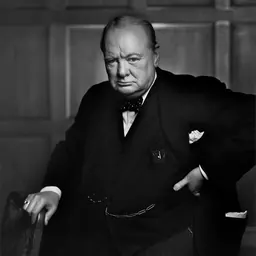
Related people
Same field, nearest in time


Contemporaries
People whose lives overlapped James Butler, Viscount Thurles's



Frequently asked questions
Who was James Butler, Viscount Thurles?
(1916-1940)
When was James Butler, Viscount Thurles born?
James Butler, Viscount Thurles was born on 18 August 1916.
When did James Butler, Viscount Thurles die?
James Butler, Viscount Thurles died on 8 May 1940.
What was James Butler, Viscount Thurles's occupation?
James Butler, Viscount Thurles was a military personnel.
Sources & further reading
· Wikipedia: James Butler, Viscount Thurles
· DBpedia: Anthony Butler, Viscount Thurles
Cite this page
APA: Biography.guide. (2026). James Butler, Viscount Thurles. https://biography.guide/james-butler-viscount-thurles/
MLA: "James Butler, Viscount Thurles." Biography.guide, https://biography.guide/james-butler-viscount-thurles/.
Chicago: "James Butler, Viscount Thurles." Biography.guide. https://biography.guide/james-butler-viscount-thurles/.
Data last updated: 2026-09-20 · Spot an error? Report a correction.
Page generated 2026-09-27 05:03 UTC