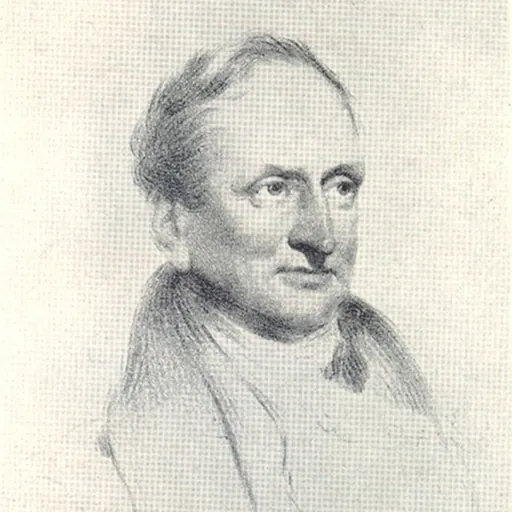
About James Burton
Lived 1761 – 1837 (aged 75). James Burton was a British businessperson, real estate developer, architect, property developer and waltham Abbey Royal Gunpowder Mills.
Lieutenant-Colonel James Burton (previously James Haliburton) (29 July 1761 – 31 March 1837) was an English property developer. The Oxford Dictionary of National Biography identifies him as the most successful property-developer of Regency and of Georgian London, in which he built over 3000 properties in 250 acres. He spent over £400,000 (about £30 million in 21st century money), between 1792 and 1802, on the Foundling Hospital Estate alone.
Burton built most of Bloomsbury (including Bedford Place, Russell Square, Bloomsbury Square, Tavistock Square, and Cartwright Gardens), and St John's Wood, Regent Street, Regent Street St. James, Waterloo Place, St. James's, Swallow Street, Regent's Park (including its Inner Circle villas in addition to Chester Terrace, Cornwall Terrace, Clarence Terrace, and York Terrace). He financed, and his company built, the projects of John Nash at Regent's Park (most of which were designed by his son Decimus Burton) to the extent that the Commissioners of Woods and Forests described him, not John Nash, as 'the architect of Regent's Park'. Burton also developed the town of St Leonards-on-Sea which is now part of Hastings.
Burton and his sons were members of London high society during the Georgian era and during the Regency era. He was an early member of the Athenaeum Club, London, whose Clubhouse his company built to a design by his son Decimus Burton, who became the club's "prime member". Burton was a friend of Princess Victoria (the future Queen Victoria), and of the Duchess of Kent. He was Master of the Worshipful Company of Tylers and Bricklayers, and Sheriff of Kent.
In addition to the famous architect Decimus Burton, James Burton Senior's sons included the pioneering Egyptologist and libertine James Burton Junior, and the physician Henry Burton who discovered the Burton line. He was the grandfather of Constance Mary Fearon, who was the founder of the Francis Bacon Society.
The Burtons' London mansion The Holme (which was designed by his son Decimus Burton) was described by architecture critic Ian Nairn as 'a definition of Western civilization in a single view'. James Burton also built the Burtons' Tonbridge mansion, Mabledon.
The Burtons' mansion, The Holme of Regent's Park, which was designed by Burton's son Decimus Burton, has been described as 'one of the most desirable private homes in London' by the architectural scholar Guy Williams.
Family James Burton was born in Strand, London, as James Haliburton, on 29 July 1761. who descended from John Haliburton (1573 – 1627) from whom Sir Walter Scott, 1st Baronet was descended on the maternal side. and thereby of the Canada First founder Robert Grant Haliburton and the civil servant Arthur Lawrence Haliburton, 1st Baron Haliburton,
Burton's mother was Mary Foster (who was previously Mary Johnson; 1735–1785), whom his father married in 1760, who was the daughter of Nicholas Foster of Kirkby Fleetham, Yorkshire. William Haliburton and Mary Foster had two sons, James and another who died in infancy.
James (b. 1761) was christened with the name 'James Haliburton' at Presbyterian Chapel, Soho, London. until 1782, when he commenced with speculative construction projects, between 1792 and 1802. (on which he built 600 houses); Bloomsbury Square (where the remaining north side are Burton's original houses); Bedford Place; and Burton Street and Burton Crescent (which were named after him). Five of the largest blocks of Regent Street were purchased by Burton in 1817. Cornwall Terrace (1821); and Chester Terrace (1825). and the architectural critic Ian Nairn described it as 'a definition of western civilization in a single view'. St Leonards-on-Sea (1827 - 1837).
The architectural scholar Guy Williams contends, "He [Burton] was no ordinary builder. He could have put up an imposing and beautifully proportioned building, correct in every constructional detail, from the roughest of sketches tossed patronizingly at him by a "gentleman architect"". Burton worked as an 'Architect and Builder' in Southwark between 1785 and 1792.
By 1787, Burton was lauded in Southwark: in 1786 he had built the Blackfriars Rotunda in Great Surrey Street (now Blackfriars Road) to house the Leverian Museum, this building subsequently housed the Southwark Institution. Samuel Pepys Cockerell, advisor to the Governors of the Foundling Hospital, commended Burton's excellence:
"Without such a man [James Burton], possessed of very considerable talents, unwearied industry, and a capital of his own, the extraordinary success of the improvement of the Foundling Estate could not have taken place... By his own peculiar resources of mind, he has succeeded in disposing of his buildings and rents, under all disadvantages of war, and of an unjust clamour which has repeatedly been raised against him. Mr. Burton was ready to come forward with money and personal assistance to relieve and help forward those builders who were unable to proceed in their contracts; and in some instances he has been obliged to resume the undertaking and complete himself what has been weakly and imperfectly proceeded with...".
The contemporary Oxford Dictionary of National Biography contends that 'there is certainly no doubt about his energy and financial acumen'. He then left London for a project in Tunbridge Wells but returned in 1807 to build over the Skinners Company land between the Bedford Estate and the lands owned by the Foundling Hospital, where he built Burton Crescent (which was later renamed Cartwright Gardens), Burton Street, These developments included, for himself, the Tavistock House, on land that is now occupied by the British Medical Association, where he lived until he moved to The Holme in Regent's Park, which was designed for him by his son Decimus Burton.
Burton constructed some houses at Tunbridge Wells between 1805 and 1807. Burton developed Waterloo Place, St. James's, between 1815 and 1816. Whilst working for his father, Decimus was present in the design and construction of Regent Street St. James (Lower Regent Street). where Burton worked as an 'Architect and Builder' and developed a positive reputation for prescient speculative building between 1785 and 1792. To resolve his financial shortage, Nash cultivated the acquaintance of Burton, and Burton consented to patronize him.
James Burton was responsible for the social and financial patronage of the majority of Nash's London designs, Architectural scholar Guy Williams has written, 'John Nash relied on James Burton for moral and financial support in his great enterprises. Decimus had showed precocious talent as a draughtsman and as an exponent of the classical style... John Nash needed the son's aid, as well as the father's'. Decimus ignored Nash's advice to develop the Terraces in his own style, to the extent that Nash unsuccessfullt sought the demolition and rebuilding of Chester Terrace.
James Burton's historically underestimated imperative contribution to the West End of London has been acknowledged since the 20th century: including by Baines, John Summerson, Olsen, and Dana Arnold. Steen Eiler Rasmussen, in London: The Unique City, commended Burton's buildings but did not identify their architect. and later as the Tunbridge Gunpowder Works) were established in 1811 in partnership with Sir Humphry Davy, who later sold his shares to the Burtons, who thereby became the sole owners of the Works. After the retirement of James Burton in 1824, William Ford became the sole owner of the mills until his death in 1856, Decimus Burton advised against this prospective project of his father, which limited his supply of capital for his own development of the Calverley Estate, The Burtons lived at Mabledon from 1805 to 1817.
The Burton family had residences and offices at 10, 12, and 14 Spring Gardens, St. James's Park, at the east end of The Mall, that were constructed by Decimus. who has been described as the 'prime member of the Athenaeum' by architectural scholar Guy Williams who there 'mixed with many of the greatest in the land, meeting the most creative as well as those with enormous hereditary wealth'. During 1820, Burton, his wife, and his children dined and attended the opera with George Bellas Greenough to finalise Greenhough and Decimus's designs.
Elizabeth Burton died at St Leonards-on-Sea on 14 January 1837. James is buried in a pyramidal tomb in the churchyard of St Leonards-on-Sea, the town that he had designed and created, where a commemorative monument was erected. (which were initially known as the Ramhurst Powder Mills, sons by Mary Moore (b. 1784): the architect Captain Henry Marley Burton FRIBA (1821 - 1880) (who was the father of the architect Edgar Burton); and William Warwick Burton (d. 21 October 1861), of Lincoln's Inn Fields, who was articled as a solicitor to Septimus Burton (1794 - 1842). Emma Elizabeth (1785 - 1785). Died from smallpox. Pioneering British Egyptologist. (1786 - 1867) in 1817) (1801 - 1840) Their son Arthur (1830-1867), in 1860 married Lilian Margaret Robertson. (1789-1869), Burton's granddaughter, Constance Mary Fearon, was the founder of the Francis Bacon Society. Alfred and to which his brother Decimus and nephew Henry Marley Burton made architectural additions. Alfred married Anna Delicia Adams (1811 - 1897) in 1843, who was the sister of Major-General Henry William Adams CB, and of Major-General Frank Adams CB. They had one son, Alfred Henry (1845–1917), JP DL, of St. Leonard's Lodge, St. Leonard's-on-Sea, and 18 Manson Place, Queen's Gate, who was High Sheriff of Sussex in 1902, and one daughter, Louisa Charlotte (1849–1873), by whom he had four sons. Their son Robert Cecil Burton (1882 - 1915), who was educated at Winchester College and Oriel College, Oxford, and was a Captain of the 2nd Battalion of the Rifle Brigade, and was a Major of the Coldstream Guards, with which he served in Egypt and in France and Belgium. He was killed in action on 20 July 1917, and lived at Kensington and 5 Cheyne Place, Chelsea, was a Captain of the British Army who died on active service on 29 January 1942. Alfred (1802 - 1877) left an estate that was worth less than £12,000 (about £1 million in 21st century money). and of Great George Street, Westminster, Jessy/Jessie Burton and John Peter Fearon were married by the groom's brother The Ven. Henry Fearon Jessy/Jessie and John Peter Fearon had three daughters: Jessy/Jessie Tyndale (1834–1910); and Ethel Anna (1839–1901) (1837–1914) Constance Mary Fearon, or Mrs Henry Pott, was also the mother of the artist Constance Mary Pott (1862 - 1957).
Don’t just read it —
keep it.
Full-length biographies made to live with: read them, listen on the way to work, watch them tonight.
- E-book
- Audio
- Video
Instant download · yours to keep · every purchase keeps this site free
Important facts
Family & relationships
People in James Burton's life
Named in this biography and alive at the same time


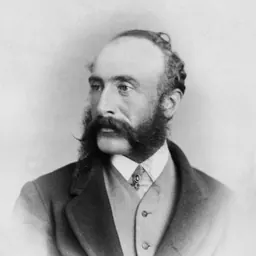
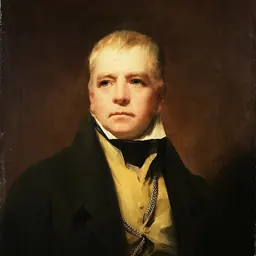
Related people
Same field, nearest in time


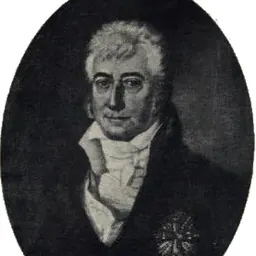


Contemporaries
People whose lives overlapped James Burton's




Frequently asked questions
Who was James Burton?
British businessman
When was James Burton born?
James Burton was born on 29 July 1761 in London.
When did James Burton die?
James Burton died on 31 March 1837 in St Leonards.
What was James Burton's occupation?
James Burton was a businessperson, real estate developer, architect, property developer and waltham Abbey Royal Gunpowder Mills.
What nationality was James Burton?
James Burton was British.
Sources & further reading
· DBpedia: James Burton (property developer)
Cite this page
APA: Biography.guide. (2026). James Burton. https://biography.guide/james-burton-businessperson/
MLA: "James Burton." Biography.guide, https://biography.guide/james-burton-businessperson/.
Chicago: "James Burton." Biography.guide. https://biography.guide/james-burton-businessperson/.
Data last updated: 2026-09-22 · Spot an error? Report a correction.
Portrait: Wikimedia Commons · author & licence
Page generated 2026-09-27 04:57 UTC