
About James Burgh
Lived 1714 – 1775 (aged 60–61). James Burgh was a British politician.
James Burgh (1714–1775) was a British Whig politician whose book Political Disquisitions set out an early case for free speech and universal suffrage: in it, he writes, "All lawful authority, legislative, and executive, originates from the people." He has been judged "one of England's foremost propagandists for radical reform".
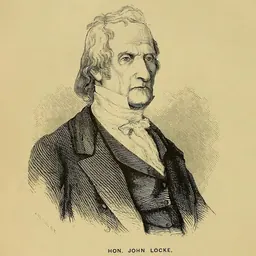
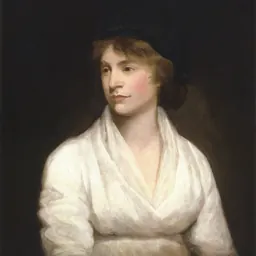
Burgh also ran a dissenting academy and wrote on subjects such as educational reform. Lyndall Gordon said that his widow acted as "fairy godmother" to early feminist Mary Wollstonecraft, then a young and unpublished schoolmistress, helping her to set up her own boarding school. Wollstonecraft entitled her first book Thoughts on the Education of Daughters (1787), alluding to Burgh's Thoughts on Education (1747) which in turn alludes to John Locke's 1693 work, Some Thoughts Concerning Education.
Life and works
Burgh was born and raised in Madderty, Scotland. His father was a minister of the parish in the Church of Scotland. Burgh was raised a Presbyterian, which strongly contributed to his fight for moral issues. He attended St. Andrews University with the intention of studying for the ministry. An illness prevented him from completing his degree and he entered the linen trade. Failure at that sent him to England in the early 1740s. For a short time he was a printer's helper and then in 1746 he became an assistant master (teacher) in an academy just north of London. The next year, he became master (principal) of his own academy in Stoke Newington. In 1750, he moved his school to nearby Newington Green, and ran it there for 19 years.
In 1754 Burgh's The Dignity of Human Nature was published. In 1761 Burgh wrote The Art of Speaking, an educational book focusing on oratory. In 1766 he wrote the first volume of Crito, a collection of essays on religious toleration, contemporary politics, and educational theories. The second volume followed a year later.
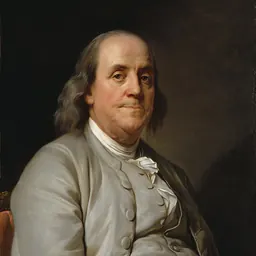
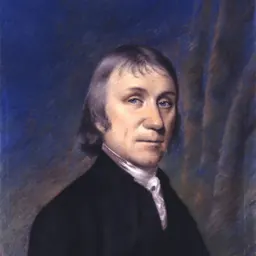
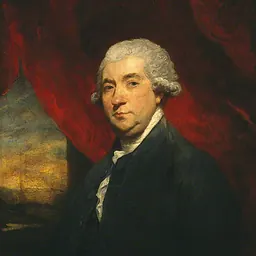
Burgh became involved in the early 1760s with a group called the Honest Whigs, a club that met on alternate Thursday evenings in a coffeehouse, then an important social and political meeting place. Other members of the group included Richard Price, Joseph Priestley, Benjamin Franklin, James Boswell and others. In 1774, Burgh wrote his most popular work, Political Disquisitions. The three-volume work was intended by Burgh to be longer, but his deteriorating health caused him to stop after the third volume. Burgh died a year later on 26 August 1775.
Don’t just read it —
keep it.
Full-length biographies made to live with: read them, listen on the way to work, watch them tonight.
- E-book
- Audio
- Video
Instant download · yours to keep · every purchase keeps this site free
Important facts
People in James Burgh's life
Named in this biography and alive at the same time

Related people
Same field, nearest in time




Contemporaries
People whose lives overlapped James Burgh's




Frequently asked questions
Who was James Burgh?
British politician (1714-1775)
When was James Burgh born?
James Burgh was born in 1714.
When did James Burgh die?
James Burgh died in 1775.
What was James Burgh's occupation?
James Burgh was a politician.
What nationality was James Burgh?
James Burgh was British.
Sources & further reading
Cite this page
APA: Biography.guide. (2026). James Burgh. https://biography.guide/james-burgh/
MLA: "James Burgh." Biography.guide, https://biography.guide/james-burgh/.
Chicago: "James Burgh." Biography.guide. https://biography.guide/james-burgh/.
Data last updated: 2026-09-20 · Spot an error? Report a correction.
Page generated 2026-09-27 05:01 UTC