
About James Brown Clay
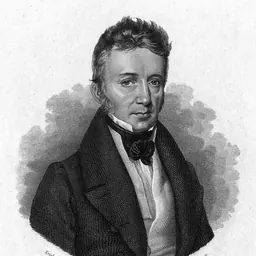
Lived 1817 – 1864 (aged 46). James Brown Clay was an American politician, lawyer, diplomat and judge.
James Brown Clay (November 9, 1817 – January 26, 1864) was an American politician and diplomat who served as a member of the United States House of Representatives for Kentucky's 8th congressional district from 1857 to 1859.
Early life and education Born in Washington, D.C., while his father, Henry Clay, was serving in the United States Congress, James Brown Clay was named for the husband of his maternal aunt, James Brown. His brothers were Henry Clay, Jr. and John Morrison Clay. Clay attended a boys' school associated with Kenyon College, Gambier, Ohio (founded by family friend Bishop Philander Chase). Later, Clay attended Transylvania University in Lexington, Kentucky.
Career He worked at a countinghouse in Boston from 1832 to 1834 before studying law and being admitted to the bar. He practiced law with his father in Lexington, Kentucky.
Clay served as chargé d'affaires to Portugal from August 1, 1849, to July 19, 1850. He farmed in Missouri in 1851 and 1852 before returning to Lexington. Clay had been a lifelong member of the Whig Party. But when the Whig Party disintegrated following Henry Clay's death, and due to the controversy surrounding the Kansas–Nebraska Act, Clay joined the Democratic Party. He was elected to the Thirty-fifth Congress (March 4, 1857 – March 3, 1859). Clay did not run for renomination in 1858 and declined an appointment by President James Buchanan to a mission to Germany. His father having died, Clay returned to Lexington and farmed using enslaved labor; his household also included three male boarders. In the 1860 census he owned a dozen slaves in Fayette County (surrounding Lexington).
Clay was a member of the Peace Conference of 1861 held in Washington, D.C., an attempt to prevent the impending American Civil War. During the Civil War Clay supported the Confederacy and was commissioned to raise a regiment. Ill-health from tuberculosis prevented Clay from doing so.
Personal life In 1843, Clay married Susan Maria Jacob, the daughter of Louisville's first millionaire, John J. Jacob, and sister of its later mayor, Charles Donald Jacob. The couple eventually had ten children.
Death and legacy Clay died in Montreal, Quebec, Canada, where he had gone for his health. He is interred at his family plot in Lexington Cemetery.
Don’t just read it —
keep it.
Full-length biographies made to live with: read them, listen on the way to work, watch them tonight.
- E-book
- Audio
- Video
Instant download · yours to keep · every purchase keeps this site free
Important facts
People in James Brown Clay's life
Named in this biography and alive at the same time




Related people
Same field, nearest in time


Contemporaries
People whose lives overlapped James Brown Clay's




Frequently asked questions
Who was James Brown Clay?
American politician (1817-1864)
When was James Brown Clay born?
James Brown Clay was born on 9 November 1817 in Washington, D.C..
When did James Brown Clay die?
James Brown Clay died on 26 January 1864 in Montreal.
What was James Brown Clay's occupation?
James Brown Clay was a politician, lawyer, diplomat and judge.
What nationality was James Brown Clay?
James Brown Clay was American.
Sources & further reading
Cite this page
APA: Biography.guide. (2026). James Brown Clay. https://biography.guide/james-brown-clay/
MLA: "James Brown Clay." Biography.guide, https://biography.guide/james-brown-clay/.
Chicago: "James Brown Clay." Biography.guide. https://biography.guide/james-brown-clay/.
Data last updated: 2026-09-20 · Spot an error? Report a correction.
Page generated 2026-09-27 05:23 UTC