
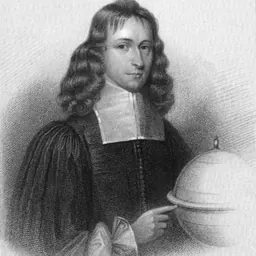
James Bertie, 1st Earl of Abingdon
English nobleman
About James Bertie, 1st Earl of Abingdon
Lived 1653 – 1699 (aged 45). James Bertie, 1st Earl of Abingdon was an English.
James Bertie, 1st Earl of Abingdon (16 June 1653 – 22 May 1699), styled Hon. James Bertie until 1657 and known as the 5th Baron Norreys from 1657 until 1682, was an English nobleman.
Early life and relations Bertie was the eldest son of Montagu Bertie, 2nd Earl of Lindsey, by his second wife, Bridget Bertie (née Wray), 4th Baroness Norreys. His father, who had five sons by his previous marriage, was a royalist of impeccable credentials, and the head of an influential Lincolnshire family. While James' position as a sixth son might have limited his prospects, he was his mother's eldest son, and upon her death in c.1657, he became the 5th Baron Norreys of Rycote. Together with the peerage, he inherited from his mother considerable estates, including the manors of Rycote, Albury, Wendlebury, Chesterton, Dorchester, Thame, Beckley and Horton in Oxfordshire, and Wytham, Cumnor and Frilsham, all then in Berkshire. These extensive estates would provide him with a base of political power in Oxfordshire. The Danvers estates were left in trust for Eleanor and her sister Anne, who married Thomas Wharton in 1673; Eleanor's aunt Elizabeth, wife of Robert Villiers, later Danvers, was also a beneficiary, but the trustees bought out her share in the year of Anne's marriage. Litigation arose between Norreys, Wharton, and their wives over the trust, Marden, and Patney, Wiltshire. They also received Anne's share in the manor of Westbury, Wiltshire and bought her aunt Elizabeth's share, the whole manor being settled on them in 1689. The manor of Bradenstoke was divided between Anne and her aunt Elizabeth until 1683, when Abingdon bought out Elizabeth's interest.
Norreys and his wife had six sons and three daughters: Montagu Venables-Bertie, 2nd Earl of Abingdon (1673–1743) Hon. James Bertie (1674–1735) Hon. Henry Bertie (1675–1735) Hon. Robert Bertie (28 February 1676 – 6 August 1710) Capt. Hon. Peregrine Bertie (2 February 1677 – 1709), commanded HMS Ruby, died a prisoner of war in France Rev. Hon. Charles Bertie (1678–1747) Lady Bridget Bertie (before 1683 – 13 June 1753), married Richard Bulkeley, 4th Viscount Bulkeley Lady Anne Bertie (died 1734), married Sir William Courtenay, 2nd Baronet Lady Mary Bertie (died 31 October 1718), unmarried.
Upon the death of Lord Saye and Sele in 1674, Norreys replaced him as Lord Lieutenant of Oxfordshire. He first took his seat in the House of Lords on 13 April 1675. As befitted his royalist descent and connection with Osborne, now Earl of Danby and Lord High Treasurer, Norreys belonged to the court party, later the Tories. It was Danby who composed a quarrel between Norreys and Lord Rochester in September 1678 and averted a duel. The King dissolved the Cavalier Parliament, and new elections were held in February 1678/9. Norreys campaigned in Oxford and Oxfordshire for the court candidates to the new Parliament, but without success: he was shouted out of the streets of Oxford by a mob.
Norreys by now had a much more important commission in hand from the court. As the Tory reaction gained strength, the court now proceeded, on rather specious grounds, against some of the Whigs for conspiring to depose the King. Jurisdiction over Edward Fitzharris at law had been debated between Commons and Lords in the late Parliament; the dissolution of Parliament cleared the way for his condemnation in the Court of King's Bench, and proceedings were then set afoot against Stephen College, a virulent anti-Catholic activist. The grand jury of Middlesex, which was Whiggish, failed to indict College; he was then brought before the Oxfordshire assizes for alleged misdeeds there. College had been a prominent figure at the assembly of the Oxford Parliament, riding into town armed and armoured to protect Protestantism, he claimed, from a Catholic rebellion. This can hardly have endeared him to Norreys, charged with keeping the peace in Oxford for the duration of the Parliament, and it was understood that he would engineer a successful indictment of College. Such was indeed the case: College was charged with sedition before a grand jury whose foreman was Norreys' younger brother Henry and committed to trial. Norreys presided over the trial, held on 17 and 18 August 1681. College and his counsel, Aaron Smith, put up as good a defence as could be expected, and much of the evidence against him was circumstantial; but he could hardly hope to escape, and was promptly condemned to death.
Break with James II
As James II adopted increasingly forceful pro-Catholic policies, many Tories found themselves forced to choose between support for the Court and support for the Established Church. Abingdon sided with the Church: in particular, he took the side of the fellows of Magdalen College in their quarrel with the King, which began in the spring of 1687. His division from the Court signaled his rapprochement with the borough of Oxford: on 16 September 1687, he was unanimously elected high steward of Oxford by the corporation, In October 1687, James II issued the "Three Questions" to his lord lieutenants, intended to identify supporters of his programme to remove the legal disabilities against Catholics. The lord lieutenants were to address these questions to members of the commission of the peace in their respective counties and remove those hostile to Catholic tolerance. Abingdon, in a candid exchange with the King, refused to take part in this program. He further offended his master by his continued support for the fellows of Magdalen. When they were ejected on 16 November by the Ecclesiastical Commission, he offered them his hospitality at Rycote. This act of defiance was not to be borne, and Abingdon was dismissed from the lord-lieutenancy and replaced by his wife's first cousin, the Earl of Lichfield.
As James' program for generating a compliant government escalated, the borough of Oxford was "regulated", and the corporation dissolved in June 1688 by Order in Council. A new charter was issued in September, With the Glorious Revolution imminent, James reversed course in October and annulled the charters of 1684 and 1688. Abingdon was unanimously re-elected high steward, In November 1688, Abingdon defected to join William, leading 50 horsemen out of Oxford to William's headquarters in Exeter, the first of the peers to openly take up arms on his behalf. but was returned for Oxfordshire after a bruising campaign which included accusations of Jacobitism levelled against Abingdon, which so dispirited him he considered resigning the lord-lieutenancy, much to the dismay of Clarendon.
In 1693, on the death of his political rival Lord Lovelace, Carmarthen obtained for Abingdon the post of Justice in Eyre south of the River Trent. The patronage of the post included a secretaryship to the justice, which he gave to his half-brother Charles.
Abingdon's health, never good, continued to plague him throughout the decade, and Charles reported in January 1694 that Abingdon suffered badly from shortness of breath. Carmarthen was made Duke of Leeds that year, but a Whig attack on him for accepting bribes drove him from office in 1695. Abingdon was increasingly at odds with the Whig-dominated government; to this was added the old quarrel over the Danvers estates with his wife's brother-in-law, Lord Wharton, one of the members of the Junto. His refusal to sign the Association in 1696 gave grounds to dismiss him from his offices as Justice and Lord Lieutenant the following year. now renamed Isla Pinta by Ecuador.
Don’t just read it —
keep it.
Full-length biographies made to live with: read them, listen on the way to work, watch them tonight.
- E-book
- Audio
- Video
Instant download · yours to keep · every purchase keeps this site free
Important facts
Family & relationships
People in James Bertie, 1st Earl of Abingdon's life
Named in this biography and alive at the same time







Contemporaries
People whose lives overlapped James Bertie, 1st Earl of Abingdon's



Frequently asked questions
Who was James Bertie, 1st Earl of Abingdon?
English nobleman (1653-1699)
When was James Bertie, 1st Earl of Abingdon born?
James Bertie, 1st Earl of Abingdon was born on 16 June 1653 in Grimsthorpe Castle.
When did James Bertie, 1st Earl of Abingdon die?
James Bertie, 1st Earl of Abingdon died on 22 May 1699 in City and Liberty of Westminster.
What nationality was James Bertie, 1st Earl of Abingdon?
James Bertie, 1st Earl of Abingdon was English.
Sources & further reading
· Wikipedia: James Bertie, 1st Earl of Abingdon
· DBpedia: James Bertie, 1st Earl of Abingdon
Cite this page
APA: Biography.guide. (2026). James Bertie, 1st Earl of Abingdon. https://biography.guide/james-bertie-1st-earl-of-abingdon/
MLA: "James Bertie, 1st Earl of Abingdon." Biography.guide, https://biography.guide/james-bertie-1st-earl-of-abingdon/.
Chicago: "James Bertie, 1st Earl of Abingdon." Biography.guide. https://biography.guide/james-bertie-1st-earl-of-abingdon/.
Data last updated: 2026-09-26 · Spot an error? Report a correction.
Page generated 2026-09-27 05:14 UTC