
About James Bardsley
Lived 1805 – 1886 (aged 80–81). James Bardsley was a British anglican priest.
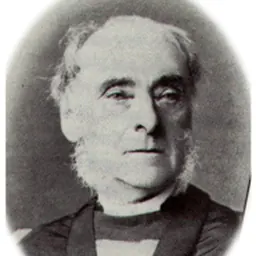
James Bardsley (1805–1886) was an English cleric of evangelical views.
Early life He was an older brother of Joseph Bardsley (1825–1896), who became Archdeacon of Craven. As a boy, he worked in Waterhead Mills, Oldham, Lancashire.
After tuition by the Rev. Thomas Rogers at Wakefield Grammar School, In the politics of reform, he was a supporter of the 1832 Bill. He was also an associate of George Stringer Bull. Under Bull's influence, he took part in the Ten Hours Bill agitation and factory movement, with Richard Oastler. Patrick Brontë hoped in 1833 to have him as curate assisting at Haworth, but the Archbishop's permission was refused. Records show another candidate, John Butterfield, ordained deacon at the same time, who nominally was to be the assistant. Green conjectures, in any case, that the issue for Harcourt may have been financial: whether Brontë could fund the post. Brontë had a curate from the end of 1835. Bardsley became a family friend, regularly bringing his wife Sarah to Haworth Parsonage for tea on Saturday afternoons.
Bardsley instead became a curate in Keighley. He was living at Bank Place in 1834, in which year he was ordained priest by the Archbishop. The rector of Keighley, from 1825 to 1840, was Theodore Dury (1788–1850). Dury and Bardsley came to Haworth to address a temperance meeting in 1834, at Brontë's invitation. In 1835 Bardsley spoke at the Temperance Festival in Wilsden.
Later in the 1830s Bardsley became curate at Bierley Chapel, then just outside Bradford. There he was from 1837 assistant to George Stringer Bull, and had the whole chapel salary; Bull may have relied on support from John Wood. Caught up in a ramifying dispute involving William Scoresby, the vicar of Bradford, Bardsley resigned.
Burnley and Manchester In the 1840s Bardsley was a curate for nine years in Burnley, where he had moved around 1840. The incumbent of Burnley, then a chapelry, was a perpetual curate, Robert Mosley Master. In 1841 Bardsley was one of the group of northern clerics agitating for factory reform, that included John Compton Boddington at Horton cum Bradford, William Morgan (1782–1858) in Bradford, and William Margetson Heald the younger at Birstall.
Bardsley was appointed to serve at St Philip’s Church, located on Bradford Road, Manchester, in 1849. This was a new church, two or three years old, by Edwin Hugh Shellard, in a densely populated area. He joined Hugh Stowell and Henry Walter McGrath in the Manchester area anti-Catholic campaigns of the 1850s.
St Ann's Church, Manchester In 1857, Bardsley was appointed rector of St Ann's Church, Manchester. In 1861, he spoke to the Church Pastoral Aid Society and said "The Voluntary system is the life's blood of the Church of England." That year, an address of William McKerrow of the Presbyterian Church of England, on behalf of the Liberation Society, drew from him a rebuttal for the Manchester Church Defence Association. McKerrow supported voluntaryism, as a principle of education of religion; while Bardsley emphasised voluntary contributions to support evangelical causes they both valued, as common endeavour. In 1868 he lectured in his church on the "present crisis", wrote an open letter to the Manchester Courier, and wrote to Gathorne Hardy, lobbying for more evangelical appointments. Hardy forwarded the letter to Benjamin Disraeli, the Prime Minister, who wrote back to Hardy, assuring him that the Oxford University parliamentary seat was of greater concern to him.
Bardley was made an honorary canon of Manchester Cathedral in 1871 by James Fraser. He retired from St Ann's in 1880. He died on 21 May 1886, in Southport. The "Liberation Society" and its Abettors (1861), against William McKerrow Mind Your Rubrics (1866), against ritualism
He also wrote tracts Popery a Novelty and Rome the Mystic Babylon of the Apocalypse.
Family Bardsley married Sarah Wareing, daughter of John Wareing of Oldham. They had seven sons, including: James War(e)ing Bardsley, second son, B.A. Trinity College Dublin, 1860. Joseph Wareing Bardsley, third son; went to Karachi for the Church Missionary Society. George Wareing Bardsley, fourth son Richard Wareing Bardsley, fifth son Charles Wareing Endell Bardsley (1843/4–1898) was the sixth son, born in Burnley
Don’t just read it —
keep it.
Full-length biographies made to live with: read them, listen on the way to work, watch them tonight.
- E-book
- Audio
- Video
Instant download · yours to keep · every purchase keeps this site free
Important facts
People in James Bardsley's life
Named in this biography and alive at the same time



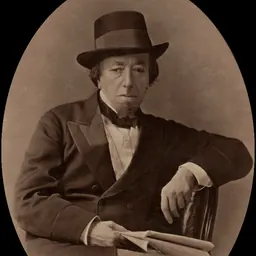
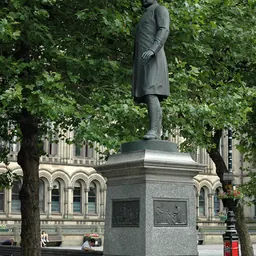

Related people
Same field, nearest in time
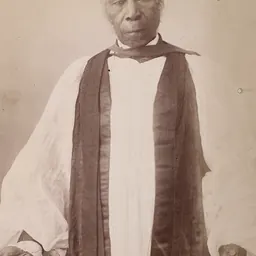

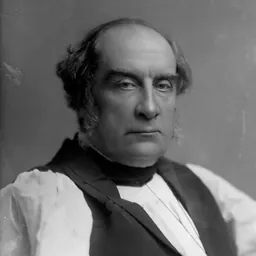
Contemporaries
People whose lives overlapped James Bardsley's





Frequently asked questions
Who was James Bardsley?
English cleric in Yorkshire and Manchester
When was James Bardsley born?
James Bardsley was born in 1805.
When did James Bardsley die?
James Bardsley died in 1886.
What was James Bardsley's occupation?
James Bardsley was an anglican priest.
What nationality was James Bardsley?
James Bardsley was British.
Sources & further reading
· DBpedia: James Bardsley (priest)
Cite this page
APA: Biography.guide. (2026). James Bardsley. https://biography.guide/james-bardsley/
MLA: "James Bardsley." Biography.guide, https://biography.guide/james-bardsley/.
Chicago: "James Bardsley." Biography.guide. https://biography.guide/james-bardsley/.
Data last updated: 2026-09-20 · Spot an error? Report a correction.
Page generated 2026-09-27 05:25 UTC