
About James Atkinson
Lived 1780 – 1852 (aged 72). James Atkinson was a British painter, surgeon, orientalist, physician and artist.
Self-portrait ca. 1845, National Portrait Gallery, London James Atkinson (17 March 1780 – 7 August 1852) was a surgeon, artist and Persian scholar — "a Renaissance man among Anglo-Indians". First arriving in India in 1802 as a surgeon, he was later appointed Assistant to the Assay Master at the Calcutta Mint in 1812; and was also editor of the Calcutta Gazette. Closely associated with the British colonial authorities and their community in India, he would meet Lord Minto and Lord Bentick, the latter with whom he had a notorious disagreement. He was best known for his study of Persian and his translation of a number of texts in to English. He was a gifted amateur artist and published a number of illustrated books, including on his travels in Afghanistan in the early 1840s.
Early life
Atkinson was born in Darlington, County Durham, England, the son of a woolcomber. He showed at an early age a remarkable gift for languages and portraiture and was enabled by the kindness of a friend to study medicine at Edinburgh and London. He first sailed to India in 1802 as Surgeon's Mate on board a ship of the Honourable East India Company (HEIC). On his second trip in 1805 he was appointed Assistant Surgeon in the Bengal service of the HEIC and placed in medical charge of the station of Backergunj near Dacca
Calcutta
It was Atkinson's proficiency with languages that brought him to the attention of The Lord Minto, the Governor General of India, who invited Atkinson to Calcutta in 1812 orientalist and Secretary to the Asiatic Society of Bengal, who published the first Sanskrit to English dictionary in 1819. For most of 1820 while Wilson was setting up the new Mint at Benares Atkinson worked alongside James Prinsep, the antiquarian and numismatist, at the Calcutta Mint.
The appointment at the Mint while not a sinecure as such afforded Atkinson a considerable amount of free time to pursue more academic pursuits. He published a 'free' translation of the poem Soohrab an extract from the Sha Nameh by the Persian poet Firdausi in 1814; Hatim Ta’ee, an old romance in the Persian language in 1818 for the use of the students at Fort William College where he held the Deputy Chair of Persian for that year; in 1819 The Aubid an eastern tale and in 1824 The City of Palaces, a collection of poems, the title of which became the epithet for Calcutta during the period of British rule.
Atkinson was a member of the Asiatic Society of Bengal, the Medical and Physical Society of Calcutta and sat on the committee of the Chowringhee Theatre.
Government Gazette
Atkinson was also editor of the Calcutta Gazette, one of the earliest English language newspapers in India being founded in 1784. It was a weekly newspaper which had the exclusive rights of publishing Government announcements and advertisements affording it an increased circulation and the potential of increased advertising revenues from other sources. In 1815, the Government transferred these rights to the Bengal Military Orphan Society in order to provide an income for the charity as well as providing the orphans with a potential trade. The new paper was named the Government Gazette and was thenceforth printed from the Orphan Society's Press. Atkinson became the Editor of the new Government Gazette in 1815; in 1817, he became the Superintendent of the Press. The Government Gazette included local and national news including extracts from English newspapers and those of Bombay and Madras, letters from correspondents, information on the customs and manners of the people of India as well as occasionally translations of Sanskrit hymns and Persian poetry. For the years 1825-1828 Atkinson leased the Press and the Government Gazette from the Orphan Society for an annual fee of 40,000 rupees effectively becoming its proprietor to run as his own business.
Epic of Kings
In 1829 Atkinson left India after a disagreement with the newly arrived Governor General Lord Bentinck concerning Atkinson's role at the Government Gazette and he spent the next five years in England. It was at this time he took the opportunity to translate an abridged version of the Sha Nameh of the Persian poet Firdausi in prose and verse published in 1832 which won the gold medal of the Oriental Translation Fund. In the same year he published Customs and Manners of the Women of Persia, and their domestic superstitions, translated from the original Persian manuscript (Kitábi Kulsúm Naneh).
In 1833 he returned to India resuming his former profession of Surgeon with the HEIC, during which time he had published a translation of Nizami Ganjavi's Laili and Majnun and Makhzan ul Asrar (the Treasury of Secrets) by the Oriental Translation Fund in 1836.
Afghanistan
In 1838, he was appointed Superintending Surgeon (ranking with Lieutenant-Colonel) of the Army of the Indus, Bengal Division. The same year Atkinson published Sketches in Afghaunistan, a folio of 25 tinted lithographed plates showing the topography and landscapes of Afghanistan and the Punjab creating an important record of "what was then an unexplored country". Atkinson had planned a second volume but the 'worked up' paintings were lost at sea en route to his British publisher where they were to be engraved; the original sketches he had prepared on the spot however are in the British Library.
Retirement
Atkinson became a member of the Medical Board in Calcutta in 1845 and was made Inspector General of Hospitals (ranking with Brigadier-General), he retired two years later after 45 years in the company's service and returned to England. He died on 7 August 1852 and was interred at Brompton Cemetery, London.
Marriage
Atkinson married Jane Bathie on 4 October 1815 at Fort William, Calcutta. Together they had four sons and one daughter: Frederick Dayot, Charles D’Oyly, George Francklin, Julia and James Augustus.
Publications
(James Atkinson wrote the descriptive text.)
(The drawings were by Sir Charles D'Oyly and the verses by James Atkinson.)
Don’t just read it —
keep it.
Full-length biographies made to live with: read them, listen on the way to work, watch them tonight.
- E-book
- Audio
- Video
Instant download · yours to keep · every purchase keeps this site free
Important facts
People in James Atkinson's life
Named in this biography and alive at the same time
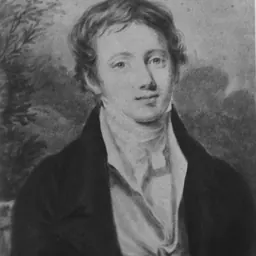
Related people
Same field, nearest in time
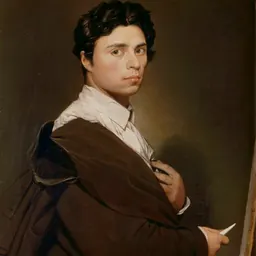




Contemporaries
People whose lives overlapped James Atkinson's


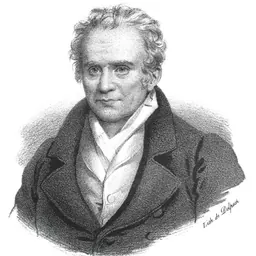

Frequently asked questions
Who was James Atkinson?
English surgeon, artist and Persian scholar (1780–1852)
When was James Atkinson born?
James Atkinson was born on 17 March 1780 in Durham.
When did James Atkinson die?
James Atkinson died on 7 August 1852.
What was James Atkinson's occupation?
James Atkinson was a painter, surgeon, orientalist, physician and artist.
What nationality was James Atkinson?
James Atkinson was British.
Sources & further reading
· DBpedia: James Atkinson (Persian scholar)
Cite this page
APA: Biography.guide. (2026). James Atkinson. https://biography.guide/james-atkinson-painter/
MLA: "James Atkinson." Biography.guide, https://biography.guide/james-atkinson-painter/.
Chicago: "James Atkinson." Biography.guide. https://biography.guide/james-atkinson-painter/.
Data last updated: 2026-09-20 · Spot an error? Report a correction.
Page generated 2026-09-27 05:27 UTC