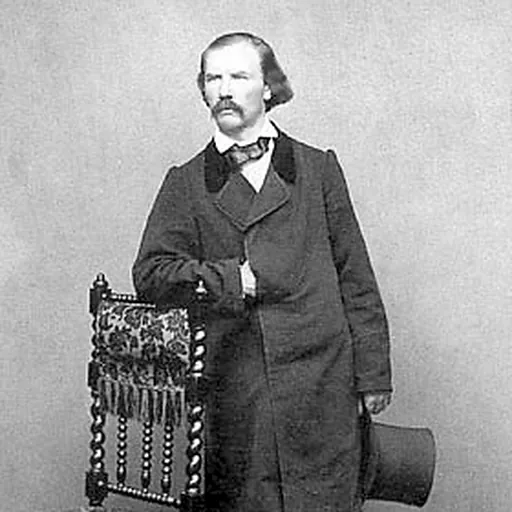
About Jakub Gieysztor
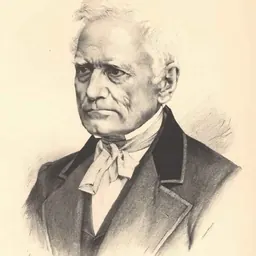
Lived 1827 – 1897 (aged 70). Jakub Gieysztor was a Lithuanian, Polish and Russian politician and bookseller.
Jakób Gieysztor (; 18 April 1827 – 15 November 1897) was a Polish-Lithuanian nobleman and politician who participated in the January Uprising of 1863. Gieysztor was also an antiquarian, publicist, and one of the leaders of the Whites political group in Lithuania. He has published his memoirs of his participation in the uprising and the subsequent deportation to Siberia.
Ancestry Jakób Gieysztor in his own memoirs notes that he is a descendant of a not very wealthy, but well-known noble family in Lithuania, and explains that "there was no truly historical figure in the Gieysztor family", although he notes that the family has been mentioned in Lithuania for several hundred years. Gieysztor's father, Stanisław, is mentioned as a president of the land courts and an active member of the Kaunas insurgent committee in the November Uprising of 1831. Gieysztor mentions his grandfather's brother, Dominik, as a member of the Great Sejm, where he "called for the treasury and the army", and later entered into the list of the Warsaw townspeople on 29 April 1791. After that Dominik is mentioned as a member of the Lithuania-based security department during the Kościuszko Uprising of 1794. Gieysztor's paternal grandfather, also named Jakób, is mentioned as a civil-military commissioner in 1794.
Biography Early life Jakób Wilhelm Kasper Gieysztor was born on 18 April 1827 in the village of Medekšiai in the modern-day Kaunas district. He was the son of Stanisław Gieysztor and Leokadia née Zawisza-Dowgiałło. Gieysztor's mother died when he was two years old, and his brother soon died as well. Gieysztor was subsequently nurtured by his grandmother Ona Gonseckienė. They moved to Benaičiai, where Gieysztor learned to read and write. After the November Uprising, Gieysztor and his father moved to Koncavas, while his grandmother moved to Kaunas. Gieysztor's father died in 1834, so Gieysztor moved to Kaunas to meet his grandmother again, after which a more formal type of education ensued. By the will of his uncle, a year before beginning formal education, Gieysztor moved to Plytninkai to study with some other relatives of his. In 1836 Gieysztor entered a gentry school in Kėdainiai. Gieysztor began developing an interest in book collection at the age of thirteen with the works of Marcin Bielski and Julian Ursyn Niemcewicz. In 1848, right before the final exam, Gieysztor returned to Lithuania to stop insurrectionist activities of the Lithuanian Youth Fraternity Union. Gieysztor then turned to farming and settled in the estate of the Ignacygrad manor belonging to his late grandfather in the Kėdainiai district, which he inherited. Although Gieysztor did not have a formal agricultural education, he nonetheless managed to save the degraded manor financially. He founded a reading room and was the first to establish a quit-rent tax on the peasants in Kėdainiai. Gieysztor actively supported sobriety organizations in Lithuania, such as the one led by Motiejus Valančius.
Gieysztor married his maternal aunt, Tekla Zawisza-Dowgiałło, in 1851. They had five sons and one daughter: Stanisław Ignacy Stefan, Kazimierz Dominiki Adam, Tadeusz Franciszek Alfons, Jan, Witold, and Leokadia. In 1863 Gieysztor became one of the committee members of the Whites. After the outbreak of the January Uprising in 1863, Gieysztor became responsible for managing the provinces of Lithuania. On 31 July 1863 Gieysztor denounced Aleksander Domeyko, the governor's marshal of Vilnius, and was subsequently was arrested. In 1865, he was sentenced to 12 years of hard labor in Usol. After three years he was transferred to Irkutsk, where he traded in footwear. In 1872 he was allowed to return to Poland. He settled in Suwałki with his wife, and then in Warsaw. Upon returning from Siberia, his manor in Ignacygrad was already owned by the descendants of Pyotr Stolypin. In 1877 Gieysztor married Elena Eismantaitė. They had two sons: Ryszard and Adam.
Gieysztor died on 15 November 1897. He was buried at the Powązki Cemetery in Warsaw.
Don’t just read it —
keep it.
Full-length biographies made to live with: read them, listen on the way to work, watch them tonight.
- E-book
- Audio
- Video
Instant download · yours to keep · every purchase keeps this site free
Important facts
People in Jakub Gieysztor's life
Named in this biography and alive at the same time


Related people
Same field, nearest in time




Contemporaries
People whose lives overlapped Jakub Gieysztor's





Frequently asked questions
Who was Jakub Gieysztor?
Lithuanian politician (1827–1897)
When was Jakub Gieysztor born?
Jakub Gieysztor was born on 6 April 1827 in Medekšai.
When did Jakub Gieysztor die?
Jakub Gieysztor died on 3 November 1897 in Warsaw.
What was Jakub Gieysztor's occupation?
Jakub Gieysztor was a politician and bookseller.
What nationality was Jakub Gieysztor?
Jakub Gieysztor was Lithuanian, Polish and Russian.
Sources & further reading
Cite this page
APA: Biography.guide. (2026). Jakub Gieysztor. https://biography.guide/jakub-gieysztor/
MLA: "Jakub Gieysztor." Biography.guide, https://biography.guide/jakub-gieysztor/.
Chicago: "Jakub Gieysztor." Biography.guide. https://biography.guide/jakub-gieysztor/.
Data last updated: 2026-09-22 · Spot an error? Report a correction.
Portrait: Wikimedia Commons · author & licence
Page generated 2026-09-27 05:03 UTC