
About Jakob Kunz
Lived 1874 – 1938 (aged 63). Jakob Kunz was a physicist.
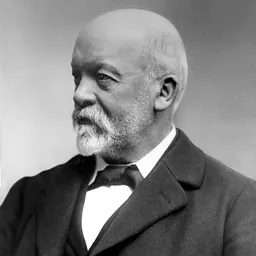
Jakob Kunz (November 3, 1874 – July 18, 1938) was an American physicist who pioneered the development and application of photoelectric cells. Born in Brittnau, Switzerland, he earned his bachelor's degree in 1897 and his Ph.D. in 1902 from the Eidgenossisches Polytechnikum in Zurich, and was active in the Baháʼí Faith from 1921.
Physics department Kunz arrived at the University of Illinois in 1909 as a theoretical physicist. He taught most of the graduate courses and supervised half of the Ph. Ds up to 1929. Larazus notes that “He was clearly the intellectual leader of the department.” One of his students was E. Frances Seiler who became the first woman to earn a Ph.D. in physics at Illinois for her thesis on the color-sensitivity of photoelectric cells. Kunz also wrote papers on and gave public lectures on relativity.
Photoelectric cells and astronomical photometry Kunz made significant contributions to construction of photoelectric cells improving on the methods introduced by Elster and Geitel. During the fall of 1911, he began a collaboration and friendship with the University of Illinois Observatory director Joel Stebbins that would revolutionize astronomical photometry. Kunz's photoelectric cells were many times more sensitive that what was available commercially and therefore able to detect faint star light. Kunz's cells would be used at half a dozen observatories all across the nation including Yerkes Observatory, Lick Observatory, and Washburn Observatory. Kunz also accompanied Stebbins and four solar eclipse expeditions beginning with the Solar eclipse of June 8, 1918 to measure the total light of the solar corona with the photoelectric photometer. The collaboration between Stebbins and Kunz continued until Kunz's death in 1938. and had two daughters Anna Marie and Margaret. Stebbins a subject he and Anna had spoken with ʻAbdu'l-Bahá on during their pilgrimage the year before. In 1919 they had co-signed a letter to ʻAbdu'l-Bahá following the break in communication with the Baháʼís during World War I. They spent about a year abroad. The Kunz daughters Annamarie and Margaret lead a class of a youth session of Louhelen Baháʼí School in the summer of 1937. The Kunz family would continue to speak at and sometimes host events of the religion in the coming years. Following Kunz' death, Anna moved to Switzerland to help spread the religion there where she died in August, 1973 and authored a well-known collection of stories about ʻAbdu'l-Bahá. Their other daughter Margaret married David Ruhe and long served as an assistant to Ruhiyyih Khanum in her various travels.
Don’t just read it —
keep it.
Full-length biographies made to live with: read them, listen on the way to work, watch them tonight.
- E-book
- Audio
- Video
Instant download · yours to keep · every purchase keeps this site free
Important facts
People in Jakob Kunz's life
Named in this biography and alive at the same time

Related people
Same field, nearest in time


Contemporaries
People whose lives overlapped Jakob Kunz's

Frequently asked questions
Who was Jakob Kunz?
American physicist
When was Jakob Kunz born?
Jakob Kunz was born on 3 November 1874 in Brittnau.
When did Jakob Kunz die?
Jakob Kunz died on 18 July 1938.
What was Jakob Kunz's occupation?
Jakob Kunz was a physicist.
Sources & further reading
Cite this page
APA: Biography.guide. (2026). Jakob Kunz. https://biography.guide/jakob-kunz/
MLA: "Jakob Kunz." Biography.guide, https://biography.guide/jakob-kunz/.
Chicago: "Jakob Kunz." Biography.guide. https://biography.guide/jakob-kunz/.
Data last updated: 2026-09-20 · Spot an error? Report a correction.
Page generated 2026-09-27 05:24 UTC