
About Jaime Colson
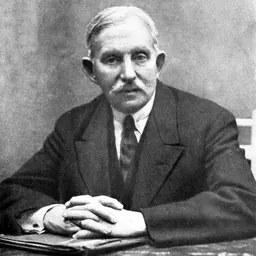
Lived 1901 – 1975 (aged 73–74). Jaime Colson was a Dominican and Spanish painter and poet.
Jaime Antonio Gumercindo González Colson (13 January 190120 November 1975) was a Dominican modernist painter, writer, and playwright born in Tubagua, Puerto Plata in 1901. He is remembered as one of the most important Dominican artists of the 20th century, and as one of the leading figures of the modernist movement in 20th century Dominican art, along with Yoryi Morel, Dario Suro, and Celeste Woss y Gil.
His travels to Spain and France in the early 20th century led to his experimenting with Cubism, Surrealism and other avant-garde styles. He struck up friendships with artists like Maruja Mallo, Rafael Barradas and Salvador Dalí in Spain, and in Paris, came to know Pablo Picasso and Georges Braque, masters of the cubist school that influenced his style.
After leaving Mexico in 1938, Colson became professor at the art academy in Havana, Cuba to teach his "cubismo neo-humanista". The Cuban artist Mario Carreño was one of his pupils.
In May 1938, Colson held an art exhibition for the first time in his country, in Santo Domingo, at that time, Ciudad Trujillo. Years later, dictator Rafael Trujillo would go on to appoint him Director of the School of Fine Arts in 1950. Colson would go on to resign less than two years later as a result of the repressive regime. His most notable works include Merengue (1938), and his series Figuras Metafisicas (1930). Colson also wrote poetry and theatrical works.
Colson was a devoted Catholic his entire life and married his companion, Toyo Kurimoto, of Japan, in a Catholic ceremony. He died of throat cancer in Santo Domingo on November 20, 1975. Many of his works are displayed in the Museo Bellapart in Santo Domingo.
Early life and education Colson was born in Tubagua, Puerto Plata, Dominican Republic on 13 January 1901, to parents Antonio González, a Spanish merchant, and Juana María Colson Tradwell, who was born in Puerto Plata and was the daughter of American immigrants. He received his early education in Santo Domingo, and showed an interest in art at an early age. His earliest works were influenced by Noucentisme, the prevailing artistic and literary aesthetic in Barcelona at the time, as well other avant-garde movements of the era. Following suggestions from Dominican writer Pedro Henríquez Ureña and Mexican poet Maples Arce, he left for Mexico in 1934 with hopes of improving his situation; there, Colson held a personal exhibition, sponsored by the Secretary of Education and began teaching at the Workers' School of Art. During this period, Colson also devoted himself to illustration, such as in the book Eco by the poet and friend Elías Nandino, published in 1934, whose black and white surrealistic illustrations of male torsos and genitalia, bleeding wounds and mutilated organs were celebrated at the time. In Mexico, Colson befriended María Izquierdo, José Gorostiza, Antonin Artaud, Wifredo Lam and his Cuban student, Mario Carreño. In 1938, Colson left Mexico, traveling to Havana, Cuba, accompanied by Mario Carreño. He lived and taught there for a few months, and held an art exhibition, before shortly returning to his native country after twenty years of absence.
On May 26, 1938, Colson arrived in Santo Domingo and held his first exhibition in the country at the Dominican Athenaeum
The next year in Paris he exhibited at the prestigious Berheim-Jeune Gallery ten paintings and drawings, with artists Mario Carreño and Max Jiménez. However, as a result of World War II, Colson relocated to Barcelona. There, he completed numerous works including a set of murals on the island of Mallorca.
In 1950, Colson returned to Dominican Republic and became director of the National School of Fine Arts. However, in 1952 he resigned from his post without having served two years in office. Following his resignation, Colson illustrated the Dominican author Tomás Hernández Franco’s book Cibao, with drawings portraying the daily life of cibaeños. He also made a well-known portrait of him there.
In 1957 he traveled to Caracas, Venezuela, to hold an exhibition. Colson had already presented his work in Venezuela at the Valencia International Painting Exhibition, which was held in commemoration of the 400th anniversary of its founding. On this occasion he had brought a multitude of works to be shown at the Museum of Fine Arts in Caracas, however, after the interviews in the press announcing the exhibition, the general director of Fine Arts did not approve Colson’s works.
Style Colson’s works blend Cubism, Surrealism, Symbolism, Expressionism, and Neoclassicism into a style described as Neohumanism that he became known for. During his years in Paris, Colson got to know the work of Giorgio De Chirico and Pablo Picasso who were two of his biggest influences. The influence of the De Chirico can be seen in his works from the 30s and 40s, in the use of perspective and scenography, themes towards the metaphysical and surrealist, the return to the classical, unreal atmospheres, and the reinterpretations of Mediterranean mythology. All of this penetrated deeply into Colson's aesthetic. The mystery and loneliness that emanate from De Chirico's paintings can also be seen in Colson’s work.
A retrospective of his work was held at Museo Bellapart in Santo Domingo in 2008.
Gallery
Don’t just read it —
keep it.
Full-length biographies made to live with: read them, listen on the way to work, watch them tonight.
- E-book
- Audio
- Video
Instant download · yours to keep · every purchase keeps this site free
Important facts
Family & relationships
People in Jaime Colson's life
Named in this biography and alive at the same time




Related people
Same field, nearest in time

Contemporaries
People whose lives overlapped Jaime Colson's



Frequently asked questions
Who was Jaime Colson?
painter and writer (1901-1975)
When was Jaime Colson born?
Jaime Colson was born on 13 January 1901 in Puerto Plata.
When did Jaime Colson die?
Jaime Colson died in 1975 in Santo Domingo.
What was Jaime Colson's occupation?
Jaime Colson was a painter and poet.
What nationality was Jaime Colson?
Jaime Colson was Dominican and Spanish.
Sources & further reading
Cite this page
APA: Biography.guide. (2026). Jaime Colson. https://biography.guide/jaime-colson/
MLA: "Jaime Colson." Biography.guide, https://biography.guide/jaime-colson/.
Chicago: "Jaime Colson." Biography.guide. https://biography.guide/jaime-colson/.
Data last updated: 2026-09-20 · Spot an error? Report a correction.
Page generated 2026-09-27 04:58 UTC