
Jafargulu agha Javanshir
Poet, public figure and Major General
About Jafargulu agha Javanshir
Lived 1787 – 1866 (aged 78–79). Jafargulu agha Javanshir was a Russian poet and imperial Russian Army.
Jafargulu agha Javanshir (; 1782 or 1787–1866), also known as Jafar khan Javanshir or by his pen-name Neva , was an Azerbaijani poet, warlord and major general of the Russian Army.
Early life Jafargulu was born either in 1782/3 Just a day after the assassination, Jafargulu rode with Lisanevich and defeated Iranian troops near Shusha.
Struggle for heirship He arrived in Tiflis around to put forward his claim as principal heir of his grandfather Nevertheless Jafargulu continued to take part in military campaigns, especially during Yermolov's Dagestan campaign in 1819, for which he received a Gold Saber encrusted with precious stones and an inscription “For Bravery” on .
However, the relations between his uncle and him continued to detoriate in 1821. Jafargulu was assaulted near his home in Shusha, receiving two gunshots, but managed to hide. Jafargulu accused his uncle, who on , fearing Russia's punishment for the overtures had made to the Iranian government, escaped to Iran. According to Yermolov's memoirs, Jafargulu orchestrated this attack on himself to sideline Mehdigulu and gain khanate of Karabakh. This was repeated by Nikolay Muravyov-Karsky, who in his memoirs said that Valerian Madatov urged Jafargulu to shot himself in the arm.
Using the opportunity, Yermolov abolished the Karabakh khanate and it became a province of Russia. Yermolov later arrested Jafargulu and took his 15-year-old son Karim agha as hostage in Tiflis, arguing that he didn't trust him given his previous defection to Iran. Moreover, Jafargulu was exiled to Simbirsk 2 weeks later. Nikolay Muravyov-Karsky who accompanied him during the journey, mentioned that he "was very worried about his future and kept asking me where he was being taken."
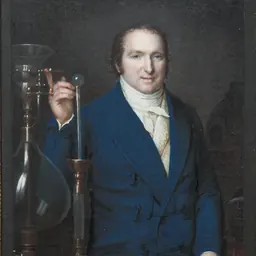
Nicholas however, ordered to ask new viceroy Ivan Paskevich's opinion about this. According to Foreign Affairs Minister of the Russian Empire Karl Nesselrode "Jafargulu was brave and courageous, for he received the rank of colonel and a gold saber adorned with diamonds for distinction in battles; but before that he fought against us for the Persians with equal courage." According to Vasily Potto, Paskevich found Jafargulu's return uncomfortable; he believed that the presence in one place of two blood enemies, a nephew and an uncle (Mehdigulu returned from Iran in 1827), could become a cause of confusion for an entire province. Nikolay Muravyov-Karsky on the other hand, reported that there was no harm Jafargulu can do to the state, but there was no benefit either. According to Potto, one of the travelers, who saw Jafargulu in 1857, says that he was already a venerable old man, but that even then his handsome, typical face, set off by a full beard, and a colossal figure, bent over years, but saying that there was before a lot of life and strength. The gravity of his calm movements, his posture and height - everything distinguished him from the crowd of honorary beys, also tall and prominent people, who also did not look like ordinary Azerbaijanis.
Last famous person to visit Jafargulu was Vasily Vereshchagin, who saw him in 1864. According to him, Jafargulu was breeding Karabakh horses and even created his own breed called Jabrayil horses, which were much stronger and durable, albeit not as beautiful as them. He described Jafargulu as "an old man with an intelligent and expressive face; his long red beard reached his chest. Bedridden for a long time, he was a shadow of the brave Jafar of the past. He had been one of the contenders to the Karabakh throne, but his bravery, courage, and determination had made him too dangerous—he spent many years in exile. A handsome, young, and rich man, he had been very popular in fashionable Petersburg society where he lived a dissipated life. Today, he probably tries to atone for his past sins with good deeds."
Jafargulu died on
Poetry Jafargulu Agha wrote poems under the pseudonym “Neva" meaning "Harmony," though Mir Mohsun Navvab claimed him to also have used the name "Arif." Azerbaijani originalEnglish translationÇoxların qılıbsan çörәyә möhtacAxtarır, tapılmaz dәrdinә әlac;Fironu Hamanü Zöhhakü HәccacOla bilmәz ola sitәmkar sәndәn.Many have no Bread due to youFor your sickness there's no cure;Pharaoh, Haman, Zahhak, HajjajCouldn't be more cruel than you. To which he responded mockingly: Azerbaijani originalEnglish translationMən deyiləm, aləmdə var, eldə varBelə, cüzvü işlər aradə gedər:Burada bir başmaq olub zərərinQələm alıb yazdın zəmin bu dərin.It's not me, the world is cruelTruly, such trifles come and go;Here you come and lose a loaferTake your pen and write your tale. Rivalry between two poets grew especially worse following Mehdigulu's death in 1845 and Jafargulu's wish to marry his widow Badir Jahan Begüm and cousin Khurshidbanu Natavan to his son Hidayat agha (1821–1888). Zakir further accused him of overtaxing people, causing poverty in Karabakh. Hatred worsened when Zakir's son-in-law Ali bey Fuladov was forced to pay 10-fold of the debt he owed to Jafargulu. Events culminated when Jafargulu raided Zakir's village Khindiristan with 700 soldiers in name of searching for Zakir's fugitive nephew Behbud, arresting his 23-year-old son Najafgulu and 20-year-old nephew Iskander in addition to his 19 relatives. Zakir's other nephew was shot dead, while Zakir himself was forced to be exiled to Baku.
His other critics included Muhammad agha Mujtahidzadeh and Ashiq Peri. The latter was from Maralyan village - owned by Jafargulu - and criticized his immoral behaviour and overall general character.
Personality He enjoyed Popular support, with about 700 soldiers always in his infantry – when critique of him or the Karabakh Khanate was raised, he would sometimes lead them in looting and raiding the city or village where it came from. He was frequently described as being extremely tall, towering over most of the Imperial Russian Army, and was said to have had reddish hair.
Much of his poetry consists of attacks against other aristocrats, especially Islamic judges, but also features him lamenting death and the decline of the Karabakh Khanate, as well as self-praise in which he compares his kingship to that of Jamshid, and his ideals to those of Plato, as well some flirtatious exchanges with Ashiq Peri. He also wrote many Meykhana-like Ghazals.
Contemporary views He is sometimes painted as a Philanthropist by Historians for having used his wealth to open many Zurkhanas and Meykhanas, as well as sponsoring many now-beloved Azerbaijani national poets, and having held many friendships and close ties with commonfolk and Infantrymen.
Family
His descendants carry the surname Javanshirov; after death of his uncle, he became head of Javanshir clan and head of senior line of the dynasty. He had two wives:
Ajaibnisa khanum (daughter of Tuni bey from Banazur, an Armenian) Abdullapasha agha (1803/4 – before 1860) married his own cousin Gullü begüm (daughter of Khanjan agha, his uncle), had 5 daughters Karim agha (c. 1807 – c. 1852) — Major in Imperial Russian Army, also known as Prince Javanshir, he was the only member of the family of the Karabakh khans who had an official title of "knyaz" Yetar khanim (daughter of Huseyngulu beg). Hidayat agha (1821/2 – c. 1888) married Sharafjahan begüm (b. 1836), daughter of Abra Khan (son of Jafarqoli khan Donboli) and Azad Begüm (daughter of Ibrahimkhalil khan) Javad agha ( - December 1930) married Saray Malek Qajar (1868–1942), daughter of Rzagulu Qajar (1837–1894) Huseyn agha (1854-?) - had two sons and a daughter Najafgulu agha (1858-?) - had five sons and one daughter Begüm khanum (1858-20 December 1910) Aghabegüm agha (1865-?) Awards
Gold Saber encrusted with precious stones and an inscription “For Bravery” Order of St. Anna 2nd class Order of St. Vladimir 3rd class for Non-Christians Order of St. Stanislav 1st class
Don’t just read it —
keep it.
Full-length biographies made to live with: read them, listen on the way to work, watch them tonight.
- E-book
- Audio
- Video
Instant download · yours to keep · every purchase keeps this site free
Important facts
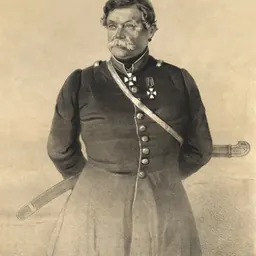
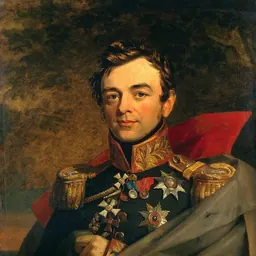
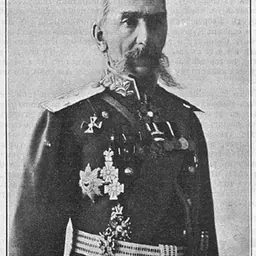
People in Jafargulu agha Javanshir's life
Named in this biography and alive at the same time



Related people
Same field, nearest in time
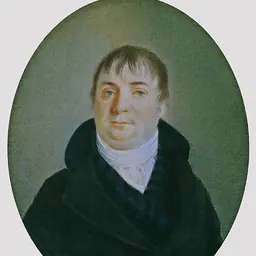
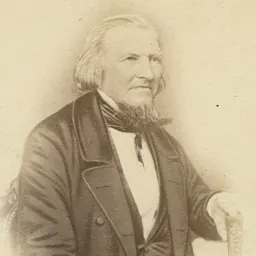
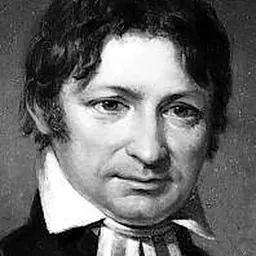
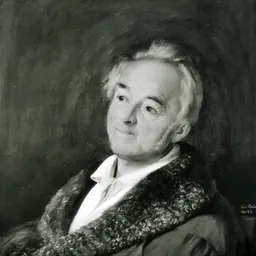
Contemporaries
People whose lives overlapped Jafargulu agha Javanshir's



Frequently asked questions
Who was Jafargulu agha Javanshir?
Poet, public figure and Major General
When was Jafargulu agha Javanshir born?
Jafargulu agha Javanshir was born in 1787 in Shusha.
When did Jafargulu agha Javanshir die?
Jafargulu agha Javanshir died in 1866 in Shusha.
What was Jafargulu agha Javanshir's occupation?
Jafargulu agha Javanshir was a poet and imperial Russian Army.
What nationality was Jafargulu agha Javanshir?
Jafargulu agha Javanshir was Russian.
Sources & further reading
· Wikipedia: Jafargulu agha Javanshir
· DBpedia: Jafargulu agha Javanshir
Cite this page
APA: Biography.guide. (2026). Jafargulu agha Javanshir. https://biography.guide/jafargulu-agha-javanshir/
MLA: "Jafargulu agha Javanshir." Biography.guide, https://biography.guide/jafargulu-agha-javanshir/.
Chicago: "Jafargulu agha Javanshir." Biography.guide. https://biography.guide/jafargulu-agha-javanshir/.
Data last updated: 2026-09-20 · Spot an error? Report a correction.
Page generated 2026-09-27 05:32 UTC