
About Jacques Legardeur de Saint-Pierre
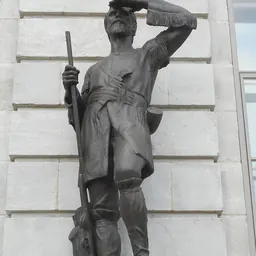
Lived 1701 – 1755 (aged 53). Jacques Legardeur de Saint-Pierre was a French military personnel.
Military life In 1724 he began military service as a second ensign with the colonial regular troops. Because of his skills as an interpreter, his early active duty involved building loyalty and support among the Ojibwa, Cree, and Sioux to assist the French in future campaigns against other First Nations tribes. From 1734 to 1737, he was commandant at Fort Beauharnois (on Lake Pepin, along the present day Wisconsin–Minnesota border) and caught in the middle of tribal rivalries. Fearing for himself and his garrison, he abandoned and burned the fort in May 1737.
From 1737 to 1740 he campaigned against the Chickasaws and drew praise for his skills in dealing with the First Nations. In 1741 he made lieutenant and was commandant of the Miami post near what is now known as Fort Wayne, Indiana for a short while. From 1745–1747 he was stationed at Montreal and carried out many military assignments, including a raid on the British colonial settlement of Saratoga, New York. In 1747 he and Louis de la Corne fought the British and their First Nations allies in the Lachine area.
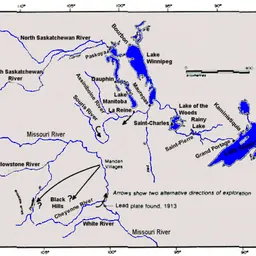
From 1748–1750 he served at Fort Michilimackinac during which time he was promoted to captain. The whole period was spent negotiating a fragile peace between the warring First Nations. In 1750 Governor La Jonquière appointed him Western commander to lead in the search for the western sea, a project that had been headed by Pierre Gaultier de Varennes et de La Vérendrye who had died in 1749 while planning a new expedition. He was soon involved in a dispute with two of de La Vérendrye sons, Louis-Joseph Gaultier de La Vérendrye and Pierre Gaultier de La Vérendrye, who had been actively involved in this project with their father. To his credit, Saint-Pierre recognized their past role and apologized. During his tenure, he was quite active. He travelled several times to the area of the Red and Winnipeg rivers and Fort St. Charles on Lake of the Woods. He no doubt headquartered at Fort La Reine. At least one important post was established under his command; that being Fort La Jonquière on the Saskatchewan River (probably in the Nipawin, Saskatchewan area). The western sea explorations were not expanded much beyond that point. The story goes that when Fort La Reine was invaded by a group of Assiniboines he saved the fort by standing at the door of the powder magazine with a blazing brand and threatening to blow everyone up if they did not leave.
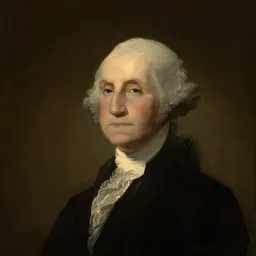
Returning from the western forts in 1753, Saint-Pierre was assigned to the Ohio Country, where the French and Canadians were building a strong presence in order to deal with the economic threat posed by British fur traders. Paul Marin de la Malgue constructed two forts, the main one being Fort Le Boeuf. After Marin's death, Legardeur took over Marin's command. The French occupation drew attention from the Virginia Colony, and its lieutenant governor, Robert Dinwiddie, sent a young George Washington with a written demand that the French leave the disputed territory. Much has been made of this event because of the later fame of the messenger; history records that Washington was impressed by Saint-Pierre in this encounter. After Washington in 1754 led an expedition that ambushed a Canadian party, Saint-Pierre was in the party sent from Fort Duquesne that defeated Washington at Fort Necessity. In 1755 Jacques led a large contingent of militia and First Nations from Montreal into a battle at Lac du Saint-Sacrement (as Lake George, New York was then known) and was immediately killed. These actions contributed to beginning of the French and Indian War with the eventual formal declarations of war in spring 1756.
Pierre's service to France in North America was valuable and extensive. He was a logical successor to La Vérendrye in the western forts and fur trade. He was awarded the cross of Saint Louis for his endeavors in military action. He was married but had no children. His widow remarried in 1757, to Luc de la Corne.
Don’t just read it —
keep it.
Full-length biographies made to live with: read them, listen on the way to work, watch them tonight.
- E-book
- Audio
- Video
Instant download · yours to keep · every purchase keeps this site free
Important facts
People in Jacques Legardeur de Saint-Pierre's life
Named in this biography and alive at the same time


Related people
Same field, nearest in time



Contemporaries
People whose lives overlapped Jacques Legardeur de Saint-Pierre's


Frequently asked questions
Who was Jacques Legardeur de Saint-Pierre?
Canadian military commander
When was Jacques Legardeur de Saint-Pierre born?
Jacques Legardeur de Saint-Pierre was born on 21 October 1701 in Ville Marie de Montréal.
When did Jacques Legardeur de Saint-Pierre die?
Jacques Legardeur de Saint-Pierre died on 8 September 1755 in Lake George.
What was Jacques Legardeur de Saint-Pierre's occupation?
Jacques Legardeur de Saint-Pierre was a military personnel.
What nationality was Jacques Legardeur de Saint-Pierre?
Jacques Legardeur de Saint-Pierre was French.
Sources & further reading
· Wikipedia: Jacques Legardeur de Saint-Pierre
· DBpedia: Jacques Legardeur de Saint-Pierre
Cite this page
APA: Biography.guide. (2026). Jacques Legardeur de Saint-Pierre. https://biography.guide/jacques-legardeur-de-saint-pierre/
MLA: "Jacques Legardeur de Saint-Pierre." Biography.guide, https://biography.guide/jacques-legardeur-de-saint-pierre/.
Chicago: "Jacques Legardeur de Saint-Pierre." Biography.guide. https://biography.guide/jacques-legardeur-de-saint-pierre/.
Data last updated: 2026-09-20 · Spot an error? Report a correction.
Page generated 2026-09-27 04:58 UTC