
About Jacques-Henri Lartigue
Lived 1894 – 1986 (aged 92). Jacques-Henri Lartigue was a French painter, photographer and artist.
Jacques Henri Lartigue (; 13 June 1894 – 12 September 1986) was a French photographer and painter, known for his photographs of automobile races, planes and female Parisian fashion models.
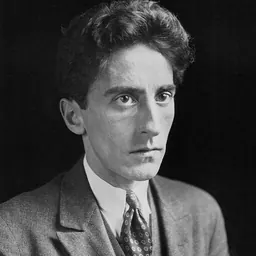
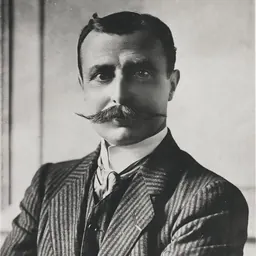
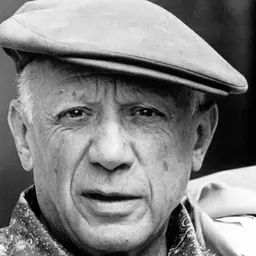
Biography Born in Courbevoie in western Paris to a wealthy family, Lartigue started taking photographs when he was seven. He photographed his friends and family at play – running and jumping; racing home-built race cars; making kites, gliders as well as aeroplanes; and climbing the Eiffel Tower. He was one of the first artists to use the Kodak Brownie camera for snapshots. He also photographed sport events, such as the Coupe Gordon Bennett and the French Grand Prix, early flights of aviation pioneers such as Gabriel Voisin, Louis Blériot, Hubert Latham, Louis Paulhan and Roland Garros. He also captured in his camera, tennis players such as Suzanne Lenglen at the French Open tennis championships. Many of his initial, famous photographs were originally captured in stereo, for example seen in Hidden Depths but he also produced a vast number of images in all formats and media including glass plates in various sizes, autochromes, and film. He developed his own photographs from a young age. He was friends with a wide selection of literary and artistic celebrities including the playwright Sacha Guitry, the singer Yvonne Printemps, the painters Kees van Dongen, Pablo Picasso and the artist-playwright-filmmaker Jean Cocteau. He also worked on the sets of the film-makers Jacques Feyder, Abel Gance, Robert Bresson, François Truffaut and Federico Fellini, and many of these celebrities became the subject of his photographs. Lartigue, however, photographed everyone he came in contact with. His most frequent muses were his three wives, and his mistress of the early 1930s, the Romanian model Renée Perle.
His first book, Diary of a Century was published in collaboration with Richard Avedon. The book was mentioned at the Rencontres d'Arles Book Award in 1971. The next year he was elected as the festival's guest of honor. He continued taking photographs throughout the last three decades of his life, finally achieving commercial success. An evening screening was presented by Michel Tournier: "Jacques-Henri Lartigue & Jeanloup Sieff."
In 1974, his work was included in the group exhibition "." In 1984, the movie "," by François Reichenbach was released. At the same time his work "" based on his stereo and panoramic photographs was exhibited in the festival. One of the evening's screenings was "" by Patrick Roegiers, in 1994, and a last exhibition was presented: "."
Collections Lartigue's work is held in the permanent collections of many institutions worldwide, including the Harvard Art Museums, the Los Angeles County Museum of Art, the George Eastman Museum, the Detroit Institute of Arts, the University of Michigan Museum of Art, the San Francisco Museum of Modern Art, the Princeton University Art Museum, the Museum of Modern Art, and the Museum of Contemporary Photography.
Awards 1984: The Cultural Award from the German Society for Photography (DGPh)
Legacy
With Albert Plécy and Raymond Grosset in 1954 Lartigue founded the , an association recognising those who, in a private or professional capacity, are concerned by still or moving images in any medium, which are pretexts for reflection and debate. It offers two awards for photography; the Niépce, and the Nadar Prizes.
Lartigue's son Dani, a painter and a noted entomologist specializing in butterflies, was patron of , a small museum on a very narrow street in St. Tropez containing paintings and souvenirs of his father and a large artistically presented collection of butterflies.
American director Wes Anderson is a fan of Lartigue's work, and has referenced it in his films. A shot in Rushmore is based on one of his photographs, and Lartigue's likeness was the basis for the portrait of Lord Mandrake in The Life Aquatic with Steve Zissou. 'Zissou' was also Lartigue's nickname for his brother Maurice.
A station on the T2 tram line in Issy-les-Moulineaux in southwestern Paris is named after Lartigue, adjacent to a street also named after him.
Don’t just read it —
keep it.
Full-length biographies made to live with: read them, listen on the way to work, watch them tonight.
- E-book
- Audio
- Video
Instant download · yours to keep · every purchase keeps this site free
Important facts
more
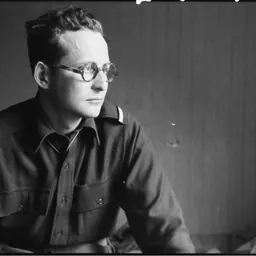
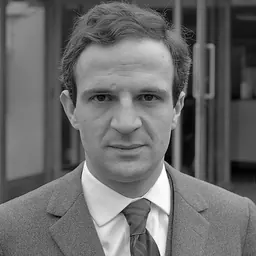
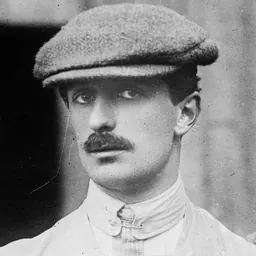
Jacques Henri LartiguePeople in Jacques-Henri Lartigue's life
Named in this biography and alive at the same time

Related people
Same field, nearest in time


Contemporaries
People whose lives overlapped Jacques-Henri Lartigue's


Frequently asked questions
Who was Jacques-Henri Lartigue?
French photographer and painter (1894–1986)
When was Jacques-Henri Lartigue born?
Jacques-Henri Lartigue was born on 13 June 1894 in Courbevoie.
When did Jacques-Henri Lartigue die?
Jacques-Henri Lartigue died on 12 September 1986 in Nice.
What was Jacques-Henri Lartigue's occupation?
Jacques-Henri Lartigue was a painter, photographer and artist.
What nationality was Jacques-Henri Lartigue?
Jacques-Henri Lartigue was French.
Sources & further reading
· Wikipedia: Jacques-Henri Lartigue
· DBpedia: Jacques Henri Lartigue
Cite this page
APA: Biography.guide. (2026). Jacques-Henri Lartigue. https://biography.guide/jacques-henri-lartigue/
MLA: "Jacques-Henri Lartigue." Biography.guide, https://biography.guide/jacques-henri-lartigue/.
Chicago: "Jacques-Henri Lartigue." Biography.guide. https://biography.guide/jacques-henri-lartigue/.
Data last updated: 2026-09-26 · Spot an error? Report a correction.
Page generated 2026-09-27 05:14 UTC