
About Jacques-André Mallet
Lived 1740 – 1790 (aged 49). Jacques-André Mallet was an astronomer, known for Geneva Observatory.
Biography Early life and education Jacques-André was born in Geneva to Jean-Robert, a captain in the French Army, and his wife, Dorothée Favre, both of noble lineage. Jean-Robert was from a branch of the Mallet family of Huguenot merchants and bankers who had fled from Rouen to Geneva in 1557 to escape growing religious persecution. Through his mother, Dorothée, Jacques-André was also a direct descendant of the Eidguenot patriot François Favre, who famously clashed (with later support from his son-in-law, Ami Perrin) with the Calvinist rule of Geneva.
Jean-Robert wanted his son to become a career soldier, but a severe burn to the thigh in childhood rendered Jacques-André permanently disabled and unfit for future service. He completed his studies in 1762, and journeyed to France and England in 1765, where he became friends with astronomers Jérôme Lalande, John Bevis, who discovered the Crab Nebula, and Nevil Maskelyne, among others. Others who were engaged to observe the transit include Stepan Rumovsky, Christian Mayer, and Christoph Euler, son of the mathematician Leonhard Euler. While in Saint Petersburg, readying themselves for their expedition north, Mallet and Pictet met with many members of high society, including Jean-Baptiste Charpentier and the Baron Stroganov, who, like Mallet, had been a pupil of Necker at the Geneva Academy.
The transit of Venus occurred on 3 June 1769. From 76 points globally, astronomers and navigators, like James Cook in Tahiti, were charged with observing the rare phenomenon. Unfortunately for Mallet, rain obscured the transit, and he was only able to view its beginning. In December 1776, perhaps owing to his contributions in Lapland, Mallet was awarded honorary membership in the Saint Petersburg Academy of Sciences.
Geneva Observatory
For the structure's design, Mallet had departed from a traditional, utilitarian plan, instead building a single-story octagon, capped with a drum and small dome. With his pupils and assistants, including Marc-Auguste Pictet and Jean Trembley, Mallet continued to observe celestial objects and bodies, and their interactions with each other and the Earth. As a correspondent, Mallet was seen as effective, meticulous, and dependable. (The Mallet estate was built in the 17th and 18th centuries by the Saladin family.) In 1705, Antoine Saladin willed the estate to his daughter, Hélène Favre, Jacques-André's maternal grandmother. Antoine died in 1709, and when his daughter died in 1743, Jacques-André's mother Dorothée inherited the estate. In April 1773, having developed an interest in meteorology and crop cultivation, Mallet began a diary, diligently detailing weather patterns, livestock acquisition, sharecropping and labor, equipment maintenance, crop maturation, quality of wine production, and more. Mallet continued his diary until January 1789. In June of the same year, while passing through Geneva on his continental research expedition with Duke Ernest II, astronomer Franz Xaver von Zach visited Mallet in Avully to socialize and conduct research. Other scientists and intellectuals maintained epistolary communication with Mallet, including Johann Bernoulli, Joseph-Louis Lagrange, Jean Hyacinthe de Magellan, Johann Euler, and Charles Messier.
After his death in 1790, his former pupil Marc-Auguste Pictet succeeded Mallet as director of the observatory. Mallet's astronomical instruments from Avully were purchased by Pictet and the Geneva Arts Society, an organization founded by another of Pictet's instructors, Saussure, and donated to the Geneva Observatory.
Family
Jacques-André was never married and fathered no known children. In 1773, his youngest sister, Marguerite (1745–1824), married the astronomer and lawyer Jean-Louis Pictet, Jacques-André's companion during the 1769 expedition to the Kola peninsula. His other sister, Isabelle (1743–1798), continued Jacques-André's diary and estate accounts for two years after his last entry. When Isabelle, like her brother, died unmarried, the Avully estate passed to her nephew, Jean-Pierre Pictet, father of the zoologist and paleontologist Francois-Jules Pictet.
Legacy
It is generally accepted that the lunar crater Mallet was named after Robert Mallet, the Irish geophysicist and engineer. However, since no given name was originally denoted, Swiss astronomer Marcel Golay, eighth director of the Geneva Observatory (1956–1992), suggested that Blagg and Müller had labelled the eponymous crater in honor of Jacques-André. Founder and director of Geneva's Museum of the History of Science, chemist Marc Cramer (1892–1976), also supported the misnomer theory, though he implied the crater was first named by Johann Schmidt.
Don’t just read it —
keep it.
Full-length biographies made to live with: read them, listen on the way to work, watch them tonight.
- E-book
- Audio
- Video
Instant download · yours to keep · every purchase keeps this site free
Important facts
People in Jacques-André Mallet's life
Named in this biography and alive at the same time
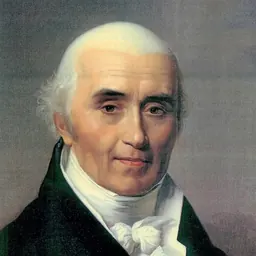


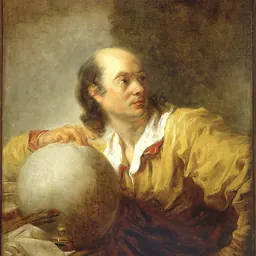
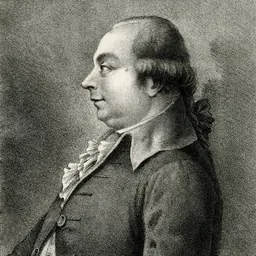
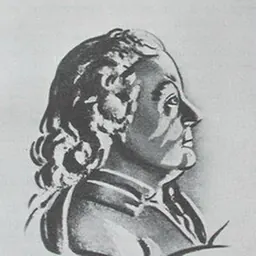

Related people
Same field, nearest in time



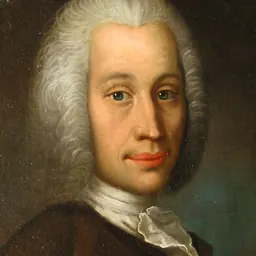
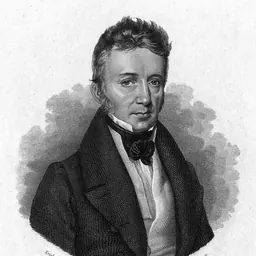
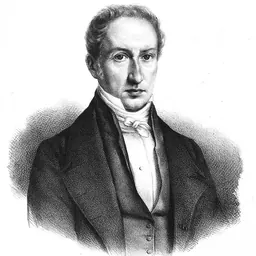
Contemporaries
People whose lives overlapped Jacques-André Mallet's




Frequently asked questions
Who was Jacques-André Mallet?
Genevan astronomer (1740-1790)
When was Jacques-André Mallet born?
Jacques-André Mallet was born on 23 September 1740 in Geneva.
When did Jacques-André Mallet die?
Jacques-André Mallet died on 31 January 1790 in Geneva.
What was Jacques-André Mallet's occupation?
Jacques-André Mallet was an astronomer.
What was Jacques-André Mallet known for?
Jacques-André Mallet was known for Geneva Observatory.
What nationality was Jacques-André Mallet?
Jacques-André Mallet's recorded nationality: Republic of Geneva.
Sources & further reading
· Wikipedia: Jacques-André Mallet
· DBpedia: Jacques-André Mallet
Cite this page
APA: Biography.guide. (2026). Jacques-André Mallet. https://biography.guide/jacques-andre-mallet/
MLA: "Jacques-André Mallet." Biography.guide, https://biography.guide/jacques-andre-mallet/.
Chicago: "Jacques-André Mallet." Biography.guide. https://biography.guide/jacques-andre-mallet/.
Data last updated: 2026-09-20 · Spot an error? Report a correction.
Page generated 2026-09-27 05:33 UTC