
About Jacobello del Fiore
Lived 1370 – 1439 (aged 68–69). Jacobello del Fiore was an Italian painter.
Jacobello del Fiore ( – 1439) was a Venetian painter in the late fourteenth century and early fifteenth century. His early work is in the Late Gothic style popularized by Altichiero da Verona and Jacopo Avanzi, two of his contemporaries, while his mature work displays a local Venetian style established by the school of Paolo Veneziano, an artist and workshop proprietor with notable Byzantine inspiration in his work.
Early life and works
Birth and family Jacobello del Fiore is likely to have been born around 1375, since by the time of his marriage in 1394, he was still under the tutelage of his father, Francesco del Fiore. While it is known that Jacobello del Fiore was married in 1394, the identity of his spouse is unknown, as is whether or not he had children. Jacobello's father, Francesco, was a painter himself: in 1376 he is documented in a contract as the chief officer of the confraternity, or organization dedicated to recognizing Christian works of charity, Scuola dei Pittori.
The "Master of the Giovaneli Madonna" While Jacobello's earliest surviving and confirmed work is dated in 1407, he is thought to be the painter of a Crucifixion piece in the Matthiesen Collection and the Virgin and Child of Piazzo Giovaneli, both painted in the late 14th century. The Crucifix was a common theme in Jacobello's earliest works, though as a subject it was a fairly common focus of many painters at the time. Art historian Andrea de Marchi was the first to suggest that a single author was responsible for these 'neo-giottoesque' paintings inspired by mainland painters Altichiero and Jacopo Avanzi and coined the author's unknown name as "Master of the Giovaneli Madonna". In the Matthiesen Crucifixion, Christ hangs on his cross in the center of the scene, dividing the followers of Christ on the left with the soldiers on the right. These details reveal that the author of the painting must have been familiar with the Late Gothic movement of the mainland and had Venetian training as well, due to the depiction of Longinus who lances Christ and the centurion who orders Christ's legs to be broken, two figures that also appear in Altichiero's Crucifixion in the Oratorio di San Giorgio, and also the city wall that closes the scene, a technique used by Paolo Veneziano. Similarly, art historian Carlo Volpe noted that a series of small Passion panels painted in the 1390s––Agony in the Garden (Vatican Picture Gallery), Lamentation (Vatican Picture Gallery), Way to Calvary (British Royal Collection), and Arrest of Christ (private collection)––share a Paduan influence and stylistic similarity with that of the Matthiesen Crucifixion." De Marchi also attributes The Madonna of Humility in a provincial museum in Lecce to the "Master of the Giovaneli Madonna", The Madonna of Humility in Lecce, according to art historian Illeana Chiappini di Sorio, may well have belonged to this polyptych. Thus, the Madonna of Humility, as hypothesized by art historian Daniele Benati, connects all of the above works by the "Master of the Giovaneli Madonna" to none other than Jacobello del Fiore.
A progression in style The year 1401 marks a transition in Jacobello's career from a more archaic, gothic style, utilized in the last decade of the Trecento and captured in the Matthiesen Crucifixion, to a more modern style concerned with line, as seen in the Giovaneli Madonna and Crucifixion with Mourners and Saints in a French private collection. The latter, as De Marchi emphasizes, still derives from Altichiero and Jacopo Avanzi but moves beyond the sterner style of the Matthiesen Crucifixion by employing a looser Gothic flexibility. Both these works were probably painted between 1401 and 1407, the date of Jacobello's first surviving, verified painting. Similar influences found in Jacobello's triptych of the Adoration of the Magi in Stockholm, Nationalmuseum, place it chronologically near the Virgin of Mercy triptych. These two paintings demonstrate his growing professional reputation achieved before the death of his father in 1409–1411. Jacobello del Fiore: The Lion of St. Mark (In situ), 1415 (detail) Between 1409 and 1415, Jacobello is believed to have been commissioned to decorate the Sala del Maggior Consiglio (Hall of the Great Council) in the Doge's Palace, putting him in direct contact with advanced mainland painters such as Gentile da Fabriano, Pisanello, and Michelino da Besozzo. The influence of Fabriano and Michelino can be seen in Jacobello's previously mentioned 1409 Polyptych of the Blessed Michelina and in the later Virgin of Mercy between Saints John the Baptist and John the Evangelist in the Accademia of Venice, likely painted in the mid-1410s. This conscious decision, as Benati further argues, marks a shift in Jacobello's style that loyally turns back to his early influences of the local Trecento tradition of Lorenzo Veneziano. The paintings, restored in 1950, highlight the refulgent beauty of the Gothic style that does not attempt to be naturalistic. Jacobello clothed the effigy of his father in a full-length robe to emphasize his social prestige.
During the 1430s he is believed to have mentored a young Carlo Crivelli, who was to be later known for his small colorful temperas of landscapes, fruit, flowers, and other accessories. Jacobello's adopted son, Ercole del Fiore, appears in a 1461 record stating his vocation as a painter. Jacobello died in 1439 in his sixties.
List of works with technical descriptions
Madonna and Child
Source: Keith Christiansen writes in his book on Gentile da Fabriano, “Jacobello del Fiore suffers from a greater critical misunderstanding than any other early Venetian artist. R. Longhi judged him a lesser personality than Niccolò di Pietro or Zanino because his works seemed deeply linked to Venetian painting rather than that of the mainland. In fact, Jacobello was the greatest local artist of his generation." Art historians such as Daniele Benati have clarified Jacobello's role as the link between emerging Late Gothic style of the Lombardy artists and the local Trecento tradition of Venetian painters, restoring his important role in Venetian art and the changing styles of the time. Benati concludes, "It was Jacobello who had to face the challenge of renewing local figurative culture from within, by degrees, and who ultimately succeeded in connecting the thread that tied it to its fourteenth-century principles. In the light of his youthful adherence to the Paduan neo-Giottoesque style, we can better understand how keenly, starting in 1407, he sought to adapt the novelty of the Lombard late Gothic style to local sensibilities."
There is no known portrait of Jacobello in existence. Despite his influence and prominence in the early fifteenth century Renaissance Venetian arena of painting, Jacobello del Fiore is not remembered as a major figure of the Renaissance. Jacobello del Fiore's paintings are integral primary sources for art historians and casual researchers alike to understand this artist.
Don’t just read it —
keep it.
Full-length biographies made to live with: read them, listen on the way to work, watch them tonight.
- E-book
- Audio
- Video
Instant download · yours to keep · every purchase keeps this site free
Important facts
People in Jacobello del Fiore's life
Named in this biography and alive at the same time


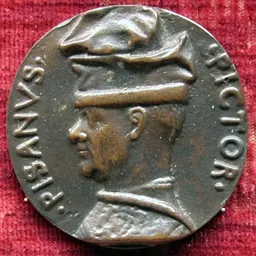



Related people
Same field, nearest in time
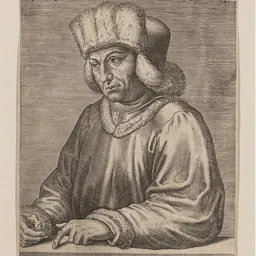

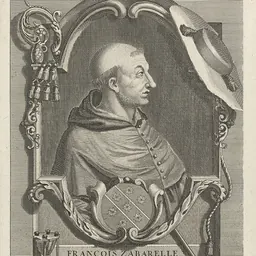
Contemporaries
People whose lives overlapped Jacobello del Fiore's




Frequently asked questions
Who was Jacobello del Fiore?
Italian painter (1370-1439)
When was Jacobello del Fiore born?
Jacobello del Fiore was born in 1370 in Venice.
When did Jacobello del Fiore die?
Jacobello del Fiore died in 1439 in Venice.
What was Jacobello del Fiore's occupation?
Jacobello del Fiore was a painter.
What nationality was Jacobello del Fiore?
Jacobello del Fiore was Italian.
Sources & further reading
· Wikipedia: Jacobello del Fiore
· DBpedia: Jacobello del Fiore
Cite this page
APA: Biography.guide. (2026). Jacobello del Fiore. https://biography.guide/jacobello-del-fiore/
MLA: "Jacobello del Fiore." Biography.guide, https://biography.guide/jacobello-del-fiore/.
Chicago: "Jacobello del Fiore." Biography.guide. https://biography.guide/jacobello-del-fiore/.
Data last updated: 2026-09-20 · Spot an error? Report a correction.
Page generated 2026-09-27 05:22 UTC