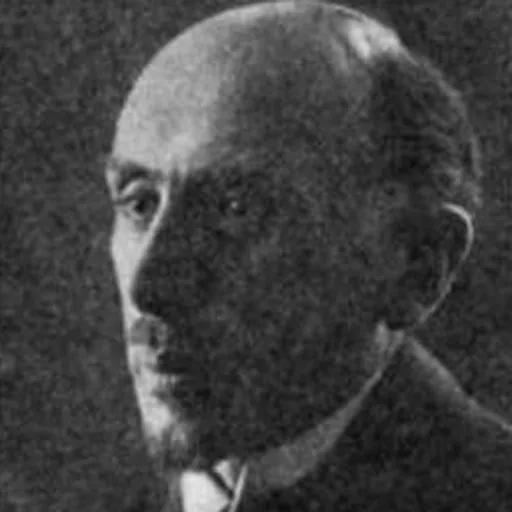
About Jacob Weinberg
Lived 1879 – 1956 (aged 77). Jacob Weinberg was a Russian composer and pianist.
Jacob Weinberg (1 July 1879 – 2 November 1956) was a Russian-born American Jewish composer and pianist who composed over 135 works for piano and other instruments. He was one of the founders of the Jewish National Conservatory in Jerusalem before immigrating to the U.S. where he became "an influential voice in the promotion of American Jewish music" from the 1940s until his death.
Life and career Weinberg was born in Odessa in the Russian Empire (present-day Ukraine) to Dora and Wolf (Zev) Weinberg. His family was middle class and his father was a merchant who died when Jacob was only 12. Jacob wrote an essay about how he had been sent to a synagogue to say the Kaddish prayer in mourning for his father. He wrote that he had not been raised in an Orthodox home and he was not familiar with the sounds of the Hebrew language in the prayer but he fell in love with the music of the language and the rhythm of the prayer. This sparked his interest in Jewish religion and Jewish music.
One of his uncles was Peter (or Pyotr) Isaevich Weinberg (or "Veinberg"). (Peter was a very prominent translator of Shakespeare, Goethe, Heine and other luminaries into Russian. Peter was a friend of Anton Chekhov who recommended Peter for The Pushkin Prize in 1901, and Peter won it. Anton also referred him for membership in the Russian Academy of Science.) Jacob completed law school at Moscow University, but he never practiced, preferring his piano studies. He studied at the Moscow Conservatory of Music from 1901 to 1906, under many prominent teachers including Taneyev and Ippolito-Ivanov. In 1910, he spent the year studying privately with Theodor Leschetizky. In addition, he studied composition for a year in Vienna, under Sergei Taneyev. He taught piano as well; among his students were Josef Yasser, with whom he remained friends for many years to come.
Weinberg toured Russia as a pianist and also toured with Emil Rosenoff in their two-piano concerts from 1912 to 1916. He adapted Rachmaninoff's works to create a two-piano piece he called Rachmaniana. It was published and performed by Weinberg and Rosenoff. He was also very interested in preserving the unique melodies and music scales of Jewish religious and secular folk tunes. When the St. Petersburg Society for Jewish Folk Music was formed in 1908 by Joel Engel, Lazare Saminsky, and others, Jacob Weinberg and his Moscow-based peers formed the Moscow branch of this society. Then he returned to Odessa, where he taught at the Odessa Conservatory of Music.
With the advent of the Bolshevik Revolution, Weinberg spent two months in prison and then fled with his wife Theresa (née Bernstein) and his only child, a son, Walter, in 1922 to Palestine (now Israel). There he composed the first Hebrew opera, The Pioneers (Hechalutz). It won First Prize in an international composition contest, sponsored by the Philadelphia Sesquicentennial. There was a performance in Jerusalem in April, 1925. He taught piano; among his students was the pianist Mordecai Sandberg.
With the competition prize money of $1,500, Weinberg took his family to New York.
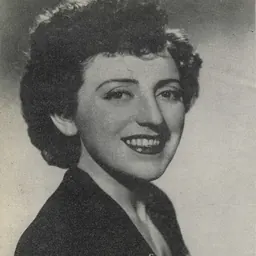
Weinberg produced concert versions of his opera The Pioneers at Carnegie Hall in 1941 and 1947, and at the Mecca Temple (now New York City Center) in the 1930s. In addition, there was a performance in Berlin, Germany on September 5, 1938, by the Kulturbund, with the soprano Mascha Benya in one of the leading roles. It was conducted by violinist and conductor Chemjo Winawer. It was performed in a beautiful, huge 3,000-seat synagogue on Prinzregentenstrasse. (The Nazi party had banned the performance of Jewish works, even masterpieces, from being performed in a proper concert hall, so it was performed in a synagogue). Two months later this grand synagogue was destroyed on Kristallnacht. The artists fled to the US and survived but Kurt Singer, the illustrious head of the Kulturbund, which organized such concerts, could not escape in time and was murdered in Auschwitz. He also composed many non-religious works. He was very interested in Lincoln's Gettysburg Address and set it to music for a chorus and in three other non-singing versions.
He joined the music faculty of the New York College of Music in 1929 where he taught for many years and later joined the faculty at Hunter College. Sonata in E-flat major for Two Pianos Concerto #2 in C Major String Quartet – Opus 55 Speed Ahead (Perpetual Motion) for Violin and Piano – Op.31, No.2 Kol Nidrei, op. 25. Suite for violoncello and piano Causerie The Cabalist The Maypole - Klezmer Rabbi Meir's Dance Trio on Hebrew Themes Prelude, Passacaglia and Finale, Op. 68. for piano
Opera The Pioneers (1924) Gettysburg Address – 4 versions Shabbat ba'aretz (Sabbath in the Holy Land Service) Sabbath Evening Service Sabbath Morning Service (Shabath baarets), Op. 41. for cantor (baritone), mixed chorus and organ Sabbath Service Psalm 29 for cantor and congregation, or two antiphonal choirs (1951)
Songs Song for Heroes (1944) for voice and piano (lyrics by Nahum Ben-Horim) Six Hebrew songs for voice and piano From the Dead Sea Scrolls for baritone and piano
Arrangements Rachmaniana for Two Pianos
Discography 1938 - Shir Hakerem (Jacob Weinberg), Zvee Aroni and Helen Marie Stolz, 78 RPM RCA E2-KB-1531 1954 - Yo Adir (Jacob Weinberg), Sidor Belarsky, 33 RPM, RCA Victor LPM-3197 (E3VL-4989) 2005 - Weinberg: Piano Concerto No. 2, String Quartet Op. 55, Shabbat Ba'aretz - American Classics, Naxos 8559457
Don’t just read it —
keep it.
Full-length biographies made to live with: read them, listen on the way to work, watch them tonight.
- E-book
- Audio
- Video
Instant download · yours to keep · every purchase keeps this site free
Important facts
People in Jacob Weinberg's life
Named in this biography and alive at the same time




Related people
Same field, nearest in time




Contemporaries
People whose lives overlapped Jacob Weinberg's


Frequently asked questions
Who was Jacob Weinberg?
Russian composer (1879–1956)
When was Jacob Weinberg born?
Jacob Weinberg was born on 1 July 1879 in Odesa.
When did Jacob Weinberg die?
Jacob Weinberg died on 2 November 1956 in New York City.
What was Jacob Weinberg's occupation?
Jacob Weinberg was a composer and pianist.
What nationality was Jacob Weinberg?
Jacob Weinberg was Russian.
Sources & further reading
Cite this page
APA: Biography.guide. (2026). Jacob Weinberg. https://biography.guide/jacob-weinberg/
MLA: "Jacob Weinberg." Biography.guide, https://biography.guide/jacob-weinberg/.
Chicago: "Jacob Weinberg." Biography.guide. https://biography.guide/jacob-weinberg/.
Data last updated: 2026-09-23 · Spot an error? Report a correction.
Portrait: Wikimedia Commons · author & licence
Page generated 2026-09-27 05:06 UTC