
Jacob Hagen
Landowner and politician in South Australia
About Jacob Hagen
Lived 1809 – 1870 (aged 60–61). Jacob Hagen was a British and Australian politician, businessperson, mine entrepreneur, pastoralist, moneylender and whaler.
Jacob Hagen (29 January 1809 – 24 January 1870) was a businessman involved in many business ventures in the colony of South Australia. He served in the Legislative Council from September 1843 to February 1851.
History Jacob Hagen was born in Mill Street, Bermondsey
Hagen arrived in the colony of South Australia in December 1839 aboard the William Barrass. He purchased part of fellow-Quaker Barton Hack's selection at Echunga. He put Walter Duffield, a fellow-passenger on the trip out, in charge of the estate and was soon growing grapes; his wine was some of the first produced in the Colony. The Hagen Arms, opened in the area around 1853, and which still stands today, was named for him.
He moved back to England in 1853 where he bought Ropley House (then known as New House) in Ropley, Hampshire along with a large amount of land known as the "New House Estate". It was on his newly acquired land that the Watercress Line was built, between 1861 and 1865.
Business He was briefly a partner with his father in the import business as Hagen & Son. Their ship Lalla Rookh took whale oil and some of South Australia's first wool export to London in 1840. He was a partner with brother-in-law John Baker, also John Bentham Neales, Capt. John Hart and others in the Adelaide Auction Company. Hagen and his brother Edward had a share in Capt. Hart's barque Augustus, which he brought to Adelaide with passengers in December 1843. He shared with Baker a shipping business involving the barque East London and in the Montacute copper venture with John Hart. Hagen, Baker, and Hart operated the whaler John Pirie and whaling station at Trial Bay, some south-east of Streaky Bay. They also had a timber-getting and iron smelting venture. Hagen and Baker were both candidates at the same City Council election, both members of the Agricultural and Horticultural Society, both SA directors of the Australian Mining Company (his brother Edward Hagen (1816–1895) was an England director). They were both on the Board of Magistrates, the Central Road Board, and directors of the Marine Insurance Company. Hagen was a director of other institutions such as the Church of England Life Assurance Institution, of London.
He made at least two business trips back to Britain during his time in Australia: returning on the Benares in July 1841 and the second, with his new wife Mary, when he also attended a mining company meeting, returning aboard the Royal George in July 1847.
Parliament Hagen was appointed by Governor Grey to the second Legislative Council in September 1843 and sat until February 1851. Grey came to regret his choice: Hagen took his role seriously, and would not back down when he knew he was right. He opposed many of Grey's measures and after an application by Hagen and Baker for mining rights to some copper-bearing land was refused, he accused Grey of "extremely corrupt conduct". As an outcome, the government in England moved Grey on to another position in New Zealand. Always a friend to the speculator, Hagen grew more right-wing. He supported measures to entrench the privileges of the squatters, and criticised the indigent poor for their dependence on Government charity. He proposed a system of inherited titles along the peerage system of the United Kingdom (later dubbed "bunyip aristocracy"), and mapping of electorates (in America dubbed "Gerrymander") in such a way as to give greater weight to the squatters' votes. and a sister of John Baker. They had one surviving child: Marianna Sophia Hagen (11 January 1852 – 26 February 1932) was born in Adelaide and removed to England with her parents, owning considerable property in South Australia. She never married, had no children, and died in Ropley, Hampshire.
Don’t just read it —
keep it.
Full-length biographies made to live with: read them, listen on the way to work, watch them tonight.
- E-book
- Audio
- Video
Instant download · yours to keep · every purchase keeps this site free
Important facts
People in Jacob Hagen's life
Named in this biography and alive at the same time
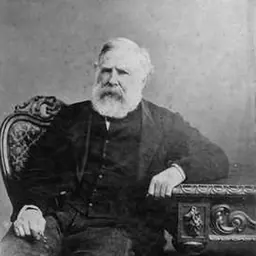
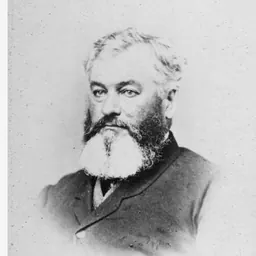
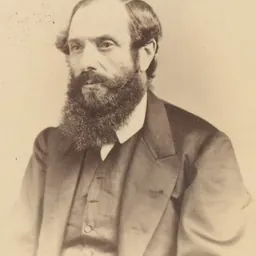
Related people
Same field, nearest in time

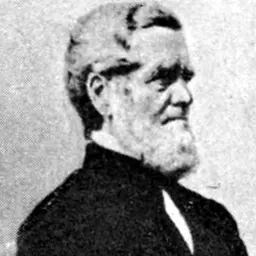


Contemporaries
People whose lives overlapped Jacob Hagen's





Frequently asked questions
Who was Jacob Hagen?
landowner and politician in South Australia (1809-1870)
When was Jacob Hagen born?
Jacob Hagen was born in 1809 in Bermondsey.
When did Jacob Hagen die?
Jacob Hagen died in 1870 in Alresford.
What was Jacob Hagen's occupation?
Jacob Hagen was a politician, businessperson, mine entrepreneur, pastoralist, moneylender and whaler.
What nationality was Jacob Hagen?
Jacob Hagen was British and Australian.
Sources & further reading
Cite this page
APA: Biography.guide. (2026). Jacob Hagen. https://biography.guide/jacob-hagen/
MLA: "Jacob Hagen." Biography.guide, https://biography.guide/jacob-hagen/.
Chicago: "Jacob Hagen." Biography.guide. https://biography.guide/jacob-hagen/.
Data last updated: 2026-09-27 · Spot an error? Report a correction.
Page generated 2026-09-27 05:17 UTC