
About Jacob Frese
Lived 1690 – 1729 (aged 38–39). Jacob Frese was a Swedish and Finnish poet and office worker.
Jacob Frese (1690 – 31 August 1729) was a Finnish and Swedish poet who wrote in Swedish. Having fled the Russian occupation of his hometown Vyborg, he found work as a civil servant in Stockholm and lived most of his life in poverty. He suffered from an illness of the lungs, which influenced his poetry. His poetry has been described as "extremely rich" and Baroque and often had a religious coloring. He imitated a variety of styles and wrote hymns which became quite popular within the pietist religious movement. Largely forgotten for the rest of the eighteenth century, he was valued by some Romantic authors and received greater recognition after 1900.
Life and work Jacob Frese was born in 1690 in Vyborg (then part of Sweden, now in Russia). and Barbara Ruuth.
Frese had a good knowledge of poetry and was familiar with the works of Swedish poets such as Georg Stiernhielm, Sophia Elisabet Brenner, and Gunno Dahlstierna. He imitated a variety of styles, including religious epic poetry, patriotic poetry, occasional poems written for weddings and funerals, and contemplative poetry which was influenced by his illness (he suffered from a lung disease, probably pulmonary tuberculosis). For meter, he especially favored the French alexandrine and the end-rhymed hexameter used by Stiernhielm. According to Kari Tarkiainen, his "extremely rich" poetry is most characterized by its creative puns and its "Baroque exuberance."
Frese emphasized his Vyborg and Finnish roots and experienced homesickness while in Stockholm. He refers to "Our Finland" in his earliest known occasional poem from the 1710s. He included a lengthy section about Vyborg, which had been occupied by the Russians after a long defense, in his poem "" (1715), written on the occasion of Charles XII's return from the Ottoman Empire. The section narrates a refugee's intense wish to see his hometown again. He also expresses in this poem hope for a peaceful future.
Frese died on 31 August 1729. His works were largely forgotten during the eighteenth century, although they were valued by some Romantic authors. He received greater recognition after 1900 thanks to the efforts of the Finnish literary historian Arvid Hultin.
List of works Frese wrote numerous occasional poems. Collections of his poetry are:
(1724) (1726) (1728) (Uppsala, 1876) (1902)
Don’t just read it —
keep it.
Full-length biographies made to live with: read them, listen on the way to work, watch them tonight.
- E-book
- Audio
- Video
Instant download · yours to keep · every purchase keeps this site free
Important facts
People in Jacob Frese's life
Named in this biography and alive at the same time

Related people
Same field, nearest in time
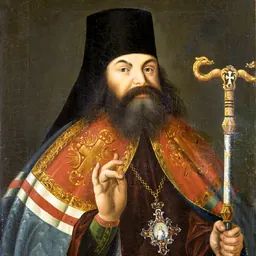


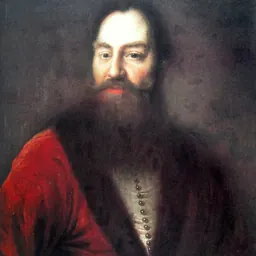
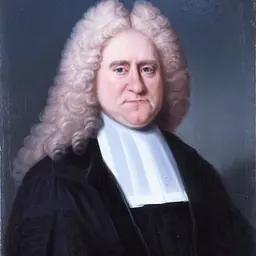
Contemporaries
People whose lives overlapped Jacob Frese's

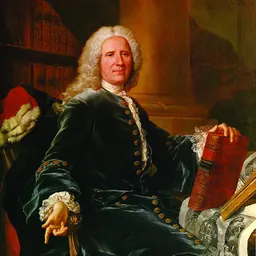


Frequently asked questions
Who was Jacob Frese?
Swedish poet (1690-1729)
When was Jacob Frese born?
Jacob Frese was born in 1690 in Vyborg.
When did Jacob Frese die?
Jacob Frese died on 31 August 1729 in Stockholm.
What was Jacob Frese's occupation?
Jacob Frese was a poet and office worker.
What nationality was Jacob Frese?
Jacob Frese was Swedish and Finnish.
Sources & further reading
Cite this page
APA: Biography.guide. (2026). Jacob Frese. https://biography.guide/jacob-frese/
MLA: "Jacob Frese." Biography.guide, https://biography.guide/jacob-frese/.
Chicago: "Jacob Frese." Biography.guide. https://biography.guide/jacob-frese/.
Data last updated: 2026-09-20 · Spot an error? Report a correction.
Page generated 2026-09-27 05:16 UTC