
About Jacob de Wit
Lived 1695 – 1754 (aged 58). Jacob de Wit was a Dutch painter, decorator, etcher and copper engraver.
Jacob de Wit (19 December 1695 – 12 November 1754) was a Dutch painter and interior decorator. He is best known for his depictions of religious scenes.
Biography Overdoor in Old City Hall in The Hague, illustrating Audi alteram partem.
Jacob de Wit was born in Amsterdam, and became famous for his door and ceiling paintings. He lived on the Keizersgracht in Amsterdam, and many of the buildings on the Keizersgracht still have door or ceiling paintings done by him. Since many of the families who lived in Amsterdam in those days had country villas, de Wit also painted in houses in the fashionable areas of Haarlem and the Vecht river.
According to the RKD, he was the pupil of Albert van Spiers in Amsterdam and Jacob van Hal in Antwerp where he became a member of the Guild of St. Luke in 1714. While in Antwerp, he made a series of watercolour sketches of the Rubens ceilings in the Carolus Borromeuskerk in Antwerp. After the church was struck by lightning in 1718 these became a historical document, and his pupil Jan Punt later engraved his sketches and published them in 1751.
His pupils were Jan de Groot (painter from The Hague), Dionys van Nijmegen, Jan Punt, Pieter Tanjé, and the brothers Frans and Jacob Xavery.
Jacob de Wit died in Amsterdam in 1754. Tako Hajo Jelgersma was his follower.
Major works Baptism of Christ in the Jordan (1716) – Chalk and pen drawing Adoration of the Shepherds (1726) – Oil on canvas Holy Family and Trinity, also : The Return from Egypt (1726) – Oil on canvas Allegory of Transience (1733) – Oil on canvas Moses Elects Seventy Elders (1737) – Oil on canvas
Location of paintings One of his paintings for a door in Heemstede now hangs in Uppsala, Sweden, in the Linnaeus museum. A set of paintings of the four seasons depicting cherubs painted in a three-dimensional monochrome style now hangs at Hinton Ampner house in Hampshire. Another of his three-dimensional monochrome style cherub paintings hangs in Kingston Lacy house in Dorset. Old City Hall in The Hague Museum Willet-Holthuysen
Don’t just read it —
keep it.
Full-length biographies made to live with: read them, listen on the way to work, watch them tonight.
- E-book
- Audio
- Video
Instant download · yours to keep · every purchase keeps this site free
Important facts
more
Jacques Dewitt, Jann de Witt, Jean de Witt, Jacques de Witt, Jacques Dewit, Jan de Wit, Jean von Witt, John de WittPeople in Jacob de Wit's life
Named in this biography and alive at the same time


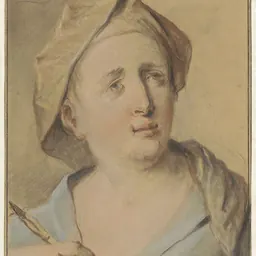
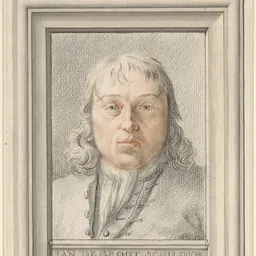


Related people
Same field, nearest in time



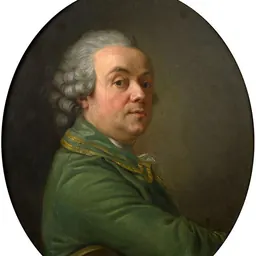

Contemporaries
People whose lives overlapped Jacob de Wit's


Frequently asked questions
Who was Jacob de Wit?
Dutch painter (1695-1754)
When was Jacob de Wit born?
Jacob de Wit was born on 19 December 1695 in Amsterdam.
When did Jacob de Wit die?
Jacob de Wit died on 12 November 1754 in Amsterdam.
What was Jacob de Wit's occupation?
Jacob de Wit was a painter, decorator, etcher and copper engraver.
What nationality was Jacob de Wit?
Jacob de Wit was Dutch.
Sources & further reading
Cite this page
APA: Biography.guide. (2026). Jacob de Wit. https://biography.guide/jacob-de-wit/
MLA: "Jacob de Wit." Biography.guide, https://biography.guide/jacob-de-wit/.
Chicago: "Jacob de Wit." Biography.guide. https://biography.guide/jacob-de-wit/.
Data last updated: 2026-09-20 · Spot an error? Report a correction.
Page generated 2026-09-27 05:31 UTC