
About Jacob de Graeff
Lived 1642 – 1690 (aged 47). Jacob de Graeff was a Dutch politician.
Jacob de Graeff (28 June 1642 in Amsterdam – 21 April 1690 ibid) was a member of the De Graeff-family from the Dutch Golden Age. He was an Amsterdam regent and held the title as 20th Free Lord of Ilpendam and Purmerland.
His political stance was characteristic of his family, on the one hand libertine and 'state oriented', republican on the other hand, if only partially, loyal to the House of Orange, the royalists. De Graeff was in intimate contact with the statesmen Johan de Witt and Willem III of Orange and the poet Joost van den Vondel.
Biography Origin
The De Graeff-family belonged to the ruling states oriented patriciate of the province of Holland. Both Jacob's father Cornelis de Graeff and his uncle Andries de Graeff were critical of the Orange family's influence. Together with the Republican political leader Grand Pensionary Johan de Witt, the De Graeff family strived for the abolition of stadtholderships, but also try to keep a good relationship with them and their sympathizers. They desired the full sovereignty of the individual regions in a form in which the Republic of the Seven United Netherlands was not ruled by a single person. Instead of a sovereign (or stadtholder) the political and military power was lodged with the States General and with the regents of the cities in Holland.
In 1648 Jacob, among three other young persons, laid the foundation stone for the new city hall on the Dam and Joost van den Vondel wrote the poem Bouwzang to Jacob. His shovel decorated with his coat of arms is now in the collections of Amsterdam's Rijksmuseum. The history of the origins and the year of this first laying of the stone was recorded in Latin script by Cornelis de Graeff on a black marble slab in one of the courtrooms:
On October 29, 1648, the year that ended the war that the united Low German peoples had waged on land and sea in almost all parts of the world for more than 80 years with the three powerful Philip, the kings of Spain, on land and at sea in almost all parts of the world for more than 80 years, after national freedom and freedom of belief were secured, during the government of the excellent mayors Gerb. Pancras, Jac. de Graef, Sib. Valchenier Pet. Schaep, the mayor's sons and blood relatives laid the foundation for this town hall by laying the foundation stone.
In 1660, Jacob's father Cornelis and his cousin Johan de Witt chaired a commission of the Dutch States-General, through which Cornelis de Graeff, De Witt and Gillis Valckenier became the guardians of Prince Willem III of Orange-Nassau, the child of the state, who later became King of England, Scotland and Ireland and stadtholder of the United Provinces of the Netherlands. During the summers the family spent a lot of their time at the Palace Soestdijk, and Jacob and his brother Pieter played with the young Willem at the lake and woods at Soestdijk.
When Mary Henrietta Stuart and Willem III visited Amsterdam in 1660, De Graeff was dismissed as the prince's personal escort during their stay. He was also responsible for the procession of the troops as a cornet alongside Captain Jan van Waveren and Lieutenant Dirck Tulp.
In 1661 Joost van den Vondel dedicated his Adonias to the young Jacob. After he finished his studies at the University of Harderwijk De Graeff returned to Amsterdam. In 1667 he was appointed Commissioner for sea affairs (Navy and Trade ) in Amsterdam and Military Commander (of the Citizens' Guard) of Amsterdam.
De Graeff and the women Marriage with Maria van der Does In 1666 Jacob de Graeff married Maria van der Does (1649–1667), daughter of Willem Simonsz van der Does (1608–1666), legal scholar, and Catharina Hendriksdr Salomon (* 1608), who was married first to the wealthy Amsterdam patrician Jacob Bas (1603–1645). Maria was thus a rich heiress who brought him a fortune of 400,000 guilders. However, she died three months after the wedding and therefore childless. and son of the former council pensioner Adriaan Pauw. There Jacob had fallen in love with Pauw's only daughter, Anna Christina Pauw van Bennebroek (1649–1719), the extremely beautiful and wealthy "Juffrouw van Bennebroek", who, as Adriaen's heiress, expected an immense inheritance and the title of Bennebroek. She was considered a popular marriage partner among The Hague aristocracy.
Rampjaar and later years In early 1672 Jacob de Graeff became as a Schepen member of the Government of the City of Amsterdam. lost their political positions.
After the events of the Rampjaar Jacob sought the favor of William III and Amsterdam's new powerful politician Gillis Valckenier. But also Wilhelm III could not rely on Jacob's intervention to fill the rebellious Amsterdam city government with his confidants. Jacob owned the castle Ilpenstein. He died 1690 and his tomb chapel is to be found in the Oude Kerk at Amsterdam.
Patron of arts
Jacob de Graeff was, like his father Cornelis and his uncle Andries, surrounded himself with art and beauty. He was an art collector and patron to some famous artist There are individual portraits of Jacob created by Gerard Ter Borch and Karel Dujardin as well as an equestrian portrait by Thomas de Keyser. In his youth, furthermore he was portrayed in 1652 together with his parents and his brother by Jan Victors as archfather Isaac and Rebekah and his children Esau and Jacob. The painting The Arrival of Cornelis de Graeff and Members of His Family at Soestdijk, His Country Estate by Jacob van Ruisdael and Thomas de Keyser shows him and his brother Pieter on their horses driving up with his parents and his uncles Willem Schrijver, Pieter Trip and Andries de Graeff in front of his father's country house in Soestdijk. Poet Joost van den Vondel dedicated some poems to him.
Later paintings: The 19th-century history painter Barend Wijnveld painted Jacob at the laying of the foundation stone for Amsterdam's Op den Dam town house. In 2007, Austrian artist Matthias Laurenz Gräff, a distant descendant of De Graeff, used Ter Borch's painting of Jacob in his painting "Im herbstlichen Wald" (In the autumnal Forest) as part of his diploma thesis. In 2018 the American artist Kehinde Wiley created a new version of the portrait of Ter Borch.
Don’t just read it —
keep it.
Full-length biographies made to live with: read them, listen on the way to work, watch them tonight.
- E-book
- Audio
- Video
Instant download · yours to keep · every purchase keeps this site free
Important facts
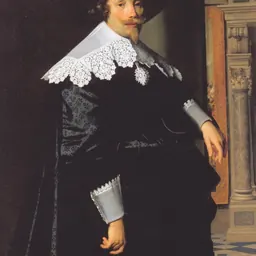
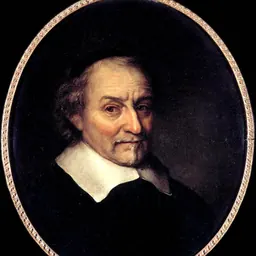
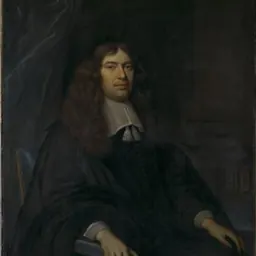
People in Jacob de Graeff's life
Named in this biography and alive at the same time




Related people
Same field, nearest in time

Contemporaries
People whose lives overlapped Jacob de Graeff's




Frequently asked questions
Who was Jacob de Graeff?
Dutch noble (1642-1690)
When was Jacob de Graeff born?
Jacob de Graeff was born on 28 June 1642 in Amsterdam.
When did Jacob de Graeff die?
Jacob de Graeff died on 21 April 1690 in Amsterdam.
What was Jacob de Graeff's occupation?
Jacob de Graeff was a politician.
What nationality was Jacob de Graeff?
Jacob de Graeff was Dutch.
Sources & further reading
Cite this page
APA: Biography.guide. (2026). Jacob de Graeff. https://biography.guide/jacob-de-graeff/
MLA: "Jacob de Graeff." Biography.guide, https://biography.guide/jacob-de-graeff/.
Chicago: "Jacob de Graeff." Biography.guide. https://biography.guide/jacob-de-graeff/.
Data last updated: 2026-09-25 · Spot an error? Report a correction.
Page generated 2026-09-27 05:12 UTC