
About Jacob Campo Weyerman
Lived 1677 – 1747 (aged 69). Jacob Campo Weyerman was a Dutch writer, painter, botanical illustrator, art historian, etcher and cadet.
Jacob Campo Weyerman (9 August 1677 – 9 March 1747) was a painter and writer during the period known as the Dutch Enlightenment. His work encompassed flower and fruit still life paintings, satirical magazines, plays, and biographies of painters. He usually signed his paintings with Campovivo.
Biography
As tradition holds, he was born in a military camp outside Charleroi, where his father fought in the Dutch army against the French. His mother was a very independent woman of Scottish descent, Elisabeth Sommeruell, who kept a market tent in Charleroi and eventually was able to afford a house in the center of Breda. There he was taught in the arts and on reaching his majority, traveled to London in 1704 and found work at the academy of Godfried Kneller.
He claims that he also studied oil painting with the Flemish flower painter Simon Hardimé. He specialized in the painting of flowers and fruit. According to the almost contemporary artist biographer Arnold Houbraken, he was a member of the Bentvueghels with the nickname Compaviva, but this may be a mistake. Though Weyerman was known for his embellishments of the truth, he never boasted about the Italian bent. Houbraken may have confused him with Jakob Christoph Weyermann, a German painter active in Augsburg in the first half of the 17th century. In 1720 he returned to the Netherlands and started a periodical called Hermes.
He wrote prose in a colorful style, and could flatter as easily as he offended his contemporaries. Jacob Campo Weyerman is not only interesting to modern readers for his literary qualities, but also as a source for historians on cultural life in the 18th century. Especially his magazines give a glimpse of daily life in Dutch taverns and coffee houses and the tourist attractions.
The Lives of Dutch painters and paintresses
After Arnold Houbraken died, he also published biographies of painters in his De levens-beschryvingen der Nederlandsche konst-schilders en konst-schilderessen, or The Lives of Dutch painters and paintresses, in four parts during the years 1729–39. Though leaning heavily on Houbraken's work, he seems to have intended his version as a rebuttal to some of the anecdotes in Houbraken's work. Moreover, Weyerman also made use of one of Houbraken's sources, namely Cornelis de Bie's Het Gulden Cabinet. Houbraken's son Jacobus Houbraken, who had helped his mother finish Houbraken's third volume, also helped Weyerman with engravings and made the portrait of him in his book after a design by Cornelis Troost.
In the decorative frame of the portrait, a piece of paper illustrating a book title page shows the words "Den Ontleeder der Gebrekken", which means the Anatomist of Faults. It is unclear today how many of Weyerman's anecdotes are based on truth or fiction. His weekly magazines were very popular. Their sensationalism and emphasis on scandals caused him to have many enemies which led to his conviction for slander and a life sentence. This was a particularly heavy sentence, and he lived in the prison in The Hague from 1738 until his death nine years later at the age of 69.
Literary works Democritus en Heraclitus Brabantsche Voyage (1701) De Rotterdamsche Hermes (1720–1721) Den ontleeder der gebreeken. Deel 1 (1724) Historie des Pausdoms (1725–1728) Den ontleeder der gebreeken. Deel 2 (1726) De levens-beschryvingen der Nederlandsche konst-schilders en konst-schilderessen, door Jakob Campo Weyerman, Konst-schider. Verrijkt met nieuwe Vignetten, Vierde Deel. Te Dordrecht, By Ab. Blussé en Zoon, MDCCLXIX (1729–1769) De Leevensbyzonderheden van J.H. baron van Syberg (1733) Den adelaar (1735)
Don’t just read it —
keep it.
Full-length biographies made to live with: read them, listen on the way to work, watch them tonight.
- E-book
- Audio
- Video
Instant download · yours to keep · every purchase keeps this site free
Important facts
more
CampovivoPeople in Jacob Campo Weyerman's life
Named in this biography and alive at the same time
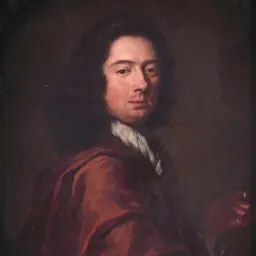
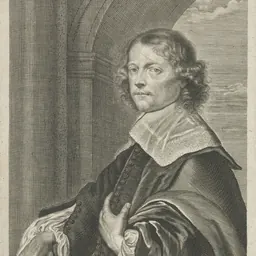

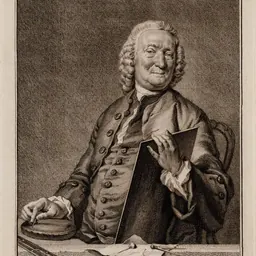

Related people
Same field, nearest in time
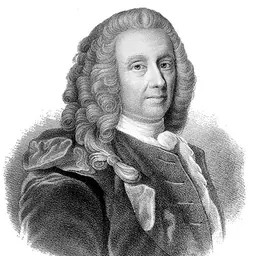




Contemporaries
People whose lives overlapped Jacob Campo Weyerman's



Frequently asked questions
Who was Jacob Campo Weyerman?
Dutch painter, biographer, playwright and army cadet (1677–1747)
When was Jacob Campo Weyerman born?
Jacob Campo Weyerman was born on 9 August 1677 in Charleroi.
When did Jacob Campo Weyerman die?
Jacob Campo Weyerman died on 9 March 1747 in The Hague.
What was Jacob Campo Weyerman's occupation?
Jacob Campo Weyerman was a writer, painter, botanical illustrator, art historian, etcher and cadet.
What nationality was Jacob Campo Weyerman?
Jacob Campo Weyerman was Dutch.
Sources & further reading
· Wikipedia: Jacob Campo Weyerman
· DBpedia: Jacob Campo Weyerman
Cite this page
APA: Biography.guide. (2026). Jacob Campo Weyerman. https://biography.guide/jacob-campo-weyerman/
MLA: "Jacob Campo Weyerman." Biography.guide, https://biography.guide/jacob-campo-weyerman/.
Chicago: "Jacob Campo Weyerman." Biography.guide. https://biography.guide/jacob-campo-weyerman/.
Data last updated: 2026-09-20 · Spot an error? Report a correction.
Page generated 2026-09-27 05:19 UTC