
About Jackson Scholz
Lived 1897 – 1986 (aged 89). Jackson Scholz was an American sprinter and athletics competitor.
World War I On June 5, 1918, Scholz registered for the draft. He asked and was accepted into the Navy’s flying division. He put his senior year at the university on hold. He reported to the Dunwoody Naval Training Station, Minneapolis, for basic training as a flyer on September 3. The November 11 Armistice made his service less timely. Nevertheless, by Thanksgiving he had transferred to the Miami Naval Air Station to continue training “for my own satisfaction”. In a letter to Schulte, he described the thrill of flying, even as a passenger: “While we were upside down 3,000 feet above the bay, I couldn’t help but hope that my safety belt would remain well fastened. Lots of fun.”
While serving, Scholz continued track training. In February 1919, at the Inter-Naval Aviation Meet, Key West, he won the 50-yard high hurdles and ran on the winning relay. On March 1, at Royal Palm Park, on the edge of the Everglades, the Miami Naval Air Station lost a dual meet with the Key West Air Station. However, Scholz won the 100 (10.1) and the broad jump (20 ft 11 in), but had to settle for a tie in the 220 at 24.2.
In March, Scholz transferred to Naval Air Station Pensacola to complete his training. In May, he was commissioned an ensign, discharged, and returned to Missouri.
As he recalled his experiences:
In World War I, I fought in the battle of Miami and Pensacola, and flew such balls of fire as the old N-9s, H-boats, F-boats, and something, which for want of a better name, the fellows called a Gyrene. It was a double pontooned biplane with a four-cylinder Hall-Scott motor which throve on castor oil, but didn’t seem to care for it after it reached an inky stage. Then it would spray the black stuff back across the pilot and his passenger, until they looked like a pair of end men. . . . Getting caught up there in the rain was just like having someone hurl gravel in your face.
In September 1919, he began his senior year at Missouri. He tried to join the football team, but Coach Shulte, also head football coach, forbade it. In track, Scholz was named an All-American.
Olympics 1920 Antwerp The sprint events in the U.S. Olympic Trials took place on July 16–17, at Harvard Stadium. Scholz competed in the 100- and 220-yard dashes. (The Olympic events were 100 and 200 meters.)
In the 100, he won his heat in 10.2. The next day he won his semi in 10.0, then in the final ran an estimated 10.1 to finish second to Loren Murchison’s 10.0. In the 220, Scholz was second in his heat, time unknown. He didn’t finish in the top three in either semi, and didn’t make the final, limited to six runners.
Trial placing was not binding on the Olympic team selectors until 1928. For the 1920 games, Scholz was selected for the 100 and the 4x100 relay. “When I was actually assured of being a member of the sixth American Olympic team,” he wrote, “I was hardly able to grasp the wonder of it.”
The team crossed the Atlantic on the USS Princess Matoika, a ship that had just come in loaded with the remains of fallen soldiers.
Nevertheless, on August 15, he won his 100 heat and quarterfinal, both in 10.8 seconds. The next morning, he ran 10.9 in his semifinal, finishing second to Harry Edward (Great Britain). “It was a cold day,” recalled Charley Paddock (USA). “The track was wet and our own track suits were more or less soaked.” Just before taking the track for the final, head track coach Lawson Robertson took the four American qualifiers to “a little café above the stadium” and treated each to a “sherry and raw egg” to boost their spirits. “We all thought we were going to be drunk.” In the race, the inexperienced officials—in Scholz’s view—made a mess of the start and blanket finish. Paddock, 10.8, and Morris Kirksey (USA), 10.9, were certain for gold and silver. Scholz was given fifth at 10.9. “When the photographs came out, showing me with an indisputable third, the officials reluctantly compromised and gave me a fourth.” Edward, 10.9, was awarded the bronze. Commenting on the difference between the trials distance of 100 yards and the international standard of 100 meters—about ten yards longer—Scholz explained: “I ran a swell one hundred yards, but finished fourth. . . . It was a good lesson.”
On August 21, the final day, the American team of Paddock, Scholz, Murchison, and Kirksey, running in that order, won the first of three semis in 43.0. The following day, the identical lineup contested the final. According to Paddock, they “trotted out on the field, late as usual.” In 1927, Scholz recalled, “When Paddock passed the baton to me, I snatched it from his hand so fast that he thought we had lost it. He says that he still has heart failure when he thinks of it.” In fall 1923, he began training seriously, writing in the day and running in the evening. His participation in the 1924 Olympic Trials (Harvard Stadium, June 13–14) was considered a comeback and, since he was well past prime for a sprinter at 27, a longshot. Yet, he emerged the biggest name of the star-studded U.S. track and field team headed for Paris.
In the 100 meter heats, Scholz and Paddock advanced with the fastest times of 10.6, which matched the standing Olympic record. Later that day, Scholz won his semi in another 10.6, the best time of the round. The next day, 35,000 spectators endured a drizzling rain to watch the action. In the 100 final, the top three finishers were clocked at 10.6. In an upset, Chester Bowman won, while Scholz and Paddock tied for second.
Scholz owned the 200, however. On June 13, his 21.0 in the fourth heat bested the world record. He topped himself the following day by winning his semi in 20.9. He then won the final in 21.0, beating second-place finisher Bayes Norton by a dominant two-tenths.
Scholz became the clear favorite to win the 200 in Paris, and a strong contender for the 100. He was also named to the 4x100 relay team. His highest praise came from rival Paddock, writing for his hometown Pasadena Star-News: “Few men have ever possessed as much sheer speed, as fast a start, or been more consistent through the years, than the little Missourian,” adding to the list his “marvelous pick-up at about seventy or eighty yards”.
At the Olympics (July 5–27), Scholz competed in the 100 and 200. Ultimately, the selectors left the top Americans, including Bowman, Scholz, and Paddock, off the relay team. (The second-tier U.S. team broke the world record twice and tied their fresh record in winning the final.)
On July 6, Scholz won both his 100 heat and quarterfinal in 10.8. Harold Abrahams (Great Britain) tied the Olympic record of 10.6 in his quarterfinal. The next day, the semis were “run in the rain, on a soft, heavy track.” Scholz won the first semi in 10.8; in the second, Abrahams tied the OR again. The four American finalists (of six slots) had three hours to kill in the athlete’s tent before the final. They decided “that unless a miracle occurred [they] would be beaten” by Abrahams. Not only was he too fast, his long stride was deemed an additional benefit on the “slushy track.”
On July 8, Scholz won his 200 heat in 22.4, and his quarterfinal in 21.8. Paddock was the second slowest quarterfinal qualifier at 22.2. That evening, he dined with film actors Douglas Fairbanks, Mary Pickford, and Maurice Chevalier at the luxury Hôtel de Crillon, confessing his lack of confidence. The other medals went to Paddock, 21.7, and Liddell, 21.9. The other finalists were Hill, 22.0, Bayes Norton, 22.0, and Abrahams, 22.3. The USA placed 1, 2, 4, and 5, while Great Britain took 3 and 6. Paddock called Scholz’s win, given his lengthy absence from the sport, “one of the greatest surprises ever registered in the history of sprint running.” Paddock felt it gained him a foot or two. The technique is clearly visible in a widely-reprinted photo of the 200 finish, which provoked speculation that Paddock’s leap may have cost him the gold.
In 1982, Scholz recalled the games:
I really had never heard of Harold Abrahams or Eric Liddell before the Olympics. They didn’t have an international reputation, but they won two big races [100, 400] against our strongest runners. . . . [In the 100,] Abrahams was running on an inside track that had been smoothed over because it was used for the decathlon event earlier. . . . But he deserved to win—he got a great start and made the most of it.
In the aftermath of the games, Scholz led the unofficial “World’s Fastest Human” competition, an inevitable debate that usually follows the Olympics. Scholz’s 200 dominance (trials and games), plus his 100 silver, made the argument. Abrahams had been stellar in the Olympic 100 but fell to a distant sixth and last in the 200; he medaled in the relay but finished second to the American team. Scholz supplanted Paddock, who the title had originated with in 1921. After the race, Paddock said, “Congratulations, Jack. You just cost me $25,000,” alluding to the “fat lecturing contracts” that awaited him contingent on his retaining the title.
1928 Amsterdam
The year was another comeback for Scholz whose writing career was well underway as he aimed to make his third Olympic team. The men’s Olympic Trials were again held at Harvard Stadium, July 6–7. Four rounds of the 100 were completed on the 6th, while three rounds of the 200 were run the next day.
Scholz won the fifth heat of the 100 in a relatively slow 11 seconds. He slipped to second in the second quarterfinal, then took another second in the first semi. In the final, he fell to fifth meaning he didn’t qualify for Amsterdam in the event and wasn’t selected for the relay.
In the 200, he won the fifth heat in 21.6. He finished second in the first semi, and third in the final in an estimated 21.5. Thus, his only event in the Olympics was the 200.
On July 31, he won both his heat, 22.2, and quarterfinal, 21.8. The next day, Scholz ran the second fastest time in the semis, 21.9, finishing behind Helmut Körnig’s (Germany) 21.8. (Körnig had tied the 21.6 OR in the quarterfinals.) Both were upset in the final by Percy Williams (Canada), 21.8, and Walter Rangeley (Great Britain), 21.9. Körnig and Scholz both timed 21.9, as well. After a lengthy deliberation by the judges, a dead heat was declared for third. A runoff was scheduled for the morning of August 3, but Scholz proved hard to locate. On the 3rd, he gave his side:
I first heard of the possibility of the runoff last night. I went to see Gen. Douglas MacArthur, president of the American committee, who assured me there would be none. I had broken training anyway but I might have competed. Today I was given five minutes’ notice to run, an official accosting me when I had a big Dutch cigar in my mouth.
“Broken training” was a euphemism. As Scholz recounted in 1982, after the meeting with MacArthur, “I tied one on that night and was in no shape to run”. and was awarded the bronze. The outcome must have grated on Scholz. When recounting his achievements, he always called his result a tie for third rather than a fourth.
Film of the 200 final has confirmed that Körnig edged out Scholz.
1932 attempted comeback In January 1932, with the Los Angeles Summer Olympics looming, it was widely reported that Scholz would attempt another comeback. By some measures, the timing was ideal. He’d be racing on home turf, the same city where his sprint career had begun; and American fans were desperate for a savior after being shut out of the 100/200 medals in Amsterdam. But time didn’t cooperate with Scholz, as he recounted later in the year:
Early in the season, I experienced a substantial touch of Olympic fever, dug my track shoes from the bottom of a trunk, and conceived the fine idea of trying for my fourth Olympic team. I worked daily with [American team head coach] Lawson Robertson’s squad at Franklin Field [University of Pennsylvania, Philadelphia], and surprised myself by finding that there was still something left in the old legs. But that, apparently, was as far as it went. The flesh was willing enough, but the spirit rebelled, and I found, for the first time in my life, that training was an effort. . . . I forgot about it.
But for Scholz, “The old ambition seemed hard to muster again. The firing pistol had lost a little of its thrill.” Charles W. Burton, a wealthy Detroit real-estate developer and sports enthusiast, found him an easy job in real estate. He ran for the Detroit Athletic Club, but got bored with real estate after two years. He went to New York and got hired as a “bin monkey” in a hosiery factory, sorting socks into bins. About half of his articles were about track and field; he also covered college football and professional boxing. But there were less than twenty short articles in a year. He explained his departure: “editing wires—making 2,500 words into twenty-five lines—lost its thrill after a time.” It was a short romcom with some clever writing that drew upon Scholz’s Navy background. The setting was Miami, Key West, and environs. The story involved a flying boat (seaplane) pilot and his challenging girlfriend Jill.
He next tried a new pulp (first issue, September 8, 1923), Sport Story Magazine, which offered a wide variety of sports fiction aimed at boys, the first magazine of its kind. He sent them numerous stories; all were rejected.
With the meteoric rise of comic books, starting in 1938, the pulps lost a large part of their juvenile audience, which helps explain Scholz’s change in fortunes at the end of the 1930s. Oliphant retired and the magazine switched to a monthly, halving the opportunities for authors. Scholz’s sales to S&S, and the pulps in general, declined. His pulp sales dwindled into the 1950s, as the market steadily contracted. though apparently Scholz never did any actual farming. In the film, Scholz engages in rigorous calisthenics. Scholz rebutted: “I am portrayed as a very active person. Hell, I was really one of the laziest men on the team.” In the film, Abrahams redeems his last place in the 200 final by winning the 100. In reality, the 100 came first on the schedule. Scholz, then, would receive any claim to redemption. In the film, Scholz hands Liddell a good-luck note before the 400 final. According to Scholz: “That would have been very dramatic, but I don’t remember ever speaking to Liddell, much less writing him a note.”
He felt no urgency to see the film. From what he’d heard, “I would probably be annoyed by the portrayal of the track meet and my character.”
Scholz vs. Paddock Charley Paddock died in 1943, depriving the record of his view of Chariots of Fire. In the film, Scholz and Paddock represent the American juggernaut that the British sprinters must overcome. In the broader view, Scholz and Paddock were the two most accomplished sprinters of the era.
The unexpected detail is that both were already making money as professional writers by the time of the 1924 games; both became accomplished career writers. They wrote about each other on occasion when their sprinting careers were active, and retrospectively after their sprint heroics had ended. Scholz specialized in fiction whereas Paddock wrote sports journalism and eventually managed a string of newspapers.
They had numerous other similarities. They were roughly the same height (5 ft 7 in) though Paddock outweighed Scholz by about 30 lbs. Both were barred by their college coaches from playing football (Paddock ).
Their Olympic careers were a close match. Each ran in the same three Olympics: 1920/24/28. They were the first sprinters to compete in three Olympics. They shared the gold medal in the 1920 4x100 relay. In 1920, Paddock took gold in the 100 and silver in the 200. In 1924, Scholz flipped it, taking gold in the 200 and silver in the 100. Paddock had an additional medal, the 200 silver in 1924. However, Scholz insisted he deserved the 100 bronze in 1920, and Paddock, who was in the race, agreed that he was “robbed.” Additionally, both athletes scaled back their running between games to work on their writing careers.
Both published their serialized memoirs in Sport Story Magazine, Scholz in 1927 and Paddock in 1928. Though Paddock only appeared in the magazine 15 times, he and Scholz had material in the same issue 7 times. By January 1930, he was already plotting his return. But, like Scholz’s comeback, it fizzled out in 1932.
Regarding their head-to-head matchups, Scholz frequently brought up the same stat: “I met him 17 times, and I beat him 12.” In 1982, an interviewer added, “Of his track accomplishments, Scholz recalls little but the duels he staged with the great Paddock.”
According to Scholz’s brother-in-law, “Jack said it just came naturally to him. He didn’t have to try, he was just born a fast runner.” all published by William Morrow.
Split Seconds: Tales of the Cinder Track (1927); collects Scholz’s first 10 stories from Sport Story Magazine; introduction by Grantland Rice Fighting Coach: A Football Story (1940) Soldiers at Bat (1942) Pigskin Warriors (1944) Goal to Go (1945) Batter Up (1946) Gridiron Challenge (1947) Fielder from Nowhere (1948) Johnny King, Quarterback (1949) Keystone Kelly (1950) Fullback for Sale (1951) Deep Short (1952) One-Man Team (1953) End Zone (1954) Base Burglar (1955) Fighting Chance, A (1956) Man in a Cage (1957) Bench Boss (1958) Perfect Game, The (1959) Football Rebels, The (1960) Center-Field Jinx (1961) Halfback on His Own (1962) Dugout Tycoon (1963) Fairway Challenge (1964) [golf] Rookie Quarterback (1965) Spark Plug at Short (1966) Backfield Buckaroo (1967) Big Mitt, The (1968) Fullback Fever (1969) Hot-Corner Hank (1970) Backfield Blues (1971)
Selected magazine writing Fiction “And Jill Came Tumbling After”, Argosy All-Story Weekly, July 14, 1923 [first known published fiction] “Pigskins and Pig-Heads”, Sport Story Magazine, October 22, 1926 [first football story] “A Matter of Temperament”, Sport Story Magazine, October 22, 1924 [first story in Sport Story] “The ‘M’ Table”, Sport Story, 2 April 1930 [Missouri] “Pigskin Pressure”, Thrilling Sports, January 1939 [first story in a Thrilling pulp] “Front-Page Tailback”, All-American Football Magazine, October 1942; and “Backfield Bomb”, Football Stories, October 1942 [first stories in Fiction House pulps] “One More Mile”, Sport Story Magazine, July 1943 [last issue of Sport Story] Royal Hall, “Somewhere in the Pacific”, Doc Savage, November 1943 [last appearance in a S&S pulp] “Keystone Feud”, Boys’ Life, July 1949 [first in a series of 20 appearances in the Boy Scouts magazine] “Gridiron Milkman” (2-part serial), Boys’ Life, November, December 1958 [last known magazine fiction]
Nonfiction United Press, “Will Paddock Yield to Eastern Call?”, July 22, 1922 [first found bylined piece as United Press Staff Correspondent] United Press, “Miss Brown Is Indignant at Statements”, June 9, 1923 [last found bylined piece as United Press Staff Correspondent] Spiked Shoes and Cinder Paths, by Mel Sheppard (11-part serial), Sport Story Magazine, May 8–Oct 8, 1924 [ghostwritten by Scholz] United Press, “Finnish Runner Breaks Two World’s Records”, January 9, 1925 [Scholz add-on to UP report on Paavo Nurmi] The Cinder Trail, Sport Story Magazine, 5-part serial, July 22–September 22, 1927 [autobiography] “Missouri—My School”, College Stories, July 1931 “California or Bust!”, Sport Story Magazine, August 25, 1932 [analysis of competing at the Olympic level, with some personal reminiscences]
Don’t just read it —
keep it.
Full-length biographies made to live with: read them, listen on the way to work, watch them tonight.
- E-book
- Audio
- Video
Instant download · yours to keep · every purchase keeps this site free
Important facts
People in Jackson Scholz's life
Named in this biography and alive at the same time





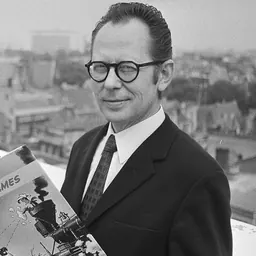
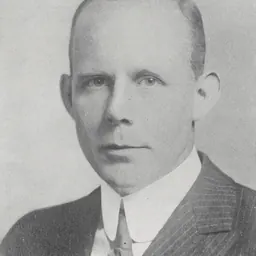
Related people
Same field, nearest in time

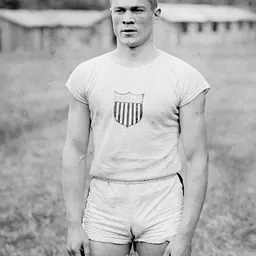


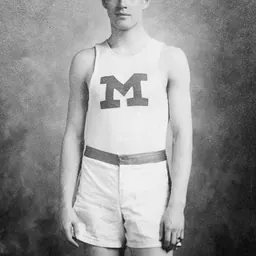
Contemporaries
People whose lives overlapped Jackson Scholz's


Frequently asked questions
Who was Jackson Scholz?
athletics competitor (1897–1986)
When was Jackson Scholz born?
Jackson Scholz was born on 15 March 1897 in Buchanan.
When did Jackson Scholz die?
Jackson Scholz died on 26 October 1986 in Delray Beach.
What was Jackson Scholz's occupation?
Jackson Scholz was a sprinter and athletics competitor.
What nationality was Jackson Scholz?
Jackson Scholz was American.
Sources & further reading
Cite this page
APA: Biography.guide. (2026). Jackson Scholz. https://biography.guide/jackson-scholz/
MLA: "Jackson Scholz." Biography.guide, https://biography.guide/jackson-scholz/.
Chicago: "Jackson Scholz." Biography.guide. https://biography.guide/jackson-scholz/.
Data last updated: 2026-09-20 · Spot an error? Report a correction.
Page generated 2026-09-27 05:31 UTC