
Charley Paddock
American athlete and Olympic gold medalist
About Charley Paddock
Lived 1900 – 1943 (aged 42). Charley Paddock was an American actor, sprinter, athletics competitor, film actor and athlete.
World War I era He interrupted his freshman year at USC to train at Camp Zachary Taylor, Louisville, Kentucky, from November 1918 to about January 1919, graduating as an Army 2nd lieutenant from the Field Artillery School. He restarted college in the second semester. He won the 100 and 200 m in the first major sporting event after the war, the 1919 Inter-Allied Games, in which soldiers of the Allied nations competed against each other. Paddock lettered at USC consecutively from 1920-1923, and captained the team as a senior in 1923. He attended the university aided by an athletic scholarship. During his collegiate years, in 1921, he first set 100-yard dash world record and tied the world record in the 220-yard dash at a Berkeley, California track meet. In Belgium, he had his greatest successes, winning the 100 m final, while placing second in the 200 m event. With the American 4 × 100 m relay team, Paddock won a third Olympic medal. Paddock became well known for his unusual finishing style, leaping towards the finish line at the end of the race.
In 1921 year, he ran the 110 yd dash, which is slightly more than 100 m, in 10.2 seconds. It was not until 1956 that the world record for the 100 m became lower than Paddock's time over 110 yard. Paddock broke or equaled several other world records over Imperial distances. at the 1924 Paris Olympics, Paddock again qualified for both the 100 and 200 m finals, but he was less successful than four years earlier. Paddock finished 5th in the 100 m and won another silver medal in the 200 m., and was not a part of the American relay team. In Chariots of Fire, the 1981 Oscar-winning film about those races, Paddock was portrayed by Dennis Christopher.
Again under the management of Lawson Robertson in 1928, Paddock participated in his 1928 Amsterdam Olympics, running a 22.1 in the semi-final of the 200m sprint, but did not reach the final. Percy Williams of Canada took the gold with a time of 21.8, Walter Rangley of Great Britain took the silver with a time of 21.9, Helmut Kornig took the Bronze with a time of 21.9.
1932 attempted comeback
In July 1929, Paddock announced his retirement from running in a syndicated news article. By early 1930, he'd changed his mind and started aiming at making his 4th Olympic team. It didn't work out, and at the Olympics Trials, July 15–16, 1932, he was merely a spectator.
Writing career Paddock aspired to be an author from an early age. While a 13-year-old 8th grader at Throop Polytechnic, his local Pasadena Star described him as “writing a number of stories that have won high praise from his teachers and friends.” He also edited Throop’s school paper, Elementary Life.
At USC, he wrote for the Daily Trojan, serving as editor-in-chief for the 1920–21 school year.
After attending the Inter-Allied Games, Paris, in 1919, he wrote a 10-part series about the event for the Pasadena Star-News. He followed up with two 4-part series on postwar conditions abroad. He continued as an occasional sports reporter for the Star-News. A highlight was his 12-part report on the Antwerp Olympics. He joined the staff of the Star-News in this period.
In 1921, he said that “his greatest ambition in life is to become a novelist really worth while.” That year, he started a long record of appearing in mass-market magazines like Leslie's, Scientific American, and Physical Culture, generally writing about track and fitness. He eventually appeared in the most popular magazines, like the Saturday Evening Post and Collier's. He never published a novel.
After the first semester of his senior year at USC, in January 1922 he graduated with a B.A. in English. He took a break from running to devote his time to writing. He began producing sports reports for other area newspapers.
His career arc was more or less set. He wrote hundreds of articles and columns for the Star-News, while occasionally appearing in other local newspapers, and national magazines. When his reporting had broader interest, his articles were syndicated nationwide. In the 1920s, his writing was off and on as he traveled extensively to compete; once his running career wound down, he became a more productive writer.
Paddock married Neva Prisk Malaby on December 11, 1930, at the home of her parents, Mr. and Mrs. Charles H. Prisk. Prisk published the Star-News, the Long Beach Press-Telegram, and other local papers. Neva had a son from a previous marriage, Charles Prisk Malaby (1924–2007); Paddock and Neva had one child together, Charles William Paddock, Jr. (1931–2024).
Paddock published his memoirs twice. The first was Flying Feet, serialized in six parts by Sport Story Magazine (March 8–May 22, 1928). The second was his book The Fastest Human (1932). His only other book was Track and Field (1933), a technique manual.
Following the death of the business manager on March 15, 1933, on April 1 Paddock became business manager of Prisk’s Long Beach Press-Telegram. In August, he was elected a director of the Press-Telegram Publishing Company. He continued to write regularly for the papers while serving in management.
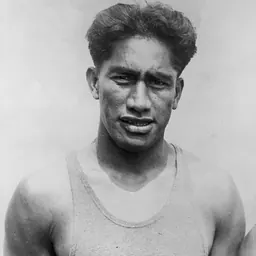
After Charles H. Prisk died on March 4, 1940, Paddock was elected vice president and general manager of Prisk’s newspapers. He was essentially editor-in-chief though the title was left in Prisk’s name to honor his memory. Numerous sports celebrities were cast in dramatic roles in feature films: Jack Dempsey and Gertrude Ederle (1924); Duke Kahanamoku and Paddock (1925); Red Grange, Gene Tunney, and Bill Tilden (1926); and Babe Ruth (1927).
Paddock’s first film, and first starring role, was Nine and Three-Fifths Seconds (1925), the title a callback to his 9.6 of April 25, 1924, run in a pouring rain at the Drake Relays, which tied the world record in the 100-yard dash. In the film, he’s thrown out of his home, and raises his fortunes through a series of heroics which all include running fast. In the climax, he goes to the Olympics and wins the sprint—and the girl.
Paddock’s next picture, The Campus Flirt (1926), came out a year later and was uniformly advertised as his first film role. He didn’t star this time, rather he was featured, his name listed below the star, Bebe Daniels. The film is about a spoiled girl in college who, it turns out, can run faster than anyone on the women’s track team. The coach of the team is Charley Paddock, using his own name. But he’s not the love interest; that belongs to another student. In real life, according to the press coverage, Daniels and Paddock became engaged during the making of the film. One movie mag devoted four photo-illustrated pages to the subject, describing Charley’s insistence on an early marriage, while Bebe declared, “It’ll be at least a year.” Several months later, they called off the engagement, vowing to remain “just friends.”
Daniels attracted most of the critical attention, but well-known critic Epes W. Sargent offered: “Charles Paddock proves that he can act as well as run.”
Paddock was then typecast in films released weeks apart, both minor parts. In Fox’s High School Hero (October 16, 1927), he played a basketball coach. In Columbia’s The College Hero (October 29), he played a football coach, and also served as technical advisor. After the latter was released, Variety snarked, “Charles Paddock, the running man, seems to go from one Hollywood studio to another impersonating head coaches.” However, playwright Robert E. Sherwood, who praised High School Hero, commended the director for developing “hitherto unsuspected talents in Charles Paddock.”
Paddock got one last shot in feature films, starring in The Olympic Hero, another rags-to-riches story of a commoner who wins the big race—and the girl. The film’s release was timed to coincide with the runup to the Amsterdam games (July 28–August 12, 1928). It debuted in Washington, D.C. on April 21 in a 30-minute version, after which Paddock spoke to the audience. In May, the presentation moved on to New York, then Boston. “He has a good act,” wrote a New York reviewer, “standing out there in front of a rose-pink velvet curtain in white ducks, with a mellow golden spotlight.” In June, a 60-minute general release version played around the country.
Before the Washington debut, Paddock was already receiving blowback from the custodians of amateur athletics, based on the presumption that he was being paid for his involvement in the film—acting and speaking. Allegations were referred to the Southern Pacific Association of the Amateur Athletic Union, the body that awarded Paddock his amateur credentials. Two weeks later, Paddock declared: “Oh, that’s all straightened out.”
The Olympic trials (July 6–7) provided another test. Paddock finished last in his 100 meters semi, while Southern California teenager Frank Wykoff won the final. The next day, Paddock finished second in the 200 to secure a spot on the team, but that initiated another protest over his eligibility. The case was handled quickly since the team was set to sail on July 10. Paddock presented affidavits from the producer and exhibitor that he had not been paid for The Olympic Hero, and was cleared. At the Olympics, however, his failure to make the 200 final became part of the disappointment of the U.S. being shut out of the 100 and 200 medals.
His experiences illustrated the risks of starring athletes in films, especially with a title like The Olympic Hero which implied promises about its athlete-actor that needed to be kept on two fronts, life and art. Not only his underwhelming performance in the Olympics, but the entire amateurism debate, told in bold headlines, overshadowed the film.
Two weeks after the Olympics, Paddock arrived back in the U.S. “I think the gong has sounded,” he said about his running career. “I am through.” Instead, he saw his future in “the moving pictures.” He expected to go to Paris in early 1929 to begin serious acting, in a picture which had nothing to do with athletics. Three days later, Variety gossiped that he was engaged to a French film star. Nothing came of the trip, the film, or the star.
In February 1931, Paddock signed a novel “no compensation” contract with Universal to appear in three shorts as part of Christy Walsh’s All-American Sports Subjects series which featured famous sports figures. Only one Paddock entry in the series is known, Running with Charles Paddock (10 minutes), added to film bills beginning in April 1932.
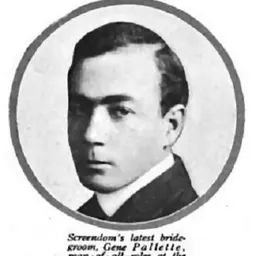
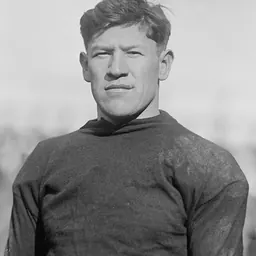
In May, a new company, Olympiad Pictures Corporation, was announced, with Paddock as president, actor James Gleason as vice-president, and sports writer Norman L. Sper as secretary and treasurer. Their mission was to create nine two-reel (20-minute) comedy films in a series called Jerry of the Journal. The films would be made at Metropolitan Studios and released through Educational Films Corporation of America. Sper was producer, Gleason director, and Paddock story writer. Veteran actor Eugene Pallette was cast as Jerry, a sports writer who covers a different sport in each film. Other cast members included Gleason’s wife Lucile Webster Gleason, son Russell Gleason, and famed athlete Jim Thorpe.
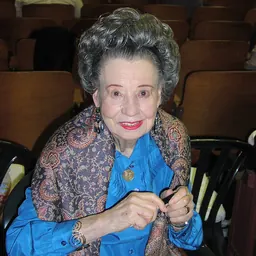
The first entry, Off His Base (IMDb, YouTube), a baseball story, was released on September 18, 1932. Erle Hampton, Hollywood publicity man, completed the continuity and dialogue. Diana Serra Cary (1918–2020), a child star of the early ’20s under the name “Baby Peggy” was cast for the series, but only appeared in this first film (as Peggy Montgomery). The second entry, Always Kickin' (IMDb, YouTube), football, was released on October 9. The third entry, A Hockey Hick (IMDb), was released on December 11. Thorpe was not in the film.
Only the three films were released. On April 1, 1933, Paddock took over the Long Beach Press-Telegram under emergency circumstances. Whether the early end of the series and the new position were related is unknown. But Paddock’s involvement in film was over.
Death and honors On July 10, 1942, Paddock was commissioned a captain in the USMC. He said he picked the Marines to "see plenty of action." On July 21, 1943, Major General William P. Upshur, his aide Paddock, and four others, died in a plane crash near Sitka, Alaska. Paddock is interred at Sitka National Cemetery.
In 1919, the University of Southern California established a scholarship in his name. In 1976 Paddock was inducted into the National Track and Field Hall of Fame.
Selected competition record WR=World Record
Don’t just read it —
keep it.
Full-length biographies made to live with: read them, listen on the way to work, watch them tonight.
- E-book
- Audio
- Video
Instant download · yours to keep · every purchase keeps this site free
Important facts
People in Charley Paddock's life
Named in this biography and alive at the same time


Related people
Same field, nearest in time

Contemporaries
People whose lives overlapped Charley Paddock's



Frequently asked questions
Who was Charley Paddock?
American athlete and Olympic gold medalist (1900-1943)
When was Charley Paddock born?
Charley Paddock was born on 11 August 1900 in Gainesville.
When did Charley Paddock die?
Charley Paddock died on 21 July 1943 in Sitka.
What was Charley Paddock's occupation?
Charley Paddock was an actor, sprinter, athletics competitor, film actor and athlete.
What nationality was Charley Paddock?
Charley Paddock was American.
Sources & further reading
Cite this page
APA: Biography.guide. (2026). Charley Paddock. https://biography.guide/charley-paddock/
MLA: "Charley Paddock." Biography.guide, https://biography.guide/charley-paddock/.
Chicago: "Charley Paddock." Biography.guide. https://biography.guide/charley-paddock/.
Data last updated: 2026-09-20 · Spot an error? Report a correction.
Page generated 2026-09-27 05:24 UTC