
Jim Thorpe
American track and field athlete and baseball player
About Jim Thorpe
Lived 1888 – 1953 (aged 64). Jim Thorpe was an American baseball player, basketball player, athletics competitor, actor, american football player and film actor.
Olympic medal controversy In 1912, strict rules regarding amateurism were in effect for athletes participating in the Olympics. Athletes who received money prizes for competitions, were sports teachers, or had competed previously against professionals, were not considered amateurs. They were barred from competition.
In late January 1913, the Worcester Telegram reported that Thorpe had played semi-professional baseball before the Olympics, and other U.S. newspapers followed up the story. Thorpe had played semi-professional baseball in the Eastern Carolina League for Rocky Mount, North Carolina, in 1909 and 1910, receiving meager pay; reportedly as little as US$2 ($ in ) per game and as much as US$35 ($ in ) per week. Later that year, the International Olympic Committee (IOC) unanimously decided to strip Thorpe of his Olympic titles, medals and awards, and declare him a professional. The IOC subsequently awarded the gold medal to silver medalist Hugo Wieslander, who refused to accept it, as he felt that Thorpe was the legitimate owner. In January 1913, he turned down a starting position with the St. Louis Browns, then at the bottom of the American League. Thorpe signed with the New York Giants baseball club in 1913, the defending 1912 National League champion. With Thorpe playing in 19 of their 151 games, they repeated as the 1913 National League champions. Immediately following the Giants' October loss in the 1913 World Series, Thorpe and the Giants joined the Chicago White Sox for a world tour. Barnstorming across the United States and around the world, Thorpe was the celebrity of the tour.
Thorpe's presence increased the publicity, attendance and gate receipts for the tour. He met with Pope Pius X and Abbas II Hilmi Bey (the last Khedive of Egypt), and played before 20,000 people in London including King George V.
Thorpe played sporadically with the Giants as an outfielder for three seasons. After playing in the minor leagues with the Milwaukee Brewers in 1916, he returned to the Giants in 1917. He was sold to the Cincinnati Reds early in the season. In the "double no-hitter" between Fred Toney of the Reds and Hippo Vaughn of the Chicago Cubs, Thorpe drove in the winning run in the 10th inning. Late in the season, he was sold back to the Giants. Again, he played sporadically for them in 1918 before being traded to the Boston Braves on May 21, 1919, for Pat Ragan. In his career, he amassed 91 runs scored, 82 runs batted in and a .252 batting average over 289 games. He continued to play minor league baseball until 1922, and once played for the minor league Toledo Mud Hens.
Football Thorpe had not abandoned football either. He first played professional football in 1913 as a member of the Indiana-based Pine Village Pros, a team that had a several-season winning streak against local teams during the 1910s. He signed with the Canton Bulldogs in 1915. They paid him $250 a game, a tremendous wage at the time. Before signing him Canton was averaging 1,200 fans a game, but 8,000 showed up for Thorpe's debut against the Massillon Tigers. The team won titles in 1916, 1917, and 1919. Thorpe reportedly ended the 1919 championship game by kicking a wind-assisted 95-yard punt from his team's own 5-yard line, effectively putting the game out of reach.
In 1920, the Bulldogs were one of 14 teams to form the American Professional Football Association, which became the National Football League (NFL) two years later. Thorpe was nominally their first president, but spent most of the year playing for Canton; a year later, he was replaced as president by Joseph Carr. He continued to play for Canton, coaching the team as well. Between 1921 and 1923, he helped organize and played for the Oorang Indians (La Rue, Ohio), an all-Native American team. Although the team's record was 3–6 in 1922, and 1–10 in 1923, Thorpe played well and was selected for the Green Bay Press-Gazette first All-NFL team in 1923. This was later formally recognized in 1931 by the NFL as the league's official All-NFL team.
Thorpe never played for an NFL championship team. He retired from professional football at age 41,
Basketball
Most of Thorpe's biographers were unaware of his basketball career until a ticket that documented his time in professional basketball was discovered in an old book in 2005. By 1926, he was the main feature of the World Famous Indians of La Rue, Ohio, a traveling basketball team. The team barnstormed for at least two years (1927–28) in multiple states.
For a brief time in 1913, he was considering going into professional hockey for the Tecumseh Hockey Club in Toronto, Ontario, Canada.
Honors and achievements
"You, sir, are the greatest athlete in the world." — King Gustav V of Sweden
National
Halls of fame Helms Athletic Foundation Pro Football Hall of Fame – Inaugural Class of 1950 Oklahoma Hall of Fame – Class of 1950 College Football Hall of Fame – Inaugural Class of 1951 Pro Football Hall of Fame – Inaugural Class of 1963 Statue of Jim Thorpe in the lobby of the Pro Football Hall of Fame Pennsylvania Sports Hall of Fame – Inaugural Class of 1963 American Indian Athletic Hall of Fame – Inaugural Class of 1972 National Track and Field Hall of Fame – Class of 1975 U.S. Olympic Hall of Fame – Inaugural Class of 1983 Oklahoma Sports Hall of Fame – Inaugural Class of 1986 Statue of Jim Thorpe American Football Kicking Hall of Fame – Inaugural Class of 2008 National Native American Hall of Fame – Inaugural Class of 2018 Middle Atlantic AAU Hall of Fame – Class of 2023
Track and field U.S. Olympic Trials Pentathlon Champion (May 18, 1912) 1st place – Running broad jump 1st place – 200 metres 1st place – Discus throw 2nd place – 1500 metres 2nd place – Javelin throw 2× Olympic Challenge Prize Winner (1912) The Swedish King's Challenge Prize Trophy The Emperor of Russia's Challenge Prize Trophy 2× Olympic gold medalist (1912) 1912 Olympic Pentathlon gold medal 1st place – Long jump 1st place – 200 metres 1st place – Discus throw 1st place – 1500 metres 3rd place – Javelin throw 1912 Olympic Decathlon gold medal 7th place in the 1912 Olympic Men's Long Jump Record-breaking 7,476 points The Thorpe Cup, an annual international decathlon and heptathlon meeting between the United States and Germany, is named in his honor (1993)
Football 3× Ohio League champion (1916, 1917, 1919) First-team All-Pro (1923) NFL 1920s All-Decade Team NFL 50th Anniversary All-Time Team No. 37 on The Top 100: NFL's Greatest Players First Commissioner of the NFL (1920–1921) As a coach 3× Ohio League champion (1916, 1917, 1919)
College College Football National Champion (BL) (1911) Heisman Trophy (NFF) (1911) Third-team All-American (1908) WC third-team All-American (1908) PI All-American team (1908) 2× Consensus All-American (1911, 1912) 2× WC first-team All-American (1911, 1912) WSF second-team All-American (1911) CC first-team All-American (1911) HL All-American team (1911) BM All-American team (1911) CSM All-American team (1911) SPS All-American team (1911) COMP first-team All-American (1912) NYS first-team All-American (1912) PI first-team All-American (1912) CSM first-team All-American (1912) BS All-American team (1912) RE first-team All-American (1912) WJM first-team All-American (1912) ASH first-team All-American TC first-team All-American (1912) PHD first-team All-American (1912) PW first-team All-American (1912) TET first-team All-American (1912) HF first-team All-American (1912) PP first-team All-American (1912) MDJ first-team All-American (1912) NCAA "unofficial" interceptions leader (1912) NCAA "unofficial" scoring leader (1912) 3× NCAA "unofficial" rushing yards leader (1908, 1911, 1912) FWAA Early Era All-America Team Walter Camp All-Time All-American Walter Camp All-Century Team The Jim Thorpe Award, named in his memory, has been awarded to the top defensive back in college football since 1986
Track and Field Penn Relays (1908) Tied-1st place – High jump Carlisle vs Syracuse Dual Meet (1908) 1st place – High hurdles 1st place – Low hurdles 1st place – Shot put 1st place – High jump 1st place – Broad jump 2nd place – Hammer throw Pennsylvania Intercollegiate Championships in Harrisburg, PA (1908) 1st place – High hurdles 1st place – Low hurdles 1st place – High jump 1st place – Broad jump 1st place – Hammer throw Middle Atlantic Athletic Association Championships in Philadelphia (1908) 1st place – High hurdles 1st place – Low hurdles 1st place – High jump 1st place – Broad jump 1st place – Hammer throw Carlisle vs Lafayette Dual Meet (1909) 1st place – High hurdles 1st place – Low hurdles 1st place – High jump 1st place – Long jump 1st place – Shot put 1st place – Discus throw 3rd place – 100-yard dash Middle Atlantic Indoor Championship Games at the Second Regiment Armory (1912) 1st place – 75-yard dash 1st place – 60 yard high hurdles 1st place – High jump 1st place – Shot put 2nd place – Standing triple jump
Ballroom Dancing Inter-Collegiate Ballroom Dancing Champion (1912)
Media Associated Press's Athlete of the Half-Century (1950) Associated Press's Greatest Football Player of the Half-Century (1950) Ranked #2 after Jesse Owens on the Associated Press's Greatest Track and Field Athletes of the Half-Century (1950) Shortly after his death in 1953, Time magazine named him The Greatest Athlete Greatest American Football Player in History in a poll conducted by Sport magazine (1977) Ranked #3 on the Associated Press's Top 100 Athletes of the 20th Century (1999) Ranked #7 on ESPN SportsCentury: Top 50 North American Athletes of the 20th Century (1999) Named America's Athlete of the Century by a resolutions of the U.S. House of Representatives and Senate (1999) ABC's Wide World of Sports Athlete of the Century (2000) In 2008, Sports Illustrated retroactively named Thorpe the Heisman Trophy winner for the 1911 and 1912 seasons Ranked #2 on Bleacher Report's Top 10 Greatest Athletes of All Time (2018) Ranked #5 on ESPN's Top 150 College Football Players of All Time (2020)
Marriage and family Thorpe married three times and had a total of eight children. In 1913, Thorpe married Iva M. Miller, They had four children: James Jr., Gale, Charlotte, and Grace Frances, an environmentalist and Native rights activist. Their son James Thorpe Jr. died in the influenza epidemic of 1918 at the age of three. Miller filed for divorce from Thorpe in 1925, claiming desertion.
In 1926, Thorpe married Freeda Verona Kirkpatrick (September 19, 1905 – March 2, 2007). She was working for the manager of the baseball team for which he was playing at the time. They had four sons: Phillip, William, Richard, and John Thorpe. In the 1932 comedy Always Kickin', Thorpe was prominently cast in a speaking part as himself, a kicking coach teaching young football players to drop-kick. He played the captain of the guard in 1935's She, an umpire in the 1940 film Knute Rockne, All American, and a member of the Navajo Nation in the 1950 film Wagon Master. An American Indian Magazine article states Thorpe appeared in over 70 films. Thorpe was seen in one scene as a coaching assistant. Thorpe was a chronic alcoholic during his later life. He ran out of money sometime in the early 1950s. When hospitalized for lip cancer in 1950, Thorpe was admitted as a charity case. At a press conference announcing the procedure, his wife, Patricia, wept and pleaded for help, saying, "We're broke ... Jim has nothing but his name and his memories. He has spent money on his own people and has given it away. He has often been exploited." While it is difficult to prove this, the public comment at the time largely reflected this view. At the time Thorpe won his gold medals, not all Native Americans were recognized as U.S. citizens (the U.S. government had frequently demanded that they make concessions to adopt European-American ways to receive such recognition). Citizenship was not granted to all American Indians until 1924.
When Thorpe attended Carlisle, the students' ethnicity was used for marketing purposes. The first notice of Thorpe in The New York Times was headlined "Indian Thorpe in Olympiad; Redskin from Carlisle Will Strive for Place on American Team."
Legacy
Olympic awards reinstated alt=One dollar coin depicting a headshot and two body shots of Thorpe competing. The text reads "Jim Thorpe / Wa-Tho-Huk" on top and "United States of America" on the bottom. Thorpe is featured on the reverse of the 2018 Sacagawea dollar.
Over the years, supporters of Thorpe attempted to have his Olympic titles reinstated. Olympic officials, including former teammate and later president of the IOC Avery Brundage, rebuffed several attempts. Brundage once said, "Ignorance is no excuse."
In 1982, Wheeler and Ridlon established the Jim Thorpe Foundation and gained support from the U.S. Congress. Armed with this support and evidence from 1912 proving that Thorpe's disqualification had occurred after the 30-day time period allowed by Olympics rules, they succeeded in making the case to the IOC. In October 1982, the IOC Executive Committee approved Thorpe's reinstatement. Thorpe's original medals had been held in museums, but they were stolen and have never been recovered. The IOC listed Thorpe as a co-gold medalist. It was backed by Pictureworks Entertainment, which is making a film about Thorpe. The petition was supported by another Native American Olympian, Billy Mills, who won a gold medal in the 10,000 meters at the 1964 Tokyo Games. In consultation with surviving family members of Wieslander,
Honors alt=Sports card of Jim Thorpe. In the center, he is shown from the torso up wearing his jersey. Thorpe's tribe, the Sac and Fox Nation, added Olympic rings to their official flag to honor him.
Thorpe's achievements received great acclaim from sports journalists, both during his lifetime and since his death. In 1950, an Associated Press poll of almost 400 sportswriters and broadcasters voted Thorpe the "greatest athlete" of the first half of the 20th century. That same year, the Associated Press ranked Thorpe as the "greatest American football player" of the first half of the century. Pro Football Hall of Fame voters selected him for the NFL 50th Anniversary All-Time Team in 1967. In 1999, the Associated Press placed him third on its list of the top athletes of the century, following Babe Ruth and Michael Jordan. ESPN ranked Thorpe seventh on their list of best North American athletes of the century.
Thorpe was inducted into the Pro Football Hall of Fame in 1963, one of seventeen players in the charter class. Thorpe is memorialized in the Pro Football Hall of Fame rotunda with a larger-than-life statue. He was also inducted into halls of fame for college football, American Olympic teams, and the national track and field competition. The fitness center and a hall at Haskell Indian Nations University are named in honor of Thorpe.
President Richard Nixon, as authorized by U.S. Senate Joint Resolution 73, proclaimed Monday, April 16, 1973, as "Jim Thorpe Day" to promote nationwide recognition of Thorpe's life. In 1986, the Jim Thorpe Association established an award with Thorpe's name. The Jim Thorpe Award is given annually to the best defensive back in college football. The annual Thorpe Cup athletics meeting is named in his honor. The United States Postal Service issued a 32¢ stamp on February 3, 1998, as part of the Celebrate the Century stamp sheet series.
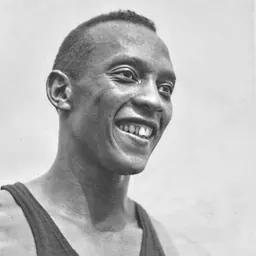
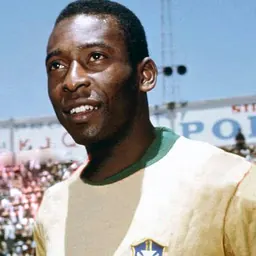
In a poll of sports fans published in 2000 by ABC Sports, Thorpe was voted the Greatest Athlete of the Twentieth Century; the pool of 15 other top athletes included Muhammad Ali, Pelé, Babe Ruth, Jesse Owens, Wayne Gretzky, Jack Nicklaus, and Michael Jordan.
In 2018, Thorpe was honored with the AAU Gussie Crawford Lifetime Achievement Award for his contributions to amateur sports. That same year, he was also commemorated on the Native American dollar coin; proposed designs were released in 2015.
In 2024, President Joe Biden announced that Thorpe would be awarded the Presidential Medal of Freedom, the highest civilian honor given in the United States.
Jim Thorpe, Pennsylvania
Thorpe's body was initially intended to be buried in the Garden Grove Cemetery in Oklahoma. A committee raised $2,500 to have his body transported from California to Shawnee. On April 12, 1953, on a farm in Oklahoma, Sac and Fox Thunder clan members, along with indigenous members of Thorpe's family, met to carry out a traditional Sac burial ceremony. During this ceremony, Thorpe's third wife, Patricia, accompanied by law enforcement, interrupted it, and Thorpe's body was removed. Following this, a funeral for Thorpe was held at St. Benedict's Catholic Church in Shawnee, Oklahoma. Afterwards, his body lay in state at Fairview Cemetery. Shawnee residents began a fundraising effort to erect a memorial for Thorpe at the town's athletic park. Local officials had asked state legislators for funding, but a bill that included $25,000 for their proposal was vetoed by Governor Johnston Murray.
Meanwhile, Thorpe's third wife, unbeknownst to the rest of his family, took Thorpe's body and had it shipped to Pennsylvania when she heard that the small Pennsylvania towns of Mauch Chunk and East Mauch Chunk were seeking to attract business. She made a deal with officials which, according to Thorpe's son Jack, was made by the widowed Patricia for monetary considerations. This deal was made in May 1954, a year after Thorpe had died. and historical markers recounting his life story.
In June 2010, Jack Thorpe filed a federal lawsuit against the borough of Jim Thorpe, seeking to have his father's remains returned to his homeland and re-interred near other family members in Oklahoma. Citing the Native American Graves Protection and Repatriation Act (NAGPRA), Jack was arguing to bring his father's remains to the reservation in Oklahoma, to be buried near those of his father, sisters and brother, a mile from the place he was born. He claimed that the agreement between his stepmother and Jim Thorpe, Pennsylvania, borough officials was made against the wishes of other family members, who want him buried in Native American land. Jack Thorpe died at 73 on February 22, 2011.
In April 2013, U.S. District Judge Richard Caputo ruled that Jim Thorpe borough amounts to a museum under the NAGPRA and therefore is bound by that law. A lawyer for Bill and Richard Thorpe said the men would pursue the legal process to have their father's remains returned to Sac and Fox land in central Oklahoma. On October 23, 2014, the United States Court of Appeals for the Third Circuit reversed Judge Caputo's ruling. The appeals court held that Jim Thorpe borough is not a "museum", as that term is used in NAGPRA, and that the plaintiffs therefore could not invoke that federal statute to seek reinterment of Thorpe's remains. In NAGPRA language, "'museum' means any institution or State or local government agency (including any institution of higher learning) that receives Federal funds and has possession of, or control over, Native American cultural items." The Court of Appeals directed the trial court to enter a judgment in favor of the borough. On October 5, 2015, the United States Supreme Court refused to hear the matter, effectively ending the legal process.
Jim Thorpe Marathon The Jim Thorpe Area Running Festival is a series of races started in 2019 in Jim Thorpe, Pennsylvania. It includes a marathon, a 26.2 mile footrace that features a steady elevation drop from start to finish.
Don’t just read it —
keep it.
Full-length biographies made to live with: read them, listen on the way to work, watch them tonight.
- E-book
- Audio
- Video
Instant download · yours to keep · every purchase keeps this site free
Important facts
People in Jim Thorpe's life
Named in this biography and alive at the same time





Related people
Same field, nearest in time


Contemporaries
People whose lives overlapped Jim Thorpe's

Frequently asked questions
Who was Jim Thorpe?
American track and field athlete and baseball player (1888-1953)
When was Jim Thorpe born?
Jim Thorpe was born on 28 May 1888 in Prague.
When did Jim Thorpe die?
Jim Thorpe died on 28 March 1953 in Lomita.
What was Jim Thorpe's occupation?
Jim Thorpe was a baseball player, basketball player, athletics competitor, actor, american football player and film actor.
What nationality was Jim Thorpe?
Jim Thorpe was American.
Sources & further reading
Cite this page
APA: Biography.guide. (2026). Jim Thorpe. https://biography.guide/jim-thorpe-baseball-player/
MLA: "Jim Thorpe." Biography.guide, https://biography.guide/jim-thorpe-baseball-player/.
Chicago: "Jim Thorpe." Biography.guide. https://biography.guide/jim-thorpe-baseball-player/.
Data last updated: 2026-09-26 · Spot an error? Report a correction.
Page generated 2026-09-27 05:16 UTC