
About Jack Cole
Lived 1911 – 1974 (aged 62). Jack Cole was an American choreographer, actor, dancer and choreography.
Jack Cole (born John Ewing Richter; April 27, 1911 – February 17, 1974) was an American dancer, choreographer, and theatre director known as "the Father of Theatrical Jazz Dance" for his role in codifying African-American jazz dance styles, as influenced by the dance traditions of other cultures, for Broadway and Hollywood. Asked to describe his style he described it as "urban folk dance".
His work as a dancer and choreographer began in the 1930s and lasted until the mid-1960s. Beginning in modern dance, he worked in nightclubs, on the Broadway stage, and in Hollywood films, ending his career as a teacher. He was an innovative choreographer for the camera and a hugely influential choreographer and teacher, training Gwen Verdon, Carol Haney, and Buzz Miller, among many others, and influencing later choreographers, such as Bob Fosse, Jerome Robbins, and Alvin Ailey, all of whom drew heavily from his innovations.
Early life Born as John Ewing Richter to a working-class family in New Brunswick, New Jersey in 1911, he later adopted his stepfather's surname, along with the nickname he was known by, to become Jack Cole. Cole attended Columbia University for a time, but dropped out in 1930 after seeing a performance by Ruth St. Denis and Ted Shawn, founders of the Denishawn School of Dancing and Related Arts.
Formal training and influences Once Cole left Columbia he joined St. Denis' and Shawn's school and dance company. He was entranced by the Asian influences they used in their choreography and costuming, although he was unimpressed by the surface-level imitation of eastern dance traditions St. Denis put forth. and later by sharing rehearsal space with Bhaskar Roy Chowdhury. Cole used the crisp arm movements and other features of classical South Asian dance he acquired through his studies throughout his career, both in those numbers in movies such as Kismet that explicitly evoked exotic Asian themes
Professional career Modern Dance Cole made his professional dance debut at Lewisohn Stadium at the City College of New York with the Denishawn Dancers, led by St. Denis and Shawn, in August 1930, only six weeks after beginning his training with them. After that dance company collapsed in 1931 because of personal differences between Shawn and St. Denis, Cole became a member of Shawn's new troupe, "Ted Shawn and His Men Dancers", and helped Shawn found the renowned summer dance hub, Jacob's Pillow, Cole was still barely getting by, sleeping in Humphrey and Weidman's studio as well as taking classes there.
He began his commercial dance career at Manhattan's Embassy Club, owned by Dutch Schultz, then opened the Rainbow Room on its inaugural evening in October 1934. For years he danced in a trio with Anna Austin, whom Cole had met while she was teaching South Asian dance, and Florence Lessing, one of Austin's students, who met Cole in one of Paco Cansino's classes.
Cole's early nightclub acts, such as Dance for a Pack of Hungry Cannibals, Japanese Lanterns, and Love Dance, combined the exoticism of Denishawn with jazz. In Swing Impressions of an East Indian Play Dance Cole used the mudras and other features of the classical Indian lexicon to create intricate routines, which he set to big band swing arrangements to create a style the press called "Hindu Swing". He had a few Broadway roles over the next decade, the most prominent being "The Groom" in The Wedding of a Solid Sender and the lead in the Hindu Serenade segment, both featured in the Ziegfeld Follies of 1943.
His first Broadway credit as a choreographer was Something for the Boys in 1943, starring Ethel Merman with music and lyrics by Cole Porter and Dorothy Fields. Cole remained active on Broadway throughout the 1940s and 1950s, maintaining a Manhattan pied-à-terre even while working in Hollywood, and choreographing the Broadway musical Kismet in 1953.
Cole returned to New York and Broadway after his film career ended in 1960. His first two productions, Donnybrook! and Kean, which he directed as well as choreographed, were both flops, but he followed them by choreographing A Funny Thing Happened on the Way to the Forum in 1962 and Man of La Mancha in 1965.
Hollywood
Cole choreographed the "Diamonds are a Girl's Best Friend" sequence in Gentlemen Prefer Blondes (1953). Cole first came to Los Angeles in 1940 when offered a nightclub gig at Ciro's. Cole was hired to provide a specialty dance for the 20th Century Fox film, Moon Over Miami (1941), choreographed by Hermes Pan. His performance was cut, however, as he showed "a little bit too much pelvis and too much bare chest—just too much male sensuality" for the studio's taste.
Cole continued to push the boundaries of what the censors would allow throughout his career in Hollywood. He played with homoerotic images in both Betty Grable's number "No-Talent Joe" in Meet Me After the Show and "Ain't There Anyone Here For Love" sung by Jane Russell in Gentlemen Prefer Blondes, both of which featured scantily clad young men stoically ignoring those two bombshells. Censors also insisted on the removal of some of the lyrics and dance moves from the Cole Porter number "Ladies in Waiting" in Les Girls (1957), which nonetheless remains quite racy, even in redacted form.
Cole found Hollywood's approach to shooting dance sequences frustrating. Studios at that time typically regarded choreography, set design and costuming as distinct operations, often coming together for the first time on the first day of filming. Cole, by contrast, sought control over the design of the sets and his dancers' outfits.
He also chafed at the often static camera setups used to film dance numbers. In his Ladies in Waiting number the point of view jumped from the audience's view of the dancers to the dancers' view of the audience—with the stage lights blinding the dancers, as they often did—then jumped again to backstage. Later director/choreographers, such as Bob Fosse, used the same technique to great effect.
As Cole worked to establish his reputation in Hollywood he worked with established stars—Rita Hayworth, Betty Grable, Ann Miller, and Jane Russell—and with one actress on the verge of stardom—Marilyn Monroe. He built up their film personas through his choreography.
Cole led the supremely talented Hayworth to give a tour de force performance in "Put the Blame on Mame" in Gilda. As Cole noted, years later, "I must say of all the things I ever did for movies, that's one of the few I can really look at on the screen right now and say: If you want to see a beautiful, erotic woman, this is it. It still remains first class, it could be done right now."
Seven years after Gilda Cole not only choreographed, but directed Monroe in "Diamonds Are a Girl's Best Friend" in Gentlemen Prefer Blondes. Ever the perfectionist, Cole dictated nearly every aspect of her performance, from the camera setups and the lyrics to her gestures and phrasing, turning the original Broadway version, which Cole considered "square", into something far more swinging and sensual. and brought in Uday Shankar to instruct them in the techniques of bharata nāṭyam during the six to nine months that preceded actual rehearsals for a film. Among his students were Gwen Verdon and Carol Haney, both of whom achieved even greater renown working with Bob Fosse.
Cole continued teaching for the rest of his life, both in his role as choreographer in nightclubs and on Broadway and in Hollywood, and later at Jacob's Pillow and at the University of California, Los Angeles, where he had been teaching for two years before his death in 1974.
Cole was a perfectionist, who demanded the same of his students and those he was working with. As Chita Rivera recalled "He dictated every last detail of how he wanted you to twist an arm or the exact shape you needed with your hands. I remember once he worked with us for hours on how a particular handclap should sound." He cursed at nearly everyone, even his long-term friends and collaborators, and once dragged a student by her hair across the rehearsal room floor and threatened to toss another out a second-story window. According to Martin Gottfried, Cole "won a place in choreographic history for developing the basic vocabulary of jazz dancing—the kind of dancing done in nightclubs and Broadway musicals".
Cole-style dancing is acrobatic and angular, using small groups of dancers rather than a large company; it is closer to the glittering nightclub floor show than to the ballet stage. His style required a great deal of concentration; as Florence Lessing, one of his earliest partners, observed "So many parts of the body, so many muscles moving in opposition to each other, and each in isolation from the other!" Cole derived many of his isolations from bharata nāṭyam, and used them to show rhythmic flow throughout the body,
Some critics challenge Cole's fixation, as a white Catholic man, on exotic ethnic dance traditions. Dance historian Constance Valis Hill allows that the elements of ethnic dance he pulled from were either "absorbed, borrowed, or appropriated." Regardless, she says, Cole honors the aesthetics of the cultural dances he uses by weaving them into works without altering their shapes or rhythms; a critic of Indian dance likewise wrote in 1945 that Cole "[performed] authentic Indian dance technique to swing tempos without losing the general dignity of the art." And, as a more recent appreciation notes, Cole studied bharata nāṭyam intensively, but did not present his dancing as authentic recreations of classic Indian dance, unlike others, such as St. Denis, who had a more superficial understanding of the tradition, but presented their work as authentic.
Broadway productions
Year Title Role Notes 1933 The Dream of Sganarelle Olympian Ballet 1934 Caviar Sailor Musical comedy 1934 Thumbs Up! Himself Musical revue 1935 May Wine Dancer Musical 1942 Keep 'em Laughing Himself Vaudeville 1943 Something for the Boys Choreographer Musical comedy 1943 Ziegfeld Follies of 1943 The Groom (The Wedding of a Solid Sender) Dancer (Hindu Serenade) Musical comedy 1944 Allah Be Praised! Choreographer Musical comedy 1948 Magdalena: a Musical Adventure Choreographer Musical comedy 1950 Alive and Kicking Choreographer Musical revue 1953 Kismet Choreographer Musical 1957 Jamaica Choreographer Musical 1961 Donnybrook! Director and Choreographer Musical comedy 1961 Kean Director and Choreographer Musical comedy 1962 A Funny Thing Happened on the Way to the Forum Choreographer Musical comedy 1963 Zenda Choreographer Broadway opening cancelled 1964 Foxy Choreographer Musical comedy 1965 Man of La Mancha Choreographer Musical drama
Film career
Year Title Role Notes 1941 Moon Over Miami Leader of Jack Cole Dancers Musical (scenes cut) 1944 Kismet Choreographer (uncredited) Drama 1944 Cover Girl Choreographer (uncredited) Musical romantic comedy 1945 Tonight and Every Night Choreographer and Dancer Musical 1945 Eadie Was a Lady Choreographer and Specialty dancer (uncredited) Musical comedy 1945 Tars and Spars Choreographer (uncredited) Musical romantic comedy 1946 Meet Me on Broadway Choreographer (uncredited) Comedy 1946 Gilda Choreographer (uncredited) Film noir 1946 The Thrill of Brazil Dance director (uncredited) Musical 1946 The Jolson Story Choreographer Musical Biopic 1947 Down to Earth Dances stager Musical comedy 1951 On the Riviera Dances stager Musical comedy 1951 David and Bathsheba Choreographer Historical epic 1951 Meet Me After the Show Dances stager Musical 1952 The Merry Widow Specialty dance choreographer (uncredited) Operetta 1952 Lydia Bailey Dancer (uncredited) and Dance sequence stager Historical adventure 1953 The I Don't Care Girl Choreographer Musical Biopic 1953 Lili Dance coach for Mel Ferrer Musical drama 1953 The Farmer Takes a Wife Choreographer Musical comedy 1953 Gentlemen Prefer Blondes Choreographer Musical comedy 1954 River of No Return Choreographer Western 1954 There's No Business Like Show Business Choreographer (uncredited) Musical comedy-drama 1955 Three for the Show Choreographer Musical comedy 1955 Gentlemen Marry Brunettes Choreographer Musical romantic comedy 1955 Kismet Choreographer, musical numbers staged by (uncredited) Musical comedy 1957 Les Girls Choreographer Musical comedy 1957 Designing Woman Randy Owens & Stager of musical numbers and dances Romantic comedy 1959 Some Like It Hot Choreographer (uncredited) Comedy 1960 Let's Make Love Choreographer Musical comedy
Don’t just read it —
keep it.
Full-length biographies made to live with: read them, listen on the way to work, watch them tonight.
- E-book
- Audio
- Video
Instant download · yours to keep · every purchase keeps this site free
Important facts
People in Jack Cole's life
Named in this biography and alive at the same time
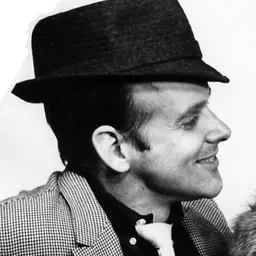

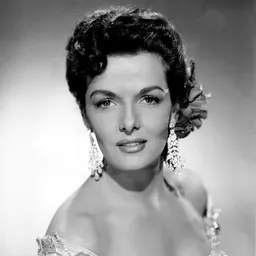


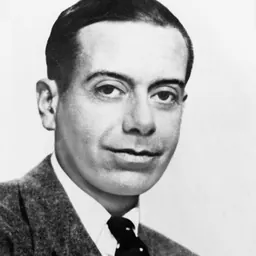

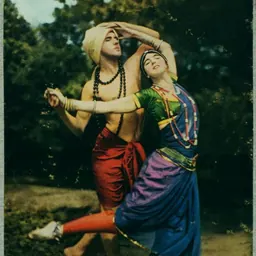
Related people
Same field, nearest in time

Contemporaries
People whose lives overlapped Jack Cole's






Frequently asked questions
Who was Jack Cole?
choreographer (1911-1974)
When was Jack Cole born?
Jack Cole was born on 27 April 1911 in New Brunswick.
When did Jack Cole die?
Jack Cole died on 17 February 1974 in Hollywood.
What was Jack Cole's occupation?
Jack Cole was a choreographer, actor, dancer and choreography.
What nationality was Jack Cole?
Jack Cole was American.
Sources & further reading
· DBpedia: Jack Cole (choreographer)
Cite this page
APA: Biography.guide. (2026). Jack Cole. https://biography.guide/jack-cole-choreographer/
MLA: "Jack Cole." Biography.guide, https://biography.guide/jack-cole-choreographer/.
Chicago: "Jack Cole." Biography.guide. https://biography.guide/jack-cole-choreographer/.
Data last updated: 2026-09-22 · Spot an error? Report a correction.
Page generated 2026-09-27 05:24 UTC