
Alicia Alonso
Cuban prima ballerina assoluta and choreographer
About Alicia Alonso
Lived 1920 – 2019 (aged 98). Alicia Alonso was a Cuban choreographer, ballet dancer, businessperson, ballet master, dancer and ballerina.
Alicia Alonso (born Alicia Ernestina de la Caridad del Cobre Martínez del Hoyo; 21 December 1920 – 17 October 2019) was a Cuban prima ballerina assoluta and choreographer whose company became the Ballet Nacional de Cuba in 1955. She is best known for her portrayals of Giselle and the ballet version of Carmen.
From the age of nineteen, Alonso was afflicted with an eye condition and became partially blind. Her partners always had to be in the exact place she expected them to be, and she used lights in different parts of the stage to guide herself.
Early life Alonso was born "on the outskirts" of Havana in 1920, the fourth child of Antonio Martínez de la Maza Arredondo, lieutenant veterinarian of the army, and Ernestina del Hoyo y Lugo, a dressmaker. Her parents were of primarily northern Spanish descent on both sides. Alonso began dancing as a child. At the age of nine in 1929, the family moved to Spain where Alonso stayed for a year and half, there she studied and learnt typical Spanish dances, such as the Jota, Malagueñas and Sevillanas among others. In June 1931 returning to Cuba she began studying ballet at Sociedad Pro-Arte Musical in Havana with Nikolai Yavorsky.
She performed publicly for the first time on 29 December 1931, aged 11. Her first serious debut was in Tchaikovsky's Sleeping Beauty at the Teatro Auditorium on 26 October 1932. Early in her career in Cuba, she danced under the name of Alicia Martínez. The couple moved to New York City, hoping to begin their professional careers.
She arranged to travel to London to study with Vera Volkova.
Vision problems After seeing the doctor for worsening vision problems, Alonso was diagnosed in 1941 with a detached retina and had surgery to correct the problem. However, before she had barely settled, out of the blue she was asked to dance Giselle to replace the Ballet Theatre's injured prima ballerina Alicia Markova. Alonso accepted and gave such a performance that the critics immediately declared her a star. "Her vision difficulties helped inspire her interpretation of the role," wrote Barbara Steinberg, daughter of Benjamin Steinberg, Music Director of the Ballet Nacional de Cuba from 1959-1963, in Dance Magazine.
She was promoted to principal dancer of the company in 1946 and danced the role of Giselle until 1948, also performing in Swan Lake, Antony Tudor's Undertow (1943), Balanchine's Theme and Variations (1947), The company debuted briefly in the capital and then departed for a tour of South America. While Alonso was happy with the success of the company, she wanted to showcase more Cuban dancers than non-Cuban dancers, leading her to open a ballet academy in Havana.
She commuted between Havana and New York to recruit teachers to train her new students. She remained a sought-after prima ballerina during this time, dancing twice in Russia in 1952 and then producing and starring in Giselle for the Paris Opéra Ballet in 1953.
From 1955 to 1959, she danced annually with the Ballet Russe de Monte Carlo as guest star. She was the first dancer of the Western Hemisphere to perform in the Soviet Union, and the first American representative to dance with the Bolshoi and Kirov Theaters of Moscow and Leningrad respectively in 1957 and 1958. During the decades to follow Alicia Alonso had cross-world tours through West and East European countries, Asia, North and South America, and she danced as guest star with the Opera de Paris, the Royal Danish Ballet, the Bolshoi and with other companies.
Return to Cuba
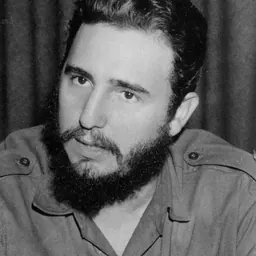
When Fidel Castro took power from the Batista government on 1 January 1959, Castro vowed to increase funding to the nation's languishing cultural programs. Alonso returned to Cuba and in March 1959 received $200,000 in funding to form a new dance school, the Ballet Nacional de Cuba, along with a guarantee of annual financial support.
Alonso has since described receiving a message from Castro in 1958 sent from the Sierra Maestra inviting her to head the company upon the triumph of the July 26 Movement. Alonso officially founded the school in 1960, and within several years her dancers were winning international dance competitions.
The Cuban government from the 1960s through the 1980s did not allow Cubans to perform in the United States, to some extent for fear of defectors, and monitored those with contacts outside Cuba via phone cables and letters. Her company continued to build its powers and achievements in both Eastern and Western Europe. In 1967 and 1971 she performed in Canada, where reviewers noted that Alonso was still the greatest ballerina of her time. Castro permitted Alonso to perform again in the United States in 1975 and 1976.
Legacy Alonso danced solos in Europe and elsewhere well into her 70s. She continued to serve as the director of the Ballet Nacional de Cuba, and is quoted as saying, she will remain "in charge of the ballet until after she is dead". As director and leading dancer of the Ballet Nacional de Cuba, she taught many now notable dancers in Cuba and beyond. Some of her former students have danced or dance with the American Ballet Theatre, the Boston Ballet, the San Francisco Ballet, the Washington Ballet, the Cincinnati Ballet and the Royal Ballet, among others.
Numerous books have been written on the ballerina, including Alicia Alonso: At Home and Abroad (1970), Alicia Alonso: The Story of a Ballerina (1979), Alicia Alonso: A Passionate Life of Dance (1984) and Alicia Alonso: First Lady of the Ballet (1993). The 2015 documentary film Horizontes features her life, as well as that of a middle-aged and a young dancer in Cuba.
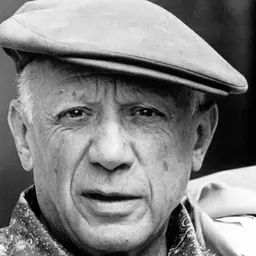
Personal life and death Alonso's sister, Blanca María "Cuca" Martínez del Hoyo, was born in 1918. Her brothers were named Elizardo and Antonio. She married Fernando Alonso in 1937, when she was 16. They had a daughter, Laura Alonso, who danced and taught with the National Ballet. Her first marriage ended in divorce in 1975, and Alonso married editor and dance critic Pedro Simón Martínez that same year. She is survived by her second husband and her daughter, a grandson, Ivan Monreal-Alonso, who is a dancer and choreographer, and three great-granddaughters. Fernando Alonso died in 2013. 1966 – Anna Pavlova Award of the University of Dance, Paris, 1970 – Grand Prix de la Ville de Paris, together with her company 1974 – Order of Work of the Democratic Republic of Vietnam 1985 – Gold Medal of the Gran Teatro by Premio Gran Teatro de La Habana 1998 – National Prize for Dance from the Ministry of Culture of Cuba 1998 – Gold medal from the Circulo de Bellas Artes of Madrid 1999 – UNESCO Pablo Picasso Medal for her extraordinary contribution to dance 1999 – Grand Prix de la Ville de Paris 2000 – Prix Benois de la Danse for lifetime achievement
Honors and distinctions
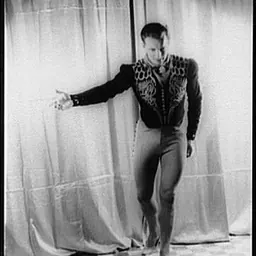
1973 – Honorary doctorate in art from the University of Havana 1980 – Received an international homage in Paris, organized by UNESCO 1981 – Council of State of the Republic of Cuba gave her the Order Felix Varela 1987 – Honorary doctorate in dancing art from the Superior Institute of Arts of Cuba 1993 – Received the Commendation of Isabel Catholic Order, given by the King of Spain Juan Carlos I 1996 – Public recognition was given in her honor at the Scientific, Artistic, and Literary Ateneo of Madrid for her valuable artistic and cultural creations 1997 – The Ballet Nacional de Cuba honored Alicia Alonso on the 50th anniversary of Theme & Variations, a ballet created by George Balanchine for her and Igor Youskevitch 1998 – Honorary degree from the Technical University of Valencia (Universidad Politecnica of Valencia) 1998 – Art & Letters Order, Commander Degree, from the Ministry of Culture and Communication of France 2000 – Prix Benois de la Danse for lifetime achievement 2000 – Order of José Marti by the Council of State of the Republic of Cuba Received the highest official awards from the countries of Mexico, the Dominican Republic, and Panama: the Order of the Aztec Eagle (Order Aguila Azteca), the Order Duarte, Sanchez, and Mella, and the Order Vasco Nunez de Balboa, respectively Named National Hero of Labor in Cuba 2011 – Honorary Citizen of Mérida (México) and Messenger of Peace 2017 – Honorary doctorate from the University of Costa Rica
Memberships
Holds membership in the Advisory Council to the Ministry of Culture in the National Committee of Writers and Artists Union of Cuba Holds membership in the Collaborating Council of the Governing Boards of the Federation of Cuban Women
Don’t just read it —
keep it.
Full-length biographies made to live with: read them, listen on the way to work, watch them tonight.
- E-book
- Audio
- Video
Instant download · yours to keep · every purchase keeps this site free
Important facts
Family & relationships
People in Alicia Alonso's life
Named in this biography and alive at the same time




Related people
Same field, nearest in time



Contemporaries
People whose lives overlapped Alicia Alonso's




Frequently asked questions
Who was Alicia Alonso?
Cuban prima ballerina assoluta and choreographer (1920-2019)
When was Alicia Alonso born?
Alicia Alonso was born on 21 December 1920 in Havana.
When did Alicia Alonso die?
Alicia Alonso died on 17 October 2019 in Havana.
What was Alicia Alonso's occupation?
Alicia Alonso was a choreographer, ballet dancer, businessperson, ballet master, dancer and ballerina.
What nationality was Alicia Alonso?
Alicia Alonso was Cuban.
Sources & further reading
Cite this page
APA: Biography.guide. (2026). Alicia Alonso. https://biography.guide/alicia-alonso/
MLA: "Alicia Alonso." Biography.guide, https://biography.guide/alicia-alonso/.
Chicago: "Alicia Alonso." Biography.guide. https://biography.guide/alicia-alonso/.
Data last updated: 2026-09-20 · Spot an error? Report a correction.
Portrait: Wikimedia Commons · author & licence
Page generated 2026-09-27 04:57 UTC