
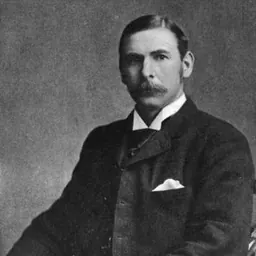
Jack Binns
English wireless operator
About Jack Binns
Lived 1884 – 1959 (aged 75). Jack Binns was a British.
John Robinson Binns (16 September 1884 – 8 December 1959) was a British-American wireless telegraph operator, sailor, and journalist, who best known for being the Marconi wireless officer on the ocean liner RMS Republic during her last voyage. He holds the distinction of being the first person in history to send a CQD distress signal which led to a successful rescue at sea.
Early life John Robinson Binns was born in a workhouse in Brigg, Lincolnshire, England, on 16 September 1884. Binns' father died two days after his birth and his mother followed a year later. He was brought up by his paternal grandmother. He was educated at Saint Marks Primary School and the National Boys School in Peterborough. His first job was as a messenger for the Great Eastern Railway, during which he was injured and spent six months in hospital. In 1898, at the age of 14, Binns began to study telegraphy. On reaching the age of 18 in 1902, he worked in a post office before joining the British Marconi Company. In 1905 he was appointed wireless officer on the White Star Liner RMS Republic.
RMS Republic
Binns joined the Republic on 22 January 1909 on a voyage from New York City to Italy with 1,600 passengers and crew. The ship had barely left New York harbour when she was caught in a fog bank off Nantucket, Massachusetts. At 5:47 a.m. on 23 January 1909, the Italian ocean liner SS Florida suddenly emerged from the fog and struck the Republic amidships. The collision killed three crew members on the Florida and two passengers on the Republic, crushing the bow of the Florida and leaving a large gash in the side of the Republic.
In danger of sinking, Binns wasted no time in attempting to send a distress signal via his Marconi wireless set, but it was damaged in the collision. Binns managed to repair the equipment and send out a CQD signal. Although the signal was weak because the ship's power had been cut off by flooding in the engine room, Binns continued his efforts using emergency batteries he had salvaged from the flooded areas of the ship. He reached the Siasconsett wireless station on Nantucket, 60 miles (96 km) away, and continued to send distress signals for the next 36 hours.
Later life In the immediate aftermath of the Republic 's loss, Binns' efforts to signal for help were recognised as heroic for saving all those on board who had not been lost in the initial collision. Arriving in New York after the sinking, Binns gained much public attention. A ticker-tape parade was held in his honour and he was offered contracts to perform on the vaudeville circuit. Nicknamed "CQD Binns" by the public, he was hailed as a hero in a song and a short film.
Binns reacted negatively to the publicity surrounding his image and successfully sued Vitagraph Studios, the makers of the short film about him, for invasion of privacy. Before returning to Peterborough, England, he testified before United States Congress on the need for mandatory wireless systems on board all ships. Binns continued to work as a wireless operator until April 1912, including aboard the , when he turned down a new assignment for the maiden voyage of the brand-new White Star Liner, the . Binns became engaged to an American woman and moved to the United States, where he began a new career in journalism, joining the staff of the New York American as a reporter.
Two days after his new career began, the RMS Titanic sank after striking an iceberg during its maiden voyage. Binns covered the disaster's aftermath for the American and also testified at the U.S. Senate inquiry into the sinking.
Binns remained a journalist until the outbreak of the First World War, when he enlisted in the Canadian branch of Royal Flying Corps as a wireless instructor.
After the war, he became radio and aviation editor of New-York Tribune. He was naturalised in April 1923. The following year, Binns began working for the Hazeltine Corporation, becoming treasurer in 1926 and a director the following year. In 1935, Binns was elected vice-president of the company and in 1942 he became president. Eventually, he became chairman of the company in 1952, and in 1957 the post of honorary chairman was created for him.
Personal life and death In 1914, Binns married Alice Ann Macniff, with whom he had two daughters, born in 1915 and 1916.
Don’t just read it —
keep it.
Full-length biographies made to live with: read them, listen on the way to work, watch them tonight.
- E-book
- Audio
- Video
Instant download · yours to keep · every purchase keeps this site free
Important facts
People in Jack Binns's life
Named in this biography and alive at the same time

Contemporaries
People whose lives overlapped Jack Binns's


Frequently asked questions
Who was Jack Binns?
English wireless operator (1884–1959)
When was Jack Binns born?
Jack Binns was born on 16 September 1884.
When did Jack Binns die?
Jack Binns died on 8 December 1959 in New York City.
What nationality was Jack Binns?
Jack Binns was British.
Sources & further reading
· DBpedia: Jack Binns (wireless operator)
Cite this page
APA: Biography.guide. (2026). Jack Binns. https://biography.guide/jack-binns/
MLA: "Jack Binns." Biography.guide, https://biography.guide/jack-binns/.
Chicago: "Jack Binns." Biography.guide. https://biography.guide/jack-binns/.
Data last updated: 2026-09-20 · Spot an error? Report a correction.
Page generated 2026-09-27 05:31 UTC