
Jabra Ibrahim Jabra
Iraqi-Palestinian author, artist, and translator
About Jabra Ibrahim Jabra
Lived 1919 – 1994 (aged 75). Jabra Ibrahim Jabra was an Iraqi poet, translator, writer, literary critic and painter.
Jabra Ibrahim Jabra (28 August 1919 – 12 December 1994 ) was an Iraqi-Palestinian author, artist and intellectual born in Adana in French-occupied Cilicia to a Syriac Orthodox Christian family. His family survived the Seyfo Genocide and fled to the British Mandate of Palestine in the early 1920s. After his family moved to Jerusalem in 1932, he enrolled at the Rashidiya School and graduated in 1937 from the Government Arab College. Jabra won a scholarship to study English at the University College of the South West in Exeter for the academic year 1939–1940, and stayed on in England to continue his studies at the University of Cambridge, because of the dangers of returning to Palestine by boat during World War II. At Cambridge, Jabra read English and earned a BA in 1943 from Fitzwilliam College, Cambridge, where his censor was William Sutherland Thatcher. He also wrote a number of articles for local Arabic-language newspapers in Jerusalem.
In January 1948, Jabra and his family fled their home in Katamon in western Jerusalem shortly after the Semiramis Hotel bombing and moved to Baghdad. Jabra traveled to Amman, Beirut, and Damascus in search of work. In Damascus, Jabra went to the Iraqi embassy, where the cultural attaché, 'Abd al-'Aziz al-Douri, who would later become an eminent Iraqi historian, gave him a visa to teach at the Teachers' Training College for one year. In 1948, Jabra received an MA from Fitzwilliam College at the University of Cambridge. The MA did not require any coursework or residence in England as per the "Cambridge MA" system, whereby holders of a BA may obtain an MA after five years and the payment of a fee.
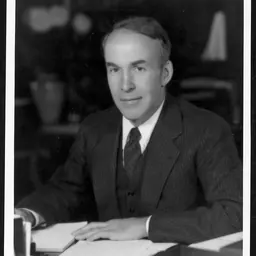
In 1952, Jabra married Lami'a Barqi al-Askari. The same year, he received a fellowship from the Rockefeller Foundation, arranged personally by John Marshall, to study English literature and literary criticism at Harvard University. While at Harvard between the fall of 1952 and January 1954, Jabra studied under Archibald MacLeish. While there, he translated his first novel, Cry in a Long Night, from English into Arabic and began writing his second novel, Hunters in a Narrow Street, which was published in 1960.
Following his return to Baghdad, Jabra worked in public relations for the Iraq Petroleum Company and then for the Iraqi Ministry of Culture and Information. In Baghdad, he taught at various colleges and became a professor of English at the University of Baghdad. Jabra's home on Princesses' Street in the Mansour District of Baghdad was a meeting place for Iraqi intellectuals.
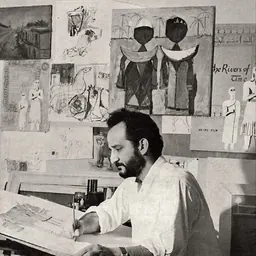
Much of his writing was concerned with modernism and Arab society. This interest led him to become, in the 1950s, a founding member of the Modern Baghdad Art Group, an artists' collective and intellectual movement that attempted to combine Iraq's profound artistic heritage with the methods of modernist abstract art. Although the Baghdad Modern Art Group was ostensibly an art movement, its members included poets, historians, architects and administrators. Jabra was deeply committed to the group's founder, Jawad Saleem and Saleem's ideals, and drew inspiration from Arab folklore, Arab literature and Islam.
Jabra's involvement in the artistic community continued with his becoming a founding member of the One Dimension Group, established by the prominent Baghdadi artist, Shakir Hassan Al Said in 1971. The group's manifesto gave voice to the group's commitment to both heritage and modernity and sought to distance itself from modern Arab artists, which the group perceived as following European artistic traditions. The One Dimension group was part of a broader movement among Arabic artists who rejected Western art forms and sought a new aesthetic, one that expressed their individual nationalism as well as their pan-Arab identity. This movement subsequently became known as the Hurufiyya movement.
Following his death in 1994, a relative, Raqiya Ibrahim, moved into his Baghdad home. However, the house was destroyed when a car bomb targeting the Egyptian embassy next door detonated on Easter Sunday in 2010, destroying much of the street and killing dozens of civilians. Thousands of Jabra's letters and personal effects were destroyed in this incident along with a number of his paintings.
Don’t just read it —
keep it.
Full-length biographies made to live with: read them, listen on the way to work, watch them tonight.
- E-book
- Audio
- Video
Instant download · yours to keep · every purchase keeps this site free
Important facts
Family & relationships
People in Jabra Ibrahim Jabra's life
Named in this biography and alive at the same time




Related people
Same field, nearest in time

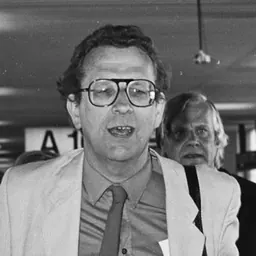
Contemporaries
People whose lives overlapped Jabra Ibrahim Jabra's
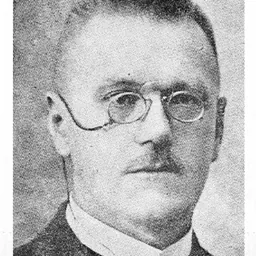
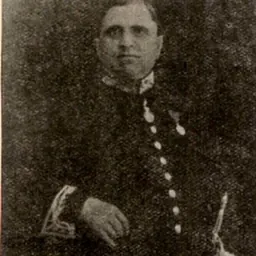


Frequently asked questions
Who was Jabra Ibrahim Jabra?
Iraqi-Palestinian author, artist, and translator (1920-1994)
When was Jabra Ibrahim Jabra born?
Jabra Ibrahim Jabra was born on 28 August 1919 in Bethlehem.
When did Jabra Ibrahim Jabra die?
Jabra Ibrahim Jabra died on 12 December 1994 in Baghdad.
What was Jabra Ibrahim Jabra's occupation?
Jabra Ibrahim Jabra was a poet, translator, writer, literary critic and painter.
What nationality was Jabra Ibrahim Jabra?
Jabra Ibrahim Jabra was Iraqi.
Sources & further reading
· Wikipedia: Jabra Ibrahim Jabra
· DBpedia: Jabra Ibrahim Jabra
Cite this page
APA: Biography.guide. (2026). Jabra Ibrahim Jabra. https://biography.guide/jabra-ibrahim-jabra/
MLA: "Jabra Ibrahim Jabra." Biography.guide, https://biography.guide/jabra-ibrahim-jabra/.
Chicago: "Jabra Ibrahim Jabra." Biography.guide. https://biography.guide/jabra-ibrahim-jabra/.
Data last updated: 2026-09-20 · Spot an error? Report a correction.
Page generated 2026-09-27 05:33 UTC