
About Jaber al-Ahmad al-Sabah
Lived 1926 – 2006 (aged 79). Jaber al-Ahmad al-Sabah was a politician.
Sheikh Jaber Al-Ahmad Al-Jaber Al-Sabah (29 June 1926 – 15 January 2006) Jaber's reign oversaw the transition of a relatively traditional society into a modernized state. He also led Kuwait through the Gulf War, defeating Ba'athist Iraq and Saddam Hussein with the support of the United States.
The third monarch to rule Kuwait since its independence from Britain, Jaber had previously served as minister of finance and economy from 1962 to 1965 when he was appointed prime minister prior to becoming Kuwait's ruler.
Early life and education Jaber was born on 29 June 1926 in Kuwait City. He was the third son of Ahmad Al-Jaber Al-Sabah.
Jaber received his early education at Al-Mubarakiya School, Al-Ahmediya School, and Al-Sharqiya School, and was subsequently tutored privately in English, Arabic, religion and the sciences.
Career
Early career
In 1962, he was appointed Kuwait's minister of finance when the ministry was established. In this position, Jaber was tasked with putting the new Kuwaiti dinar into circulation and establishing the Kuwaiti Currency Board, of which he was the chair. As minister, Jaber adopted, and was the first chairman of, the Kuwaiti Fund for Arab Economic Development from 1962 to 1964. The Fund provides financial and technical assistance to developing countries. The country's oil revenues transformed it from a largely rural seafaring society to a modern state. During this time, the Fund expanded to aid five countries and gave loans to another eight. The money going into the fund came from oil earnings. Al-Sabah led a delegation to the Arab League to resolve the issue. The United Kingdom informed Iraqi Prime Minister Abd al-Karim Qasim that it would militarily assist Kuwait in the event of military action, leading to Operation Vantage. Iraq recognised Kuwait's independence in 1963, though it disputed the borders.
Iran–Iraq War Kuwait found itself geographically in the middle of the Iran–Iraq War that took place from 1980 to 1988. Throughout the war, the country suffered from many security threats, including a series of bombings. In 1986, one year after an attack on Jaber's motorcade, there was an attack on an oil installation, which almost caused the shutdown of Kuwait's oil industry.
Gulf War President Bush with Jaber Al-Ahmad Al-Sabah on the South Lawn of the White House, 1990.
Some sources claim that the task of the invading Iraqi forces was to capture or kill Jaber. However, such a claimed plan was not possible with the exile of Jaber and his government to Saudi Arabia within hours of the invasion where they ran the Kuwaiti exiled government from a hotel in Ta'if, Saudi Arabia.
From Ta'if, Jaber set up his government so that its ministers were in communication with the people still in Kuwait. The government was able to direct an underground armed resistance made up of both military and civilian forces and was able to provide public services to the Kuwaiti people who remained, such as emergency care through the funds that it had saved from oil revenues. He returned to Kuwait in March 1991, efforts to restore his rule and remove the Iraqi army.
On 15 March 1991, Jaber returned to Kuwait, staying at the private home of a wealthy Kuwaiti as his own palace had been destroyed. He was met with a symbolic arrival with several dozens cars filled with people honking their car horns and waving Kuwaiti flags who tried to follow the Emir's convoy.
He was involved in a high profile case involving Sulaiman Al-Adsani, and the lawyer Hazel Fox, in 1996. The case failed because of a defense of diplomatic immunity.
2003 US invasion of Iraq
During the 2003 US invasion of Iraq, and unlike the ruling family of Saudi Arabia, Jaber openly allowed the United States to use Kuwait as a base.
In September 2001, Jaber suffered from a stroke and went to the United Kingdom for treatment. He died on 15 January 2006, aged 79, from the cerebral hemorrhage that he had suffered in 2001 and was succeeded by the Crown Prince Saad Al-Abdullah Al-Salim Al-Sabah. Bahrain declared forty days of mourning; Jordan announced seven days of mourning; Yemen, Egypt, Iraq, Algeria, Oman, Syria, Pakistan, Mauritius and the State of Palestine all declared three days of mourning; India declared one day of mourning.
Don’t just read it —
keep it.
Full-length biographies made to live with: read them, listen on the way to work, watch them tonight.
- E-book
- Audio
- Video
Instant download · yours to keep · every purchase keeps this site free
Important facts
Family & relationships
People in Jaber al-Ahmad al-Sabah's life
Named in this biography and alive at the same time
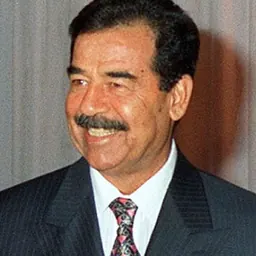



Related people
Same field, nearest in time





Contemporaries
People whose lives overlapped Jaber al-Ahmad al-Sabah's


Frequently asked questions
Who was Jaber al-Ahmad al-Sabah?
Emir of Kuwait from 1977 to 2006
When was Jaber al-Ahmad al-Sabah born?
Jaber al-Ahmad al-Sabah was born on 29 June 1926 in Kuwait City.
When did Jaber al-Ahmad al-Sabah die?
Jaber al-Ahmad al-Sabah died on 15 January 2006 in Kuwait City.
What was Jaber al-Ahmad al-Sabah's occupation?
Jaber al-Ahmad al-Sabah was a politician.
What nationality was Jaber al-Ahmad al-Sabah?
Jaber al-Ahmad al-Sabah's recorded nationality: Kuwait.
Sources & further reading
· Wikipedia: Jaber al-Ahmad al-Sabah
· DBpedia: Jaber Al-Ahmad Al-Sabah
Cite this page
APA: Biography.guide. (2026). Jaber al-Ahmad al-Sabah. https://biography.guide/jaber-al-ahmad-al-sabah/
MLA: "Jaber al-Ahmad al-Sabah." Biography.guide, https://biography.guide/jaber-al-ahmad-al-sabah/.
Chicago: "Jaber al-Ahmad al-Sabah." Biography.guide. https://biography.guide/jaber-al-ahmad-al-sabah/.
Data last updated: 2026-09-26 · Spot an error? Report a correction.
Page generated 2026-09-27 05:13 UTC