
About Jaap Schreurs
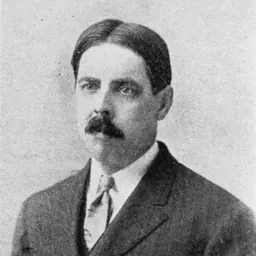
Lived 1913 – 1983 (aged 69). Jaap Schreurs was a Dutch painter.
Jaap Schreurs (19 November 1913 in The Hague – 16 February 1983 in Utrecht) was a Dutch painter and graphic artist in the neo-figurative style.
Life
Schreurs was born as Jacobus Schreurs in The Hague, Netherlands, to Jacobus Lambertus Keizer and his common-law wife Nelly Schreurs. His father was a painter in the style of the Hague School. As a child, Jaap often accompanied his father when he went into the countryside to paint the Dutch landscape, and he let the child have a go at it too. In his teens Schreurs joined a group of boys who went to the polders for the day, painting and drawing. Afterwards the boys' efforts were seriously examined and commented on by Jaap’s father, who insisted on the importance of perfection and professional skill .
In his adolescence Schreurs lost the sight of his right eye. From then on he had to live without the ability to see depth and perspective. He studied at the Royal Academy of Art and the Free Academy of Visual Art in The Hague. His teachers were Christiaan de Moor and Francis de Erdely. His relatives consulted eight experts from prominent Dutch museums, art magazines, and auctioneering firms. These unanimously judged the quality and originality of the work positively; many pieces were judged to be of museum quality. They advised prudent and professional management of the collection. The legacy has been catalogued and can be viewed on a website (see external links below).
Painting style
Influences
Schreurs’ style has been visibly influenced by three factors, namely Loss of eyesight: ophthalmologist dr. Philippe Lanthony from the Hôpital des Quinze-Vingts at Paris has examined how Schreurs’ loss of binocular vision influenced his painting. The inability to see depth and perspective in the usual way forced Schreurs either to avoid painting depth, or to find other solutions. Moreover, monocular vision often stimulates a painter to pay extra attention to the eyes of his figures. Lanthony shows how in Schreurs’ work this effect may be observed in his paintings of figures with very large dark eyes, as well as in his tendency to emphasize and exaggerate differences between the two eyes of his figures. Contact with the underprivileged and the disabled: Schreurs’ life spanned the Great Depression of the 1930s and World War II. For financial reasons Schreurs could only afford as his models the homeless he found at the shelter of the Salvation Army. Moreover, the effects of bombing, razzias, deportation, poverty, the lack of social services and health care, the famine and all of its concomitant scenes of survival of the fittest – at the cost of others – were all visible on the streets. After the war, he saw how the very same mechanisms were still operating, albeit below the surface. His fascination with outcasts and vulnerable people is reflected in many of his paintings, in particular the ones from the last 20 years of his life. The main themes are figures, portraits, still-lives, and religious scenes. The colouring is rather dark, mostly purple, brown, red and sometimes green. 1950–1965: Most works from these years are painted in light colours in acrylic on hardboard. The themes are highly stylized figures and faces, depicted two-dimensionally with their contours in dark outlines, some with elongated necks and/or extremely long and thin limbs. Their atmosphere is mostly quiet, introvert. 1965–1983: In this period, Schreurs returns to themes already present in his earliest work, such as his compassion and his respect for disabled, neglected and demented people. Often the meaning of inner conflicts, despair or impotence is represented by deformation and/or reinforced by the size of the painting. As Van den Hout describes it, “Schreurs confronts the viewer with the harsh reality of existence....Yet they (the paintings) are doing exactly what art should do: they facilitate and encourage understanding, contemplation and reflection. ” Another earlier theme he returned to after 1965 is the suffering of Christ, concentrating on the feet of the Crucified. The works from this third period are however much more poignant and emphasise the connection between the suffering of Christ and the suffering of humanity. Not all paintings from this period are in this confrontational style. Other works radiate a peaceful, introverted, or resigned atmosphere.
Graphics
During the last twenty years of his life Schreurs possessed an etching press. He liked experimenting with all kinds of unusual materials in order to create special effects. His graphic oeuvre runs to nearly four hundred pieces and shows a great variety of themes and styles. (digital exhibition of 14 selected works)
Don’t just read it —
keep it.
Full-length biographies made to live with: read them, listen on the way to work, watch them tonight.
- E-book
- Audio
- Video
Instant download · yours to keep · every purchase keeps this site free
Important facts
People in Jaap Schreurs's life
Named in this biography and alive at the same time
Related people
Same field, nearest in time


Contemporaries
People whose lives overlapped Jaap Schreurs's




Frequently asked questions
Who was Jaap Schreurs?
Dutch painter (1913-1983)
When was Jaap Schreurs born?
Jaap Schreurs was born on 19 November 1913 in The Hague.
When did Jaap Schreurs die?
Jaap Schreurs died on 16 February 1983 in Utrecht.
What was Jaap Schreurs's occupation?
Jaap Schreurs was a painter.
What nationality was Jaap Schreurs?
Jaap Schreurs was Dutch.
Sources & further reading
Cite this page
APA: Biography.guide. (2026). Jaap Schreurs. https://biography.guide/jaap-schreurs/
MLA: "Jaap Schreurs." Biography.guide, https://biography.guide/jaap-schreurs/.
Chicago: "Jaap Schreurs." Biography.guide. https://biography.guide/jaap-schreurs/.
Data last updated: 2026-09-26 · Spot an error? Report a correction.
Page generated 2026-09-27 05:16 UTC