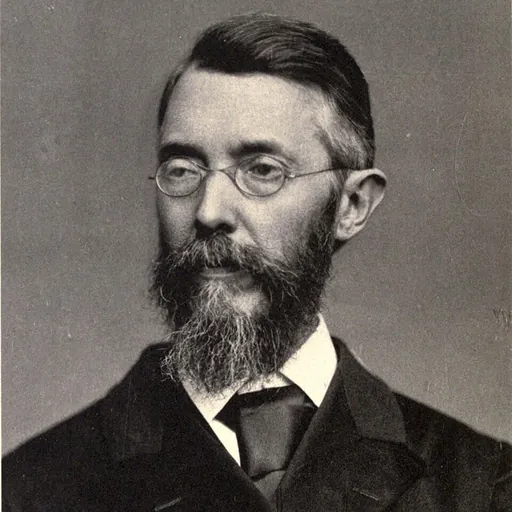
J. T. Gulick
American missionary and naturalist from Hawaii
About J. T. Gulick
Lived 1832 – 1923 (aged 91). J. T. Gulick was an American priest, zoologist, malacologist and missionary.
John Thomas Gulick (March 13, 1832 – April 14, 1923) was an American missionary and naturalist from Hawaii. He was one of the pioneers of modern evolutionary thinking based on his studies of Hawaiian snails of the genus Achatinella. He was among the first to describe the formation of species through geographic separation of breeding populations. He developed early ideas on the founder effect and what is now known as the Baldwin effect. He coined the term "divergent evolution".
Life Gulick was born in Waimea on Kauai Island, during the Kingdom of Hawaii. His father was missionary Peter Johnson Gulick (1796–1877) and mother was Fanny Hinckley Thomas Gulick (1798–1883). Early in life he went to Oregon and sought gold in California. In 1851, he started to collect and study Hawaiian land snails. He had been interested in snails (a field now known as Conchology) since his early teens, and developed independently the concept of their evolution. He discovered many species of snails were only found in very specific areas within the islands, and there was no overlap between these areas.
In 1853, after reading Charles Darwin's The Voyage of the Beagle and Hugh Miller's The Footprints of the Creator, Gulick presented his paper, "The Distribution of Plants and Animals", to the Punahou School Debating Society. In 1855, he enrolled for one year at New York University and then Williams College in Massachusetts, and studied in their Lyceum of Natural History. In 1859, he was elected Lyceum President, and graduated with an A.B. degree.
He then followed the family tradition of attending theological school at Williams College (1859) and enrolled in Union Theological Seminary in New York City from 1859 to 1861. While there, he read Darwin's On the Origin of Species. He then collected shells in Panama and Japan. In 1872, he wrote "On the Variation of Species as Related to Their Geographical Distribution, Illustrated by the Achatinellinae", which was published in the journal Nature. In 1872, he traveled to England for two years. That paper was "On Diversity of Evolution Under One Set of External Conditions", which was published in the Journal of the Linnean Society of London, Zoology in 1873. Gulick then returned to China, and remained there until 1875.
After his first wife died in 1875, he moved to Japan to continue missionary work. As in China, he studied snails while performing as a missionary. On May 31, 1880, he married Frances Amelia Stevens (1848–1928). In 1889, he received an honorary A.M. and Ph.D from Adelbert College of Western Reserve University. In 1891, another paper, "Intensive Segregation, or Divergence Through Independent Transformation" was published in the Journal of the Linnean Society of London, Zoology.
Later in 1905, he returned to Hawaii and sold his shell collection to Charles Montague Cooke Jr. the new curator of the Bernice P. Bishop Museum. He remained there until his death in Honolulu on April 14, 1923. They had two children, Addison and Louise (Gulick) Whitaker.
Evolutionary theories
In 1872, Gulick was the first to propose the theory that the majority of evolutionary changes are the result of chance variation, which has no effect on the survival and reproductive success of a species (today called "genetic drift"). He came to this theory while noting that there was a large diversity of local populations of Hawaiian land snails (Achatinella) which showed random variation under seemingly identical environmental conditions. Although he certainly promoted the importance of random factors in evolution, he also was a strong supporter of Darwinian natural selection, and this led to disagreement with Moritz Wagner's "Migration Theory" of the origin of species.
Romanes said of Gulick:...to his essays on the subject I attribute a higher value than to any other work in the field of Darwinian thought since the date of Darwin's death.
Family tree
Works
Don’t just read it —
keep it.
Full-length biographies made to live with: read them, listen on the way to work, watch them tonight.
- E-book
- Audio
- Video
Instant download · yours to keep · every purchase keeps this site free
Important facts
People in J. T. Gulick's life
Named in this biography and alive at the same time

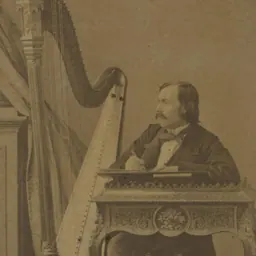
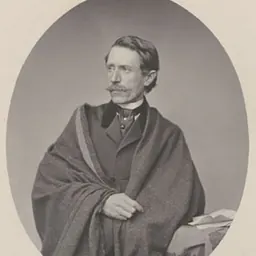


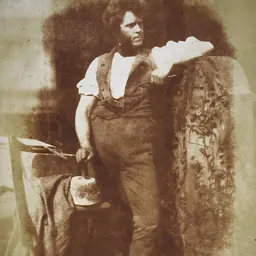
Related people
Same field, nearest in time
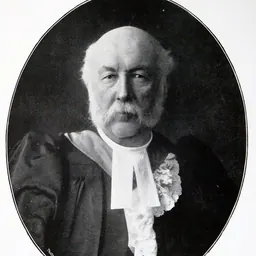


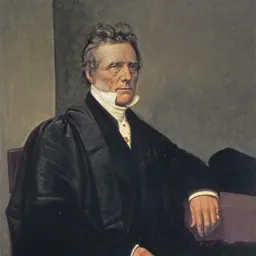
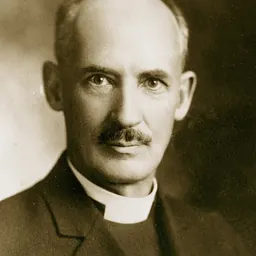
Contemporaries
People whose lives overlapped J. T. Gulick's

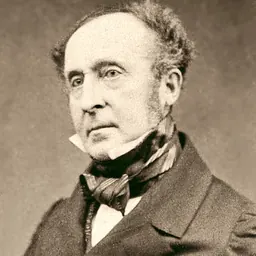


Frequently asked questions
Who was J. T. Gulick?
American missionary and naturalist from Hawaii (1832-1923)
When was J. T. Gulick born?
J. T. Gulick was born on 13 March 1832 in Kauaʻi.
When did J. T. Gulick die?
J. T. Gulick died on 14 April 1923 in Honolulu.
What was J. T. Gulick's occupation?
J. T. Gulick was a priest, zoologist, malacologist and missionary.
What nationality was J. T. Gulick?
J. T. Gulick was American.
Sources & further reading
Cite this page
APA: Biography.guide. (2026). J. T. Gulick. https://biography.guide/j-t-gulick/
MLA: "J. T. Gulick." Biography.guide, https://biography.guide/j-t-gulick/.
Chicago: "J. T. Gulick." Biography.guide. https://biography.guide/j-t-gulick/.
Data last updated: 2026-09-22 · Spot an error? Report a correction.
Portrait: Wikimedia Commons · author & licence
Page generated 2026-09-27 05:03 UTC