
About J. J. McAlester
Lived 1842 – 1920 (aged 77). J. J. McAlester was an American politician and merchant.
James Jackson McAlester (October 1, 1842 – September 21, 1920) was an American coal baron and politician active in Indian Territory and later Oklahoma. He served as a United States Marshal for Indian Territory from 1893 to 1897, one of three members of the first Oklahoma Corporation Commission from 1907 to 1911, and as the second lieutenant governor of Oklahoma from 1911 to 1915.
McAlester was born in Arkansas in 1842, and enlisted in the Confederate States Army during the American Civil War. After the war, he received a detailed survey of coal deposits within the Choctaw Nation in Indian Territory and traveled there to work as a trader. He later married Rebecca Burney, sister of Chickasaw Governor Benjamin Burney, which granted him citizenship in the Chickasaw Nation and Choctaw Nation. He used his tribal citizenship to claim lands that contained valuable coal deposits, allowing him to become incredibly wealthy and influential in the territory.
He owned a general store in an area that eventually grew into the town of McAlester, Oklahoma, named after J. J., and he owned substantial interests in coal mining operation in the area, leading him into conflict with the Choctaw Nation's government. Chief Coleman Cole ordered McAlester's execution for violating tribal law preventing the sale of "part of the land" during his tenure, but McAlester was able to escape his sentence and resumed his activities after Cole's term. He built the McAlester House, which was listed on the National Register of Historic Places in 1980.
In the lead up to Oklahoma statehood McAlester was elected to the first Oklahoma Corporation Commission and in 1910 he was elected lieutenant governor of Oklahoma and he served until 1915. He died in 1920.
Early life, military career, and family McAlester was born in Sebastian County, Arkansas, on October 1, 1842, and grew up in Ft. Smith, Arkansas. He joined the Confederate States Army at the start of the war and reached the rank of captain.
On August 22, 1872, he married Rebecca Burney (born 1841 in Mississippi - died May 5, 1919, in Oklahoma) a member of the Chickasaw Nation and they had five children. Burney was the sister of Chickasaw Governor Benjamin Burney. This made it possible for him to gain citizenship in and the right to own property in both the Choctaw and Chickasaw nations. Some miners pay was also directly paid from the company to McAlester to cover debts or as store credit. A review of his stores sale logs show price discrepancies between customers purchasing the same item, indicating some price discrimination, but no clear pattern of discrimination was determined.
McAlester's selling of coal caused conflict with Choctaw Nation Chief Coleman Cole. Under Choctaw law, any tribal citizen who sold "part of the land" was to be sentenced to death and Cole interpreted the coal sales as a violation of the law. After McAlester was arrested by Choctaw Lighthorse alongside two other intermarried whites, the three men escaped. McAlester claimed he later messaged Cole and settled the dispute, while other accounts say he lived in exile in the Muscogee Nation until the end of Cole's term in 1878. In the 1880s, Green McCurtain led an unsuccessful effort to nationalize the Choctaw Nation's coal deposits.
U.S. Marshall and Oklahoma Corporation Commission On April 6, 1893, President Grover Cleveland appointed McAlester U.S. Marshal for Indian Territory and he served until March 1, 1895, when he became the U.S. Marshall for Indian Territory's Central District until April 19, 1897. He was elected to the Oklahoma Corporation Commission and took office in 1907. He did not run for reelection in 1910, instead running for Lieutenant Governor of Oklahoma.
He died on September 21, 1920, in McAlester. He is buried in the Masonic Section of Oak Hill Cemetery.
Legacy McAlester House, J. J. McAlester's home in McAlester, Oklahoma, was listed on the National Register of Historic Places listings in Pittsburg County, Oklahoma in 1980. One of his daughters, Sudie McAlester, married Choctaw Chief Victor Locke Jr.
Analysis by historians Historians' opinions of McAlester have shifted over time. Early to mid-twentieth century scholarship on his legacy was more likely to view him as a frontier businessman bringing civilization to Indian Territory, while later scholarship is more critical of his exploitation of Choctaw law and the effects of his business on the Choctaw Nation. Historian Linda English described him as an "ambitious man who continually demonstrated his commitment to progress."
In popular culture J. J. McAlester's store served as the basis for the store visited by U.S. Marshal Rooster Cogburn in the 1968 novel True Grit by Charles Portis (and the subsequent 1969 and 2010 feature film versions).
Electoral history
Don’t just read it —
keep it.
Full-length biographies made to live with: read them, listen on the way to work, watch them tonight.
- E-book
- Audio
- Video
Instant download · yours to keep · every purchase keeps this site free
Important facts
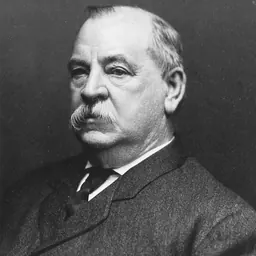
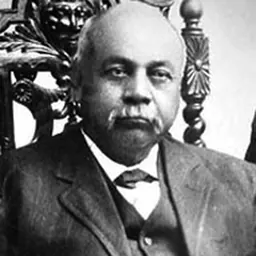
People in J. J. McAlester's life
Named in this biography and alive at the same time


Related people
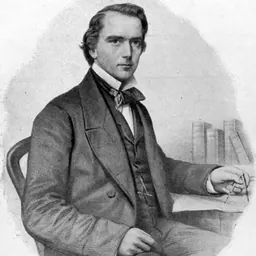
Same field, nearest in time





Contemporaries
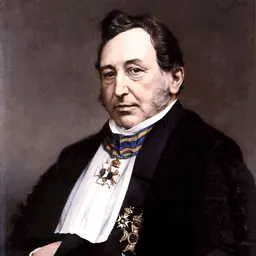
People whose lives overlapped J. J. McAlester's

Frequently asked questions
Who was J. J. McAlester?
American politician (1842-1920)
When was J. J. McAlester born?
J. J. McAlester was born on 1 October 1842 in Sebastian County.
When did J. J. McAlester die?
J. J. McAlester died on 21 September 1920 in McAlester.
What was J. J. McAlester's occupation?
J. J. McAlester was a politician and merchant.
What nationality was J. J. McAlester?
J. J. McAlester was American.
Sources & further reading
Cite this page
APA: Biography.guide. (2026). J. J. McAlester. https://biography.guide/j-j-mcalester/
MLA: "J. J. McAlester." Biography.guide, https://biography.guide/j-j-mcalester/.
Chicago: "J. J. McAlester." Biography.guide. https://biography.guide/j-j-mcalester/.
Data last updated: 2026-09-20 · Spot an error? Report a correction.
Page generated 2026-09-27 05:32 UTC