
J. Havens Richards
American Jesuit educator
About J. Havens Richards
Lived 1851 – 1923 (aged 71). J. Havens Richards was an American catholic priest, academic administrator and educator.
Joseph Havens Richards (born Havens Cowles Richards; November 8, 1851 – June 9, 1923) was an American Catholic priest and Jesuit who became a prominent president of Georgetown University, where he instituted major reforms and significantly enhanced the quality and stature of the university. Richards was born to a prominent Ohio family; his father was an Episcopal priest who controversially converted to Catholicism and had the infant Richards secretly baptized as a Catholic.
Richards became the president of Georgetown University in 1888 and undertook significant construction, such as the completion of Healy Hall, which included work on Gaston Hall and Riggs Library, and the building of Dahlgren Chapel. Richards sought to transform Georgetown into a modern, comprehensive university. To that end, he bolstered the graduate programs, expanded the School of Medicine and Law School, established the Georgetown University Hospital, improved the astronomical observatory, and recruited prominent faculty. He also navigated tensions with the newly established Catholic University of America, which was located in the same city. Richards fought anti-Catholic discrimination by Ivy League universities, resulting in Harvard Law School admitting graduates of some Jesuit universities.
Upon the end of his term in 1898, Richards engaged in pastoral work attached to Jesuit educational institutions throughout the northeastern United States. He became the president of Regis High School and the Loyola School in New York City in 1915, and he was then made superior of the Jesuit retreat center on Manresa Island in Connecticut. Richards died at the College of the Holy Cross in 1923.
Early life
Richards was born on November 8, 1851, in Columbus, Ohio.
Henry Livingston Richards was an Episcopal priest and the pastor of a church in Columbus. To the surprise of many, on January 25, 1852, he sought to convert to Catholicism, two months after Havens Cowles's birth. While there, Cynthia Cowles followed her husband in converting to Catholicism. She moved with her children to Jersey City, New Jersey, in September 1855 and was conditionally baptized on May 14, 1856, at St. Peter's Church. All the other children were eventually baptized as well.
Ancestry Richards was born into a prominent family that traced its lineage to colonial America on both his paternal and maternal sides. His uncle was Orestes Brownson, a Catholic activist and intellectual. On his mother's side, he was a descendant of James Kilbourne, a colonel in the U.S. Army who led a regiment on the American frontier in the War of 1812, founded the city of Worthington, Ohio, and became a United States Representative from Ohio.
On his father's side, Richards's lineage included combatants in the American Revolutionary War, such as William Richards (his great-grandfather), who led a contingent of troops that took part in the siege at the Battle of Fort Slongo and who later fought in the Battle of Bunker Hill as a colonel. Through William Richards, he traced his ancestry to James Richards, who was documented in 1634 as residing on the Eel River in Plymouth, Massachusetts.
Education
Richards's father sought to send all his children to Catholic schools but was at times unable to. Therefore, Richards attended both Catholic and public schools in Jersey City. Upon entering the order, he changed his name to Joseph Havens Richards. He then went to Georgetown University as a professor of physics and mathematics, In July 1883, he returned to Woodstock for four years of theological studies. The provincial superior made an exception for Richards to be ordained after only two years because his father was ill. and succeeding James A. Doonan. He had a plan to transform Georgetown into a modern, comprehensive institution that would be the leading university of both the Catholic Church and the United States. This role would be amplified by the fact that the university was located in the nation's capital.
Curriculum improvements Though Richards sought to dispel the perception that Jesuit schools were of inferior quality than their secular counterparts, he maintained that the curriculum of the Ratio Studiorum should be preserved. Therefore, he revitalized the graduate programs of the university, introduced new courses in the law school, and oversaw construction of a new law building in 1892. He also sought to establish an electrical, chemical, and civil engineering program, but this did not come to fruition. Richards sought to induce prominent scholars to join the faculty of Georgetown; he recruited the Austrian astronomer Johann Georg Hagen and several distinguished scientists from the Smithsonian Institution. Richards criticized the decision to relocate the theological training of Jesuits from Georgetown to the "semi-wilderness" of Woodstock, which was "remote from libraries, from contact with the learned world, and from all the stimulating influences which affect intellectual life".
Richards expanded the School of Medicine by establishing a chair and laboratory of bacteriology; increasing the number of instructors in anatomy, physiology, and surgery; and improving the chemistry curriculum. Eventually, Georgetown University Hospital was completed in 1898, and it was put under the care of the Sisters of Saint Francis.
Richards worked with Bishop John Keane to address tensions with the newly established Catholic University of America, which was located in the same city and run by the American bishops. Eventually, an agreement was reached that Catholic University would focus exclusively on the graduate education of secular priests.
Construction
Richards's most immediate task upon taking office was the completion of Healy Hall, construction of which began in 1877 under a predecessor, Patrick F. Healy, but whose interior remained unfinished. Richards was able to have the bulk of the work completed by February 20, 1889, the date on which the university began its three-day centenary celebration. Within Healy Hall, he made improvements to Gaston Hall Richards improved the university's astronomical observatory, placing Hagen in charge of it, which raised the stature of the university in scientific circles.
In 1892 Richards received a donation from the socialite Elizabeth Wharton Drexel for the construction of Dahlgren Chapel of the Sacred Heart. That year, he also procured the library of historian John Gilmary Shea, which extensively documented the history of the Catholic Church in the United States. by which time he had experienced worsening health for two years. Eliot's response, which was published in The Pilot, was that the quality of education at Catholic universities was inferior to that offered at their Protestant counterparts. Richards and other Catholic educators had long believed that anti-Catholic discrimination had been at work at Protestant colleges. He remained interested in Georgetown's astronomical observatory, and he petitioned to have a station established in South Africa so that the entire sky could be studied.
Richards returned to Los Gatos in April. In early 1901, he moved back to Frederick, Maryland, where he became minister of the novitiate. Richards then went to St. Andrew-on-Hudson in Hyde Park, New York, as minister in January 1903, when the novitiate relocated there. Several months later, he was made the procurator and was placed in charge of the mission in Pleasant Valley. He transferred again to Boston College in 1906 as spiritual father, remaining there for a year. From 1907 to July 1909, he was prefect of the Church of St. Ignatius Loyola at Boston College.
Richards then proceeded to the Church of St. Ignatius Loyola in New York City as . After four years, he was sent to Canisius College in Buffalo as minister and prefect of studies. He ceased to be minister in July 1914 but remained as prefect. Concurrently, he became the pastor of the Church of St. Ignatius Loyola. Being advanced in age, he retired from the position on March 25, 1919, and was succeeded by James J. Kilroy as pastor and as president of Regis and Loyola.
On March 2, 1923, Richards suffered a stroke, which left his speech impaired and the right side of his body paralyzed. He spent seven weeks in the hospital before going to the College of the Holy Cross in Worcester, Massachusetts.
Don’t just read it —
keep it.
Full-length biographies made to live with: read them, listen on the way to work, watch them tonight.
- E-book
- Audio
- Video
Instant download · yours to keep · every purchase keeps this site free
Important facts
People in J. Havens Richards's life
Named in this biography and alive at the same time



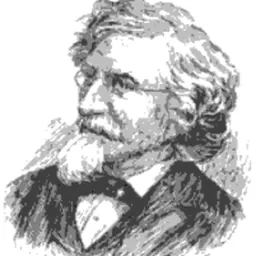
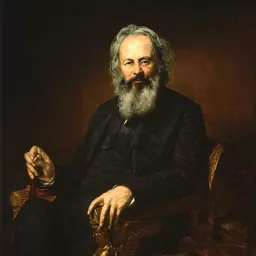

Related people
Same field, nearest in time
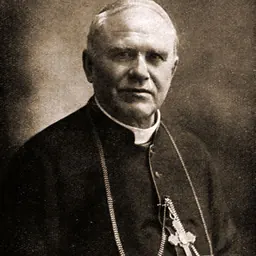
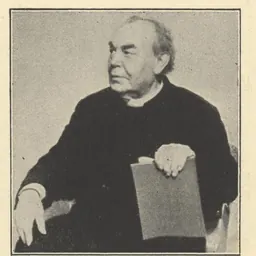

Contemporaries
People whose lives overlapped J. Havens Richards's





Frequently asked questions
Who was J. Havens Richards?
American Jesuit educator (1851-1923)
When was J. Havens Richards born?
J. Havens Richards was born on 8 November 1851 in Columbus.
When did J. Havens Richards die?
J. Havens Richards died on 9 June 1923 in College of the Holy Cross.
What was J. Havens Richards's occupation?
J. Havens Richards was a catholic priest, academic administrator and educator.
What nationality was J. Havens Richards?
J. Havens Richards was American.
Sources & further reading
· Wikipedia: J. Havens Richards
Cite this page
APA: Biography.guide. (2026). J. Havens Richards. https://biography.guide/j-havens-richards/
MLA: "J. Havens Richards." Biography.guide, https://biography.guide/j-havens-richards/.
Chicago: "J. Havens Richards." Biography.guide. https://biography.guide/j-havens-richards/.
Data last updated: 2026-09-26 · Spot an error? Report a correction.
Page generated 2026-09-27 05:16 UTC