
Johann Georg Hagen
Austrian-American Jesuit priest and astronomer
About Johann Georg Hagen
Lived 1847 – 1930 (aged 83). Johann Georg Hagen was an Austrian astronomer, university teacher, philosopher and catholic priest.
Johann (John) Georg Hagen (March 6, 1847 – September 6, 1930) was an Austrian Jesuit priest and astronomer. After serving as Director of the Georgetown University Observatory he was called to Rome by Pope Pius X in 1906 to be the first Jesuit director of the new Vatican Observatory. Father Hagen was also the spiritual director of Maria Elizabeth Hesselblad (1870-1957), who was baptized by him on August 15, 1902 and eventually was canonized on June 5, 2016 by Pope Francis.
Biography
Early life Johann Georg Hagen was born in Bregenz, Austria on 6 March 1847, the son of a school teacher.
Entering the Jesuit Order Johann entered the Society of Jesus, commonly known as the Jesuits, in Gorheim, Germany in 1863. He attended the Jesuit College Stella Matutina in Feldkirch, Austria and also studied mathematics and astronomy at the University of Bonn and the University of Münster. He volunteered for the ambulance service in the Franco-Prussian War, but was struck with typhoid fever.
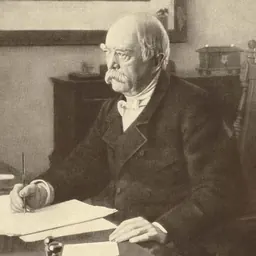
Expulsion On July 4, 1872, Otto von Bismarck, chancellor of Germany, expelled the Jesuits from the German Empire. Johann left for England where he was eventually ordained into the priesthood.
Emigration to US In June 1880, he left England for the United States. There he began teaching at Sacred Heart College in Prairie du Chien, Wisconsin. There he cultivated his interest in astronomy and built a small observatory for making astronomical observations. In Wisconsin, he became a naturalized citizen.
He was called to serve as the Director of the Georgetown University Observatory in 1888. There he continued his research and published numerous articles and texts.
He contributed several articles on astronomical topics to the Catholic Encyclopedia.
Research Hagen is also noted for his study of variable stars. His survey was published in his Atlas Stellarum Variabilium (1890–1902).
In mathematics, the Rothe–Hagen identity is named after him; it appears in his three-volume 1891 publication, Synopsis of Higher Mathematics.
At the Vatican observatory, he reported a dark nebula that he could not photograph in 1931. This object is known as the Hagen cloud. Modern astronomy has discarded the existence of that nebula and has attributed it to inconsistencies in visual perception.
Honors and awards The crater Hagen, 55 km in diameter, on the far side of the Moon is named after him.
The asteroid 562971 Johannhagen is named after him.
Publications
with G. A. Fargis:
Don’t just read it —
keep it.
Full-length biographies made to live with: read them, listen on the way to work, watch them tonight.
- E-book
- Audio
- Video
Instant download · yours to keep · every purchase keeps this site free
Important facts
People in Johann Georg Hagen's life
Named in this biography and alive at the same time

Related people
Same field, nearest in time


Contemporaries
People whose lives overlapped Johann Georg Hagen's




Frequently asked questions
Who was Johann Georg Hagen?
Austrian-American Jesuit priest and astronomer (1847-1930)
When was Johann Georg Hagen born?
Johann Georg Hagen was born on 6 March 1847 in Bregenz.
When did Johann Georg Hagen die?
Johann Georg Hagen died on 5 September 1930 in Rome.
What was Johann Georg Hagen's occupation?
Johann Georg Hagen was an astronomer, university teacher, philosopher and catholic priest.
What nationality was Johann Georg Hagen?
Johann Georg Hagen was Austrian.
Sources & further reading
· Wikipedia: Johann Georg Hagen
Cite this page
APA: Biography.guide. (2026). Johann Georg Hagen. https://biography.guide/johann-georg-hagen/
MLA: "Johann Georg Hagen." Biography.guide, https://biography.guide/johann-georg-hagen/.
Chicago: "Johann Georg Hagen." Biography.guide. https://biography.guide/johann-georg-hagen/.
Data last updated: 2026-09-22 · Spot an error? Report a correction.
Page generated 2026-09-27 05:32 UTC