
About J. Budziszewski
Born 1952. J. Budziszewski is a philosopher.
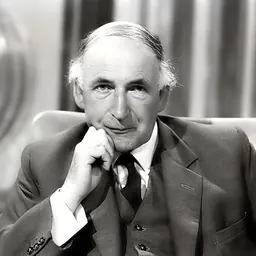
J. Budziszewski (born 1952) is an American philosopher and political scientist. He is a professor of government and philosophy at the University of Texas at Austin, where he has taught since 1981. He specializes in ethics, political philosophy and the interaction of these two fields with religion and theology.
Budziszewski has written widely, in both scholarly and popular venues, about a variety of moral and political issues including abortion, marriage, sexuality, capital punishment, and the role of judges in a constitutional republic. His principal area of publication is the theory of natural law. He has been a leading advocate for natural law theory over the past twenty years. In this context, he has given particular attention to the problem of moral self-deception. Among his research interests are also virtue ethics and the problem of tolerance.
Career He has been teaching at the University of Texas at Austin since finishing his doctoral studies in 1981, where he teaches courses on the American Founding and the natural law tradition of Thomas Aquinas. Since his conversion, he has continued to address his writings and lectures on Christian themes to Protestant, Catholic, and Orthodox Christians, as well as to those who are uncertain of their beliefs but are sincerely seeking. He is married to his wife Sandra.
Research
Self-deception One of Budziszewski's research interests has been to analyze what he regards as general human tendency to self-deception. The problem arises from a theoretical tenet defended by Thomas Aquinas, who he said "we must say that the natural law, as to general principles, is the same for all, both as to rectitude and as to knowledge." This claim amounts to saying that the most general principles of right and wrong are not only right for everyone but known to everyone, even though the same cannot be said of their remote implications. According to Budziszewski, Aquinas is right. He argues that often, even when people appear to be ignorant of the moral basics, the hypothesis that they are self deceived provides a better explanation of their actual behavior.
This leads to Budziszewski's theory of guilty knowledge, of violated conscience. Following Aquinas, Budziszewski distinguishes between synderesis, which supplies the first principles of practical reason and which he calls "deep conscience," and conscientia, which he calls "surface conscience" and supplies judgments about particular acts. According to Budziszewski, conscience operates in three different modes: In the cautionary mode, it alerts us to the peril of moral wrong and generates an inhibition against committing it. In the accusatory mode, it indicts us for wrong we have already done. In the avenging mode, it punishes the individual who knowingly does wrong but refuses to admit that he or she has done so. Conscience is therefore teacher, judge, or executioner, depending on the mode in which it is working.
The most original part of this schema is what Budziszewski says about the avenging mode. The most obvious penalty of guilty knowledge is the feeling of remorse. Remorse is not always present. However, Budziszewski suggests that even when remorse is absent, guilty knowledge generates objective needs for confession, atonement, reconciliation, and justification. Calling these other four "Furies" the "greater sisters of remorse," he argues that they are "inflexible, inexorable, and relentless, demanding satisfaction even when mere feelings are suppressed, fade away, or never come."
Budziszewski holds that the only way to break this vicious circle is to admit that one has done wrong and to repent, in reliance on the grace of God. Failure to break out of the vicious circle leads to a variety of moral pathologies in the individual, the culture, and the body politic.
Tolerance A second major area of Budziszewski's scholarly work is the problem of toleration. Budziszewski considers toleration one of the virtues. Like the Aristotelian moral virtues, it lies in a mean between extremes. One way to miss the mark is overindulgence, whereby we tolerate what we ought not tolerate. The other way is narrowmindedness, whereby we fail to tolerate what we ought to tolerate. Because "tolerating" means not just putting up with things, but to put up with things that we find false, bad, or offensive, the question may arise why toleration is a virtue at all. According to Budziszewski, the answer is that sometimes the nature of the good itself requires putting up with some evil. Christians, for example, tolerate atheists not because they are in doubt about the truth of Christian beliefs, but because of their conviction that faith, by its nature, cannot be coerced, and that God does not desire unwilling obedience.
This analysis of tolerance makes Budziszewski a sharp critic of contemporary liberal theories of toleration, which are commonly based on moral neutrality, on suspension of judgment about goods and evils. Budziszewski insists that if we were to suspend judgment consistently, we could neither defend the practice of toleration, nor decide which bad things should be tolerated. The true foundation of toleration is not suspension of judgment, but better judgment, and not neutrality about goods and evils, but deeper insight into them. Indeed, argues Budziszewski, the proponents of neutralist theories actually suspend judgment only selectively, using a facade of neutrality in order to smuggle their moral views into policy without having to defend them. In his book, The Line Through the Heart, Budziszewski attempts to show us how the natural law continues to illuminate the ethical and political dimensions of human existence today despite our best efforts to ignore it. Natural law is a fact in that it is real, we know it, and we cannot change it. It is a theory because we can reflect on our pre-theoretical knowledge of the natural law and attempt to develop a systematic account of it. Finally, the natural law is a scandal, it angers us because it confronts us. Additionally, he has given over three hundred interviews, including an exclusive television interview on EWTN's The Journey Home in 2005 shortly following his conversion to the Catholic faith.
Don’t just read it —
keep it.
Full-length biographies made to live with: read them, listen on the way to work, watch them tonight.
- E-book
- Audio
- Video
Instant download · yours to keep · every purchase keeps this site free
Important facts
People in J. Budziszewski's life
Named in this biography and alive at the same time


Related people
Same field, nearest in time


Contemporaries
People whose lives overlapped J. Budziszewski's



Frequently asked questions
Who is J. Budziszewski?
American philosopher
When was J. Budziszewski born?
J. Budziszewski was born in 1952 in Milwaukee.
What is J. Budziszewski's occupation?
J. Budziszewski is a philosopher.
Sources & further reading
Cite this page
APA: Biography.guide. (2026). J. Budziszewski. https://biography.guide/j-budziszewski/
MLA: "J. Budziszewski." Biography.guide, https://biography.guide/j-budziszewski/.
Chicago: "J. Budziszewski." Biography.guide. https://biography.guide/j-budziszewski/.
Data last updated: 2026-09-20 · Spot an error? Report a correction.
Page generated 2026-09-27 04:59 UTC