
About Ivan Surikov
Lived 1841 – 1880 (aged 39). Ivan Surikov was a Russian poet and writer.
Ivan Zakharovich Surikov (, April 6, 1841, Novosyolovo, Uglich, Yaroslavl, Russian Empire– May 6, 1880, Moscow) was a Russian self-taught peasant poet, best known for his folklore-influenced ballads, some of which were put to music by well-known composers (Tchaikovsky, Cui, Rimsky-Korsakov, Gretchaninov among them), while some ("Rowan", "Steppe" and others) became real folk songs.
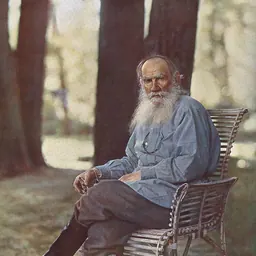
Biography Ivan Surikov was born in Novosyolovo village near Uglich, son of Zakhar Adrianovich Surikov, a rent-paying peasant who worked for Count Sheremetyev. Ivan spent the first eight years of his life in the village with his mother and grandmother, then in 1849 moved to Moscow where his father had started a small grocery shop at Ordynka. Neighbouring nuns taught the boy reading and writing; soon he became acquainted with Russian poetry and started to write himself, Aleksey Merzlyakov and Nikolay Tsyganov's songs providing the primary impulse. His father deemed book-reading to be harmful to good trader's mentality, but Ivan persisted in studying. In the late 1850s the shop went bust, and Zakhar Surikov returned to Novosyolovo, leaving the boy as an employee at a shop owned by his uncle, suffering from near-poverty and humiliation. In 1859 father returned to Moscow where he bought another shop and started trading in iron and coal, bringing his son in, as an aid. In the early 1870s Surikov began corresponding with other self-taught poets from all over the country. The Rassvet (Sunrise) anthology came as a result, featuring poems by A.Bakulin, S.Derunov and D.Zharov among others. In 1875, he became a member of the Russian Literature Society (nominated by Fyodor Buslayev, and supported by Leo Tolstoy). His next project, a literary magazine exclusively for authors from the lower classes, failed to materialize. In the late 1870s Ivan Surikov fell ill with tuberculosis. He died in Moscow in 1880, at the peak of his creativity.
Legacy Ivan Surikov's legacy is usually seen as part of the tradition set by the two major Russian folklorist poets, Aleksey Koltsov and Ivan Nikitin. Yet, while both of his spiritual forefathers employed traditional Russian folklore structures and motives as a template and, while being masters of the 'landscape poetry', could hardly be described as storytellers, Surikov's poems usually had plots and were full of drama, albeit of a simplistic brand, featuring only "strong", straightforward feelings, devoid of emotional undertones.
Koltsov and Nikitin prospered at a time when the popularity of classic folklore in Russia reached its peak; Surikov's legacy could be seen as set against the background of its decline, when frivolous and vulgar motifs were debasing folk tradition, now more part of the new proto-industrial culture rather than patriarchal rural Russia. Surikov, with his gallery of lower class urban characters (tailors, manual labourers, homeless people, wanderers) is often regarded as a founder of what later would be termed 'Russian urban romance'. His ballads were song-like in structure, and people who knew him remembered how he "tried out" each new piece by singing it aloud.
Surikov had his "peasant cycle" too, but again, its poems were generic, protagonists representing "the voice of the common people," rather than putting forward personal views. Being first and foremost a storyteller, Surikov never went for elaborate plotlines. Even the democratic press which supported the self-taught 'people's poet', deplored the narrowness of his artistic spectrum which embraced trials and tribulations only of the most trivial kind (hardships of poverty, grievances of set marriage, stepmother's cruelty, etc.).
Don’t just read it —
keep it.
Full-length biographies made to live with: read them, listen on the way to work, watch them tonight.
- E-book
- Audio
- Video
Instant download · yours to keep · every purchase keeps this site free
Important facts
People in Ivan Surikov's life
Named in this biography and alive at the same time

Related people
Same field, nearest in time

Contemporaries
People whose lives overlapped Ivan Surikov's

Frequently asked questions
Who was Ivan Surikov?
poet (1841–1880)
When was Ivan Surikov born?
Ivan Surikov was born on 6 April 1841 in Novosyolovo.
When did Ivan Surikov die?
Ivan Surikov died on 6 May 1880 in Moscow.
What was Ivan Surikov's occupation?
Ivan Surikov was a poet and writer.
What nationality was Ivan Surikov?
Ivan Surikov was Russian.
Sources & further reading
Cite this page
APA: Biography.guide. (2026). Ivan Surikov. https://biography.guide/ivan-surikov/
MLA: "Ivan Surikov." Biography.guide, https://biography.guide/ivan-surikov/.
Chicago: "Ivan Surikov." Biography.guide. https://biography.guide/ivan-surikov/.
Data last updated: 2026-09-20 · Spot an error? Report a correction.
Page generated 2026-09-27 05:24 UTC