
About Ivan Schmalhausen
Lived 1884 – 1963 (aged 79). Ivan Schmalhausen was a Russian zoologist, botanist and biologist, known for Modern synthesis (20th century) and Stabilizing selection.
Ivan Ivanovich Schmalhausen (; 23 April 1884 – 7 October 1963) was a Russian and Soviet zoologist and evolutionary biologist of German descent. He developed the theory of stabilizing selection, and took part in the development of the modern evolutionary synthesis.
He is remembered, among other things, for Schmalhausen's law, which states that a population at its limit of tolerance in one aspect is vulnerable to small differences in any other aspect.
Early life and education Ivan Ivanovich Schmalhausen was born in Kiev, Russian Empire (now Ukraine) on April 23, 1884, to Luise Schmalhausen (Luisa Ludwigovna Schmalhausen) and Johannes Schmalhausen (also transliterated as Ivan Fedorovich Schmalhausen, Иван Фёдорович Шмальгаузен). His father was one of the founders of Russian paleobotany.
In 1901, Schmalhausen graduated from the and enrolled at Kiev University, but was expelled a year later after taking a part in student disturbances. In 1902 he resumed his university studies at Kiev in the faculty of biological science. Around 1902 he became acquainted with the founder of the Russian school of evolutionary morphology, Alexey Severtsov (1866–1936).
In 1904, Schmalhausen, under the guidance of Severtsov, completed his first scientific work on the embryonic development of lungs in the grass snake. He graduated from the university in 1909.
In 1910, he married Lydia Kozlova, a French language teacher at Kiev Women Gymnasium.
Career In 1912 Schmalhausen became a professor of zoology in Kiev University. From 1920–1930 he was head of the Department of Vertebrate Zoology. During 1930–1941 Schmalhausen was director of Institute of Zoology in Kiev, at the same during 1936–1948 he was director of Institute of Evolutionary Morphology in Moscow and during 1939–1948 - also a head to the Department of Darwinism in Moscow University. The Institute of Zoology in Kiev was later named in his honour the I. I. Schmalhausen Institute of Zoology.
He published his most well known book, Faktory Evolyutsii in 1946. This was translated into English by Isadore Dordick and edited by Theodosius Dobzhansky. This translation appeared as Factors of Evolution: The Theory of Stabilizing Selection in 1949.
On 23 August 1948, after the August 1948 Session of VASKhNIL, he became victim of order 1208, one of a series signed by Minister of Higher Education in the USSR, , which led to the mass dismissals of many university professors. This destroyed his career, as it removed his professorship and also decreed the destruction of his books and research projects. This action came about due to accusations of Weismannism and pro-Morganism, and of promoting the neo-Darwinian theory of evolution by natural selection, at a time when Trofim Lysenko and his followers were emphasising a process of heredity that focused on interaction with the environment and the inheritance of acquired characteristics along Lamarckian lines. (Lysenko put his theory into practice in agriculture, claiming to have improved wheat using Lamarckian techniques. Lysenkoism played a major role in Stalin's politics, stressing that hard work led to improvement in future generations.)
During these events in 1948 Schmalhausen was removed from the heading positions in Moscow institutions, Institute of Evolutionary Morphology and Department of Darwinism of Moscow University. Until the end of his life he worked in the Zoological Institute in Leningrad as a common senior researcher.
In 1955, Schmalhausen was one of the signatories of the "Letter of 300"a collective letter by 300 scientists denouncing Lysenkoism.
He died on October 7, 1963, in Leningrad.
Don’t just read it —
keep it.
Full-length biographies made to live with: read them, listen on the way to work, watch them tonight.
- E-book
- Audio
- Video
Instant download · yours to keep · every purchase keeps this site free
Important facts
People in Ivan Schmalhausen's life
Named in this biography and alive at the same time

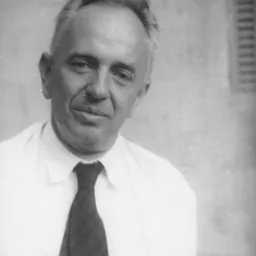
Related people
Same field, nearest in time
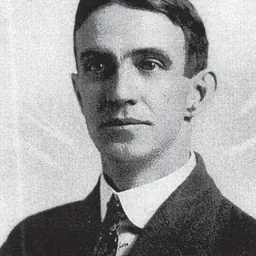

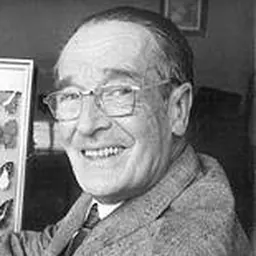



Contemporaries
People whose lives overlapped Ivan Schmalhausen's
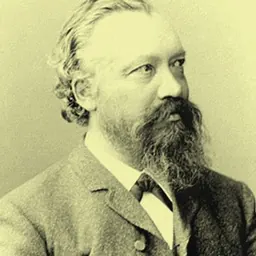

Frequently asked questions
Who was Ivan Schmalhausen?
Russian zoologist (1884–1963)
When was Ivan Schmalhausen born?
Ivan Schmalhausen was born on 11 April 1884 in Kyiv.
When did Ivan Schmalhausen die?
Ivan Schmalhausen died on 7 October 1963 in Moscow.
What was Ivan Schmalhausen's occupation?
Ivan Schmalhausen was a zoologist, botanist and biologist.
What was Ivan Schmalhausen known for?
Ivan Schmalhausen was known for Modern synthesis (20th century) and Stabilizing selection.
What nationality was Ivan Schmalhausen?
Ivan Schmalhausen was Russian.
Sources & further reading
· Wikipedia: Ivan Schmalhausen
Cite this page
APA: Biography.guide. (2026). Ivan Schmalhausen. https://biography.guide/ivan-schmalhausen/
MLA: "Ivan Schmalhausen." Biography.guide, https://biography.guide/ivan-schmalhausen/.
Chicago: "Ivan Schmalhausen." Biography.guide. https://biography.guide/ivan-schmalhausen/.
Data last updated: 2026-09-20 · Spot an error? Report a correction.
Page generated 2026-09-27 05:14 UTC