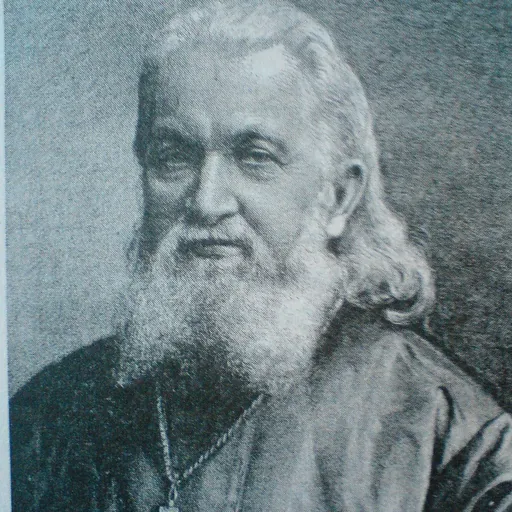
About Ivan Naumovych
Lived 1826 – 1891 (aged 65). Ivan Naumovych was an Austrian and Russian writer, public figure, politician, journalist, adult educator and greek-Catholic priest.
Ivan Grigorievitch Naumovich, also romanized as Ivan Hryhorovych Naumovych (, , ; January 14, 1826 – August 16, 1891), was a priest, member of parliament, writer, and major figure in the Russophile movement in western Ukraine. His article, A Glimpse into the Future, was considered the most important manifesto of Galician Russophilism.
Background
During the 19th century the area currently known as western Ukraine was the Kingdom of Galicia and Lodomeria, part of the Austrian Empire. Its people consisted primarily of Poles and Ukrainians. The Poles had ruled over western Ukraine prior to the Austrians having ruled over it, and made up most of the nobility. They dominated the region politically and economically. The Ukrainians, although a numeric majority, were mostly peasants or priests. During the nineteenth century the people who are now known as Ukrainians referred to themselves as Rusyny, typically translated as Ruthenians. Among the Ruthenians, two competing national ideologies developed: Russophilism, the belief that there was no such thing as a Ukrainian nation and that the people of western Ukraine were the westernmost branch of the Russian people, and Ukrainophilism, the belief that there was a Ukrainian nation separate from a Russian one and that the people of western Ukraine belonged to that Ukrainian nation. Although initially the Austrian authorities supported Russophilism as a counterbalance against the Poles, when Austria and Russia became rivals Austria shifted its support to the Ukrainophilia movement.
Biography Naumovich was born into a clerical family in western Ukraine, which was at the time part of the Austrian Empire; his father was a school teacher, and his grandfather was a priest. Like many with his social background, the family spoke the Polish language at home while maintaining Ruthenian traditions. When Naumovich entered a Ukrainian Catholic seminary in Lviv in 1848, he became swept into and joined the Polish revolutionary movement and attempted to convince other Ukrainians to join the Polish cause. These efforts met with complete rejection from the Ukrainian peasants, causing Naumovich to turn away from the Poles.
Initially, Naumovich focused his efforts on attempting to rid the Ukrainian Greek Catholic Church of various Roman Catholic rituals and practices that it had adopted during the centuries of Catholic Polish rule, a process referred to as purification, in order to reestablish the pure "Russian" character of the Church. Such actions earned him great popularity among the Ukrainian people, and he was elected to the Galician Diet in 1861 and the Austrian parliament in 1873. During this time, he was a passionate defender of the rights of the Ruthenian people against the Polish landlords and supported the division of the province of Galicia into western (Polish) and Eastern (Ukrainian, which Naumovich considered to be Russian) parts.
In 1882, Naumovich was arrested for treason. Acquitted of that charge, he was instead convicted of disturbing public order and spent eight months in prison. In 1885, he was excommunicated from the Ukrainian Greek Catholic Church. Naumovich converted to Russian Orthodoxy and settled in Kyiv, then part of the Russian Empire, before becoming a parish priest in a village outside Kyiv. Naumovich died in 1891 in Novorossiysk.
Writings and Ideas In 1866, the Austrian Empire was defeated in the Austro-Prussian War and central authorities found themselves weakened. Representative of various nationalities took advantage of this weakness to agitate for demands for more power the central authorities. Unlike their Polish rivals in eastern Galicia, Ukrainian community leaders made no demands, instead declaring their strong loyalty to the Habsburgs and hoped that this loyalty would be rewarded. However, in order to appease the restless Poles, the Austrian authorities gave in to many of their demands. The demands included greater Polish control over lands at the expense of the Ukrainian rivals, who had declared their loyalty to Austria.
A Glimpse into the Future, anonymously written by Naumovich and signed as "One in the Name of Many", was a response to these events. It would become the main manifesto of the Russophile movement in western Ukraine.
Don’t just read it —
keep it.
Full-length biographies made to live with: read them, listen on the way to work, watch them tonight.
- E-book
- Audio
- Video
Instant download · yours to keep · every purchase keeps this site free
Important facts
Related people
Same field, nearest in time

Contemporaries
People whose lives overlapped Ivan Naumovych's





Frequently asked questions
Who was Ivan Naumovych?
Austro-Hungarian politician (1826-1891)
When was Ivan Naumovych born?
Ivan Naumovych was born on 14 January 1826 in Kizliv.
When did Ivan Naumovych die?
Ivan Naumovych died on 4 August 1891 in Novorossiysk.
What was Ivan Naumovych's occupation?
Ivan Naumovych was a writer, public figure, politician, journalist, adult educator and greek-Catholic priest.
What nationality was Ivan Naumovych?
Ivan Naumovych was Austrian and Russian.
Sources & further reading
Cite this page
APA: Biography.guide. (2026). Ivan Naumovych. https://biography.guide/ivan-naumovych/
MLA: "Ivan Naumovych." Biography.guide, https://biography.guide/ivan-naumovych/.
Chicago: "Ivan Naumovych." Biography.guide. https://biography.guide/ivan-naumovych/.
Data last updated: 2026-09-22 · Spot an error? Report a correction.
Portrait: Wikimedia Commons · author & licence
Page generated 2026-09-27 05:01 UTC